

The EACR’s ‘Highlights in Cancer Research’ is a regular summary of the most interesting and impactful recent papers in cancer research, curated by the Board of the European Association for Cancer Research (EACR).
The list below appears in no particular order, and the summary information has been provided by the authors unless otherwise indicated.
Use the dropdown menu or ‘Previous’ and ‘Next’ buttons to navigate the list.
Wischnewski, V. et al. Cell Reports. 44 (3): 115427. (2025).
doi: 10.1016/j.celrep.2025.115427.
Summary of the findings
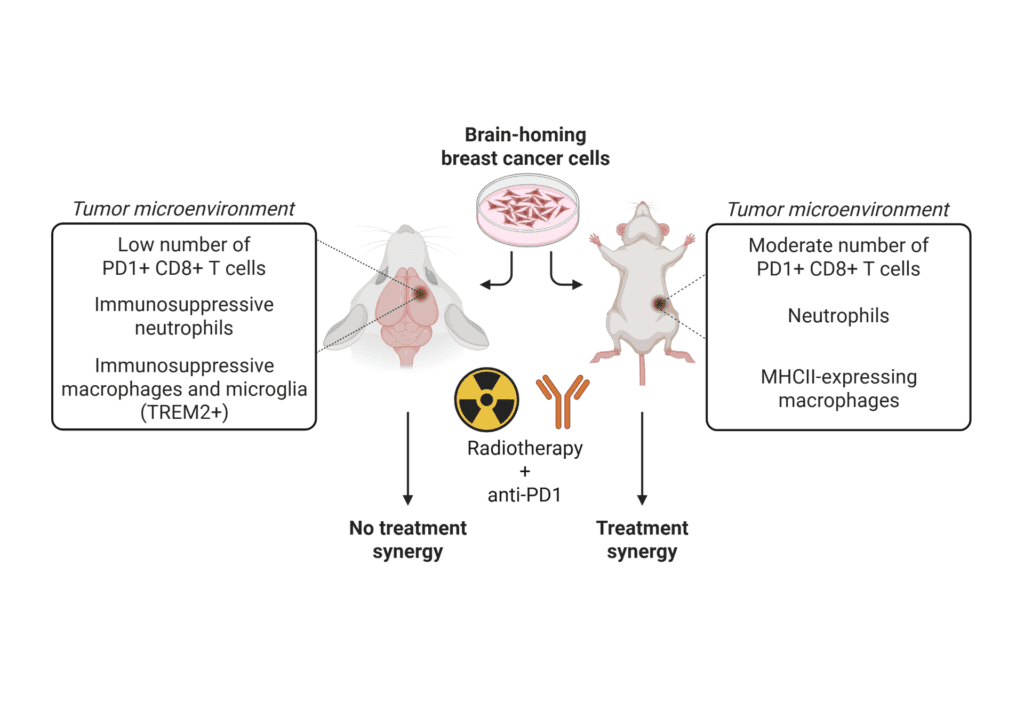
In this study, we therefore investigated how the unique microenvironment of breast cancer-BrM influences the response to combined radiotherapy and immunotherapy. We found that while immune cells, including CD8⁺ T cells, infiltrate breast cancer-BrM, their ability to kill tumor cells is locally suppressed within the brain. Consequently, the addition of a therapeutic anti-PD1 antibody to radiotherapy failed to produce any additional benefit in BrM. By contrast, this combination worked synergistically against genetically identical tumor cells growing outside the brain.
Further analyses revealed that tumor-infiltrating neutrophils and Trem2-positive macrophages and microglia can actively suppress T cell function ex vivo. Together, these findings highlight how the local tumor microenvironment in the brain limits the effectiveness of otherwise promising cancer therapies, thereby revealing a key barrier to improving outcomes for patients with brain metastases.
Future impact
Our results indicate that improving treatment of BrM will likely require strategies that specifically target local immune suppression in the brain. Inhibition of BrM-infiltrating immunosuppressive myeloid cells could help restore T cell activity and enhance the effectiveness of T cell-targeting therapies as both single agents and combination treatments.
.
More broadly, this research underscores the importance of tailoring cancer therapies to specific anatomical locations. Developing treatments that account for the unique features of the brain may lead to more effective therapeutic approaches for patients with BrM.