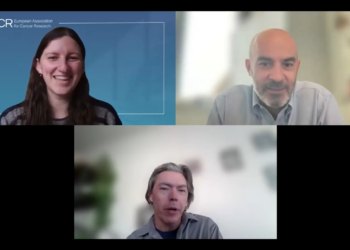

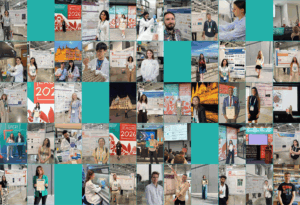
We met in Budapest, Hungary for the EACR 2026 Congress between 08-11 June 2026. This EACR conference covered a wide array of topics across the spectrum of cancer research, including: ageing and cancer, biological rhythms and its impact on cancer therapy, cell death mechanisms, genomic instability, mechanisms of tumour metastasis, tumour heterogeneity at the single cell level, and much more on further cutting-edge topics. Watch our video recap here!
Supported by Worldwide Cancer Research, we were delighted to award 50 Travel Grants to help cancer researchers in need of financial assistance to attend the event.
Scroll through our Travel Grant award winners’ personal excerpts below.
Smriti Suri: Yes, the data science and high-throughput biology sessions were immediately beneficial. I brought back highly specific, advanced workflows for LC-MS data analysis that I am now applying to my own research. Learning nuanced approaches for handling high-resolution proteomics and optimizing functional enrichment has allowed me to re-evaluate my existing HNSCC datasets. This specialized knowledge has already helped me better interpret the molecular signatures related to therapy resistance, directly strengthening the final data chapters of my PhD thesis.
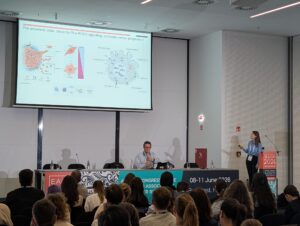
Samantha George: I gained valuable insight into emerging technologies and analytical approaches that are directly relevant to my research. Presentations on spatial biology and single-cell methods demonstrated how these tools can be used to study cell-state transitions and interactions within the tumour microenvironment at high resolution. I also learned about recent advances in cancer cell plasticity and therapeutic resistance, which are closely aligned with my current work on melanoma-associated macrophages. These ideas will help inform future experiments and provide useful context for interpreting ongoing studies in my work.
Inés de la Guía López: I am returning to my home institution with highly valuable and practical knowledge. The congress exposed me to cutting-edge technologies and innovative research models that I was previously unfamiliar with. I am very excited to implement these new methodologies and approaches in my laboratory, as I am confident they will significantly optimize our workflow, improve our experimental designs, and bring fresh perspectives to our ongoing research projects.
Guilherme Faria Nadaline: Two things, one scientific and one not. Scientifically, the feedback I received at my poster and the methodological detail in the talks I attended have led me to refine my experimental approach as I take the project forward. The second is less tangible but has been just as useful: the discussion on laboratory culture gave me concrete ideas about organisation and mentorship that I have been putting into practice in the month since the congress. I had not expected the career development sessions to be the part I would still be thinking about weeks later.