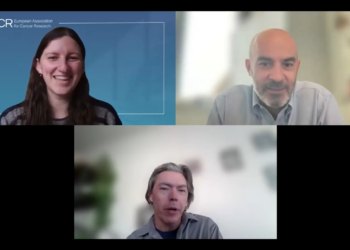

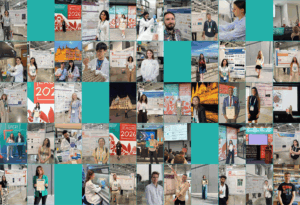
We met in Budapest, Hungary for the EACR 2026 Congress between 08-11 June 2026. This EACR conference covered a wide array of topics across the spectrum of cancer research, including: ageing and cancer, biological rhythms and its impact on cancer therapy, cell death mechanisms, genomic instability, mechanisms of tumour metastasis, tumour heterogeneity at the single cell level, and much more on further cutting-edge topics. Watch our video recap here!
Supported by Worldwide Cancer Research, we were delighted to award 50 Travel Grants to help cancer researchers in need of financial assistance to attend the event.
Scroll through our Travel Grant award winners’ personal excerpts below.
Davey Li: I was particularly inspired by the clear and succinct style from other people’s presentations. I really appreciated the mindset of putting patients first and allowing patient experiences to shape the scientific questions we ask to ensure our results can be as clinically impactful as possible. I was personally excited by the ideas of looking at cancer through the lens of evolution and considering the temporal scale of cancer evolution driving how cell states transition. I also saw some beautiful visualizations of cancer neuron interactions throughout different organ sites in the cancer neuroscience talks. I’m particularly excited to discuss with my team back home on how so many different environmental and extrinsic factors such as ethnicity can be a driver of transcriptomic variance in the tumor microenvironment.
Smriti Suri: Encountering such a dynamic, globally collaborative attitude at EACR 2026 reignited my passion for unraveling complex tumor biology. The keynote lectures exploring the molecular underpinnings of therapy resistance in solid tumors were profoundly inspiring. It was incredibly encouraging to see international consortiums tackling the exact mechanistic challenges I face in my squamous cell carcinoma research. This exposure dramatically broadened my scientific mindset, inspiring me to seek out postdoctoral opportunities that boldly bridge molecular biochemistry with targeted therapeutic interventions.
Joana Filipa Barbosa Pinheiro: The congress was incredibly inspiring. I attended several excellent talks and had many discussions about other people’s research, which gave me new ideas and perspectives for my own project. Hearing how other groups approach similar scientific questions made me think about new experiments and directions that I hadn’t considered before. I came back feeling much more motivated and excited to continue my research and explore some of these new questions.
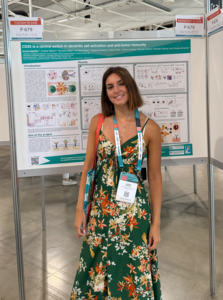
Aurora Gazzillo: The conference inspired me in many ways. Beyond the poster session, where I had the opportunity to speak with researchers from institutes in Manchester and London working in my field, the scientific talks were also highly valuable. They provided important updates on my area of research, but I was also inspired by sessions outside my immediate expertise that turned out to be relevant to my work, such as the session on the microbiota. I particularly appreciated the strong focus many speakers placed on the clinical impact of their research, as it highlighted the real-world relevance of our work and its potential benefits for patients.
Another highlight was the panel discussion with journal editors. I found this format both original and insightful, as it offered a rare opportunity to hear directly from professionals who play a key role in the research process. The open dialogue encouraged by EACR provided valuable perspectives and fostered a better understanding of the publication process from both the researchers’ and editors’ viewpoints.
Vi Truong: The EACR Congress really shifted how I see my own work. What stayed with me most was how openly senior researchers talked about failed experiments. It made me realize negative results are just part of how science moves forward, not something to hide. Talking with other early-career researchers wrestling with the same doubts was reassuring too.
Regarding to research topics, I was particularly inspired by the strong focus on the tumor microenvironment and cancer immunology, which highlighted how understanding interactions between tumor cells and their surroundings can lead to more effective therapies. I also enjoyed learning about the journey from basic research to clinical trials. Seeing how promising molecular targets are translated into potential treatments motivated me to think more about the translational impact of my own work. Since my research focuses on an understudied kinase, the presentations reinforced its potential as a therapeutic target for future drug discovery.
Inés de la Guía López: The congress has been deeply inspiring, shifting how I view my day-to-day work. Attending the lectures and engaging with passionate scientists helped me fully realize the profound impact that our scientific results can have on society and on individual lives. Seeing the translational potential of cancer research has given me a renewed sense of purpose, motivating me to push the boundaries of my project with the ultimate goal of contributing to human well-being. Moreover, I also received a lot of positive feedback of my work, what inspired me to continue with my research.
Kelsy Prest: I learned an enormous amount throughout the meeting and particularly appreciated the opportunity to hear directly from researchers whose work I regularly read and cite. Being able to engage with and learn from such influential scientists was incredibly rewarding and reinforced my enthusiasm for a career in research. The congress also provided valuable networking opportunities and reminded me why I am so passionate about science. Even when presentations were outside my immediate research area, I found them fascinating and enjoyed gaining a broader perspective on the challenges and opportunities facing cancer research as a whole.
John Oluwafemi Teibo: The congress reinforced the importance of conducting research that ultimately improves patients’ lives. Hearing about recent advances in cancer biology, immunotherapy, multi-omics, and precision medicine broadened my perspective on the future of cancer research. The presentations also sparked new ideas for applying advanced proteomics and systems biology approaches to my own work. Most importantly, the meeting strengthened my motivation to pursue translational research that bridges fundamental discoveries with meaningful clinical impact.
Che Wei Chang: One of the most thought-provoking concepts I encountered at the congress concerned the relationship between aging and cancer. While aging is generally considered a major risk factor for cancer, some studies presented evidence that tumors induced in aged mice may exhibit restricted growth compared with those in younger animals. This seemingly paradoxical observation highlighted the complexity of biological systems and reminded me that every experimental model has inherent limitations. The congress encouraged me to think more critically about the strengths and weaknesses of different research systems. It reinforced the importance of examining biological questions from multiple perspectives and avoiding overreliance on a single model organism, which can unintentionally limit scientific interpretation and discovery.
Lourdes Harting: All the questions I received regarding my project at the poster session made me think about how to redirect my research. Additionally, the small talks with experts helped me realize the importance of occasionally pausing to reflect on our results and how we interpret data. In a fast-paced research environment, it is easy to overlook these moments of reflection in favor of moving quickly from one task to the next.