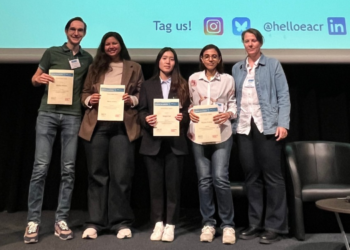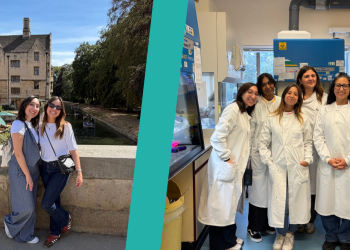

In September 2026, the EACR provided 68 funded places to EACR members across three dedicated workshops for early-career researchers, delivered virtually by EMBO Solutions. Focusing on project management, research integrity, and scientific communication, the workshops aimed to equip participants with practical skills that can strengthen both their research practice and their future careers. Participants said they felt an increase in confidence across the three subject areas and described a range of new practical approaches they plan to apply in their work.
Developing project management skills
The three-day Project Management for Scientists workshop introduced participants to concepts and tools for planning research projects, managing priorities, navigating challenges and working effectively with colleagues. Many participants highlighted the practical nature of the training and its relevance to the realities of academic research. Alongside project planning techniques, participants complimented sessions on communication, conflict management and leadership, noting them as being particularly valuable.
Prior to the workshop, participants rated their confidence in implementing project management concepts and planning tools at an average of 6.2 out of 10, but following the workshop, this increased to 8.6. Over 94% of participants told us they were likely to change their project management behaviours as a result of this training.
One participant reflected: “The most transformative takeaway is that project management in science is fundamentally about managing energy, boundaries, and trade-offs, not just scheduling tasks.”
Another noted: “The most impactful insight for me was the training on assertiveness and the need for this within project management… I think in academic culture it can be really hard to be appropriately assertive with senior colleagues and am now equipped with techniques to improve on this.”
Another participant enjoyed the time-management session: “The most impactful takeaway was learning how to break complex research projects down into clearly defined goals, milestones, and actionable tasks, allowing for more effective prioritization and time management. This provides a practical framework for managing parallel workstreams while keeping the overall project objectives and timelines in focus.”
Participants also frequently referenced the value of exchanging experiences with researchers from different backgrounds and learning approaches that could be applied immediately within their own projects. One of the frequently mentioned takeaways was the sense of camaraderie between this training cohort, summarised by this comment: “I’d just like to emphasise that [the course leaders] were really great. The atmosphere they created was very trustful and the entire cohort felt self to share experiences and learn from each others. It was really a privilege to be part of this course. Thanks EACR for giving me this opportunity!”
Establishing the foundations of research integrity
“After this course, I feel more confident as a researcher and motivated to share these insights with my colleagues.”
The one-day Foundations in Research Integrity workshop explored topics including experimental design, data management, reproducibility, authorship and publication ethics. Participants reported a marked increase in confidence, with average self-assessed confidence on the topic rising from 6.1 to 9.0 after the trainings.

In the survey feedback, 100% of participants told us they’d recommend it to others – we are thrilled that they had such a positive experience. Participants particularly appreciated the practical examples used throughout the day and the opportunity to discuss integrity challenges that researchers may encounter during the course of their work.
One participant commented: “I gained from the EMBO Research Integrity Workshop that research integrity is not simply about following formal rules or avoiding misconduct; it is an ongoing responsibility embedded in everyday research practice.
“The workshop highlighted the importance of transparency, careful documentation, responsible data management, and open communication when dealing with uncertainty or ethical dilemmas. This has encouraged me to be more reflective about my own research practices and the decisions I make throughout the research process.”
Another participant, who appreciated the more field-specific trainings, wrote: “I found the discussion on the dos and don’ts of Western blot presentation particularly valuable, as it highlighted how careful image organization and presentation are essential for maintaining clarity, transparency, and scientific integrity.
“The workshop also gave me a better understanding of how immunofluorescence images should be presented and interpreted. I believe the practical insights from this session will directly influence how I present and communicate my own research findings.”
Several participants also highlighted discussions around image handling, publication practices, and data presentation as useful reminders of the importance of maintaining rigorous standards throughout the research process. All of the participants who answered the feedback survey indicated that they were likely to change the way they approached their research projects.
A final note commends the open-minded approach to the training: “Overall, this workshop answered a lot of questions and addressed many insecurities that young researchers often have, which are not usually explained properly. Everyone acts as if the answer is obvious, but it usually isn’t.”
Building confidence in communicating your research
 The Writing Papers and Giving Presentations: Communicating your research with accuracy and impact workshop focused on manuscript preparation and communicating research effectively in a range of formats. Participants’ average confidence increased from 5.7 to 8.1, representing the largest confidence gap between pre- and post-workshop confidence rankings. Every single participant who responded to the survey told us they’d recommend the workshop to others. We will certainly take note of this for future initiatives!
Many participants indicated that their key takeaways were sparked by conversations around storytelling, scientific narrative, and tailoring communication. They confidently said that they were likely to change the way they write impactful titles and abstracts, assemble figures, or deliver presentations following this workshop. Participants also shared that they valued the practical exercises, particularly those focused on forming a compelling elevator pitch, presenting complex research concisely, and engaging different audiences effectively.
As one participant explained: “The main and most important thing I learned from this workshop was the approach of bringing together different parts of a study’s results to create a coherent and consistent story.
“During the exercises, I really enjoyed seeing how each group, based on their field of study and personal experiences, had different perspectives on how to design and present their article. I was surprised to see that, even though the approaches were very different, they were all logical, meaningful, and well-structured. This experience broadened my perspective and showed me that there can be many valid and creative ways to communicate research findings.”
Another highlighted the opportunity to hear directly from publishing professionals: “The most impactful takeaway was gaining practical insights directly from an experienced editor and having the opportunity to put them into practice through hands-on exercises. Working alongside researchers from the same field was particularly valuable, as it allowed me to exchange ideas, consider different perspectives, and learn from others’ experiences.”
Practical learning with immediate application
Across all three workshops, participants consistently emphasised the practical nature of the training and its relevance to their day-to-day work as researchers. Whether learning how to organise research projects more effectively, strengthen research integrity practices or communicate findings with greater clarity, participants described leaving the workshops with tools and approaches they could immediately apply in their own research environments.
The feedback highlights the value of complementary skills training alongside scientific development, helping early-career researchers build confidence in areas that are increasingly important for successful research careers. The EACR is delighted to continue to champion well-rounded development for cancer researchers from a variety of backgrounds.
Looking for further training for early-career cancer researchers?
Make sure to keep an eye on announcements for our 2027 edition of the EACR’s Early Career Researchers Symposium, which will take place the week of the 2027 EACR Congress. Follow us on LinkedIn, Instagram, Bluesky, and Facebook for updates.