
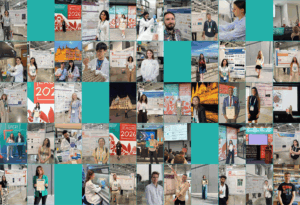
We met in Budapest, Hungary for the EACR 2026 Congress between 08-11 June 2026. This EACR conference covered a wide array of topics across the spectrum of cancer research, including: ageing and cancer, biological rhythms and its impact on cancer therapy, cell death mechanisms, genomic instability, mechanisms of tumour metastasis, tumour heterogeneity at the single cell level, and much more on further cutting-edge topics. Watch our video recap here!
Supported by Worldwide Cancer Research, we were delighted to award 50 Travel Grants to help cancer researchers in need of financial assistance to attend the event.
Scroll through our Travel Grant award winners’ personal excerpts below.
Sendegul Yildirim: EACR 2026 stood out because of its outstanding scientific quality and the welcoming atmosphere created for early-career researchers. The programme covered cutting-edge advances across many areas of cancer research, and every session offered valuable insights. I especially appreciated how accessible leading scientists were throughout the meeting, making it easy to engage in meaningful conversations and feel part of the international cancer research community.
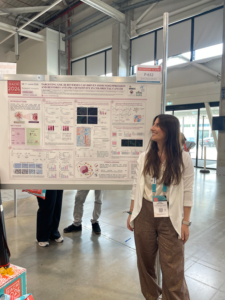
Aurora Rivas Crespo: This meeting felt different from others I have attended because of its strong international scope, the high scientific level of the programme, and its clear focus on networking. I especially appreciated how the congress combined outstanding scientific lectures with more informal moments, such as poster sessions and social activities, which encouraged interaction between researchers at different career stages. This structure made the meeting not only scientifically inspiring, but also very valuable for building new connections and identifying future opportunities. I also found it enriching that the programme brought together many different cancer research topics, allowing me to deepen my knowledge in areas related to my interests while also learning about fields and approaches that are less accessible in my usual research environment.
Lize Allonsius: This meeting stood out because of its scale and diversity. It brought together fundamental cancer biology, tumour immunology, clinical translation, computational approaches and technology development in one programme, so there was always a relevant lecture, poster or exhibitor to explore. Rather than staying within a specialist immunology audience, I could place my work in the wider cancer-research ecosystem and see how questions about cell states, spatial organisation and treatment response are being approached from different angles. The strong presence of technology partners was particularly interesting. It made the congress useful not only for learning about biological discoveries, but also for understanding which experimental tools are becoming available and how they are being used in practice.
Abigail Foston: This was my first international conference, so it was exciting to be able to experience a large scale event and see the types of innovative research going on all over the world! Other meetings that I have previously attended have been more specialised, and EACR 2026 was the largest pan-cancer event I had ever been to. It was really interesting to see how some research and approaches can translate across different diseases and to hear about developments in areas I hadn’t been able to come across before.
Yasemin Öztemur Islakoğlu: Compared to other conferences I have attended, this meeting had a stronger emphasis on interdisciplinary approaches and translational cancer research. The scale of participation and the diversity of expertise created a more dynamic environment. In addition, the quality of poster discussions was particularly high, allowing deeper scientific exchange rather than only brief presentations.
Marin Bont: The programme was well organized, with fewer parallel sessions, which meant I was able to attend all the talks I was interested in without having to make difficult choices. Another aspect that stood out to me was the strong representation of female researchers. I was particularly impressed that the conference included a dedicated award recognizing the best female researcher. I think this reflects the EACR’s commitment to promoting diversity and supporting women in science, making it a positive example for other conferences.
Siti Munira Abd Jalil: What stood out most about the EACR Congress was the strong emphasis on scientific excellence combined with an exceptionally welcoming and collaborative atmosphere. Despite being a large international meeting, it felt highly accessible to early-career researchers. The quality of the presentations was outstanding, ranging from fundamental cancer biology to cutting-edge translational and clinical research. I particularly appreciated how speakers openly discussed both successes and challenges in their work, creating an environment that encouraged learning and meaningful scientific exchange. Compared with many conferences, the EACR Congress felt less hierarchical and more focused on fostering genuine interactions between researchers at all career stages.
John Oluwafemi Teibo: What distinguished the EACR Congress was its excellent balance between scientific presentations, networking, and career development. The generous time allocated for poster sessions encouraged meaningful scientific discussions rather than brief interactions. I was also impressed by the strong participation of biotechnology companies and industry partners, which created valuable opportunities to learn about cutting-edge technologies and explore how academic discoveries are translated into clinical applications. The congress successfully brought together academia, industry, and clinicians within a highly collaborative environment.
Valentina Rossi: EACR was the best congress I have attended so far. What made it stand out was the combination of high-quality scientific sessions, an engaging and supportive environment, and a strong focus on career development. It offered a unique opportunity to move beyond a national research context and discuss my project and ideas within a broader European and international community. EACR truly felt like a hotspot for cutting-edge cancer research, bringing together leading scientists from diverse fields. I think it is one of the best congresses for expanding scientific ideas, building connections, and connecting with outstanding researchers across Europe.
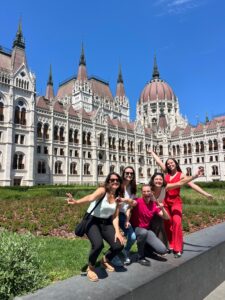
Laura Carrillo Bosch: The EACR Congress provided an amazing international environment to get a closer look at the current state of top-tier cancer research. It was really nice to feel close to the scientists who are all moving forward together to better understand cancer and improve patient treatment. In particular, I really liked the new space given to patient involvement and clinical development.
Lourdes Harting: To be honest, the EACR 2026 Congress was by far the best conference I have ever attended. This was due not only to its excellent organization and impactful scientific presentations, but also to its strong commitment to supporting early-career scientists. The sessions with experts organized specifically for early-career researchers, together with the Early Career Showcase, made me feel genuinely included and valued as part of this outstanding event.
Akanksha Agarwal: This meeting was different because it placed a strong focus on early-career researchers. There were many opportunities to present our work, have informal discussions with other young scientists, and learn from each other’s experiences. The conversations went beyond research—we also talked about building a successful research career, finding postdoctoral opportunities, networking, and developing as scientists. I found these interactions just as valuable as the scientific sessions, making the meeting both professionally and personally inspiring.
Wendy Montero: I had never attended an international conference outside my country before, so everything was different: the large number of posters, the number of people at the conference interested in exchanging knowledge and anecdotes, as well as the quality of the speakers in every session. Even the area of sponsors and brands certainly surpassed anything I’d seen before, but having access to all that technology and available tools had a huge impact on me because I had never experienced anything like it.
Diego Izabal: The EACR Congress was a first in many ways for me. It was my first major international scientific conference as both a attendee and poster presenter, where I had the opportunity to meet some of the most brilliant and inspiring researchers I have ever encountered. It was also my first visit to Europe, which made the experience even more special. Beyond the scientific content, I had the chance to interact with amazing people from diverse backgrounds and cultures. As my first experience of this kind, it will be difficult to surpass. Everything was exceptionally well organized, the atmosphere was welcoming, and the entire event exceeded my expectations.
Nicolae Ciobu Zubenco: The EACR Congress was considerably larger than other conferences I have attended, which provided an impressive breadth of research and a very international environment. However, I felt that it was still small enough to make meaningful connections and get to know other researchers, without becoming so large that interactions became impersonal. One of my favorite aspects was the “Meet the Expert” sessions, where participants could interact in small groups with established leaders in the field. I particularly appreciated hearing about their personal experiences and perspectives on different career-development stages. These discussions provided insights that went beyond the science and were especially useful as I approach the transition from my PhD to the next stage of my career.