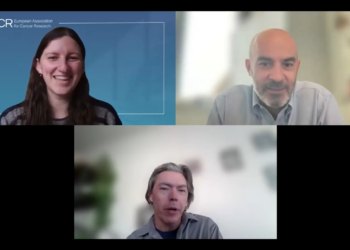

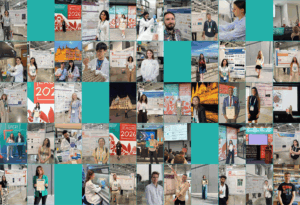
We met in Budapest, Hungary for the EACR 2026 Congress between 08-11 June 2026. This EACR conference covered a wide array of topics across the spectrum of cancer research, including: ageing and cancer, biological rhythms and its impact on cancer therapy, cell death mechanisms, genomic instability, mechanisms of tumour metastasis, tumour heterogeneity at the single cell level, and much more on further cutting-edge topics. Watch our video recap here!
Supported by Worldwide Cancer Research, we were delighted to award 50 Travel Grants to help cancer researchers in need of financial assistance to attend the event.
Scroll through our Travel Grant award winners’ personal excerpts below.
Vida Kufrin: I immediately shared with my colleagues how well EACR balanced clinical insights with fundamental cancer biology. As a wet-lab scientist, I appreciated the combination of translational and “pure” biology perspectives, which is not always the focus of large cancer conferences. I was also impressed by the strong emphasis on early-career researchers, including career development sessions and the Early Career Showcase that took place before the Congress. Hearing invited speakers share their scientific journeys, from early career stages to becoming group leaders, was particularly valuable, as these personal perspectives are always inspiring.
Bengisu Karaköse: The first thing I discussed with my colleagues was the growing importance of the tumor microenvironment across many areas of cancer research. Although researchers were studying different tumor types and biological questions, the tumor microenvironment emerged as a common theme throughout the congress. I also shared the keynote lecture on ethnic diversity in breast cancer biology, which I found particularly thought-provoking. It sparked interesting discussions within our group about the importance of ensuring that research findings are applicable to diverse patient populations, especially in a heterogeneous community like Belgium. The lecture was a valuable reminder that incorporating diversity into cancer research is essential for developing more equitable and effective approaches to patient care.
Preetham Kumar: I immediately shared with my lab group the concept of phenoscaping – a term I learned from Chris Tape’s talk on single-cell phenoscaping of tumor microenvironment organoids. The idea that we can map cellular phenotypes across spatial and environmental dimensions while accounting for non-genetic variation felt like a framework that could directly apply to my flow cytometry and immunohistochemistry data. I also told them about the Hungarian street foods (Langos and chimney cake) that I tried in Budapest. It was a sweet experience that made me understand why Budapest is such a beloved conference destination. I also told them about Arkaitz Carracedo Perez’s LEAD/DEAL tandem talk. Both the science and the vibe sparked real conversations in our next lab meeting.
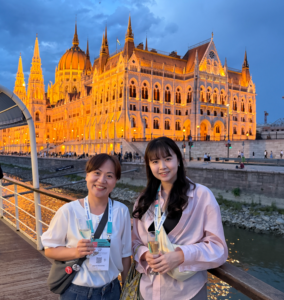
Pin Yuan Lin: As a PhD student, I believe that broadening one’s scientific perspective is essential for research development. After returning from the congress, I immediately wanted to share with my colleagues how valuable it was to participate in such an international meeting. It provided opportunities to expand my knowledge and gain insights that cannot be learned from textbooks alone. The diversity of ideas, research approaches, and scientific discussions greatly enriched my understanding of the field. I would strongly encourage other students to attend similar events whenever possible, as they offer unique learning experiences beyond the classroom.
Lize Allonsius: When I returned, one of the first things I wanted to share with colleagues was the pace at which spatial technologies are moving. I was especially excited by emerging spatial platforms, including developments from 10x Genomics, and by the expectation that other major technology providers such as Illumina will further expand this landscape. This matters directly for our work, as the questions we are asking about immune cell interactions in our model require both high-resolution readouts and robust spatial context. The conference made clear that the field is moving rapidly toward experiments that can connect these dimensions more comprehensively
Paul Marcoux: I really liked the session on “Biological Rhythms and their Impact on Cancer Therapy.” I didn’t realize that biological rhythms were so important for cancer treatment, and I don’t think it’s widely known yet. As soon as I got back, I shared these findings with my colleagues because it was just so interesting.
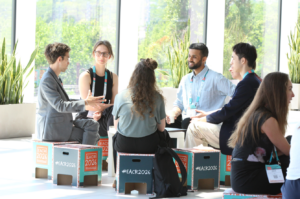
Akhil Shukla: What I felt most excited to tell my colleagues was how welcoming the congress felt and how easy it was to meet people from all over the world who were genuinely excited and open to science and research. The program was also impressive, with a great lineup of talks covering spatial tumour biology, tumour heterogeneity, metabolics, and multiomics, so it felt like there were many fresh ideas to bring back to the lab. I also mentioned how well the meeting was organized. The sessions, networking opportunities, and overall flow of the congress were managed smoothly, which made it much easier to focus on the science and talk to people.
Tong Zhao: When I got home, one thing I immediately wanted to tell my colleagues about was a poster discussion I had with another early-career researcher, Wisam Zaatra. He introduced me to his work on p53 deficiency, hypertranscription, nucleotide insufficiency, replication stress and genomic instability.
I found the study very inspiring because it was a strong example of a well-designed cancer research project. The work seemed to connect a clear mechanistic question with multiple layers of validation, including rescue experiments, patient-related validation and disease-relevant models. This discussion stayed with me after the congress and gave me ideas about how to think more critically about the structure and validation of my own research.
Ane Ochoa Echeverría: One of the most valuable experiences was meeting a Spanish researcher who works on gamma delta T cells. Since our group mainly studies alpha beta T cells but is now expanding into gamma delta T-cell research, I took the opportunity to discuss this topic with him. He shared practical advice on how to identify these cells by flow cytometry and explained their role in the anti-tumour immune response. As soon as I returned to the lab, I shared these insights with my colleagues, as they could be very useful for our future experiments and might even lead to a collaboration.
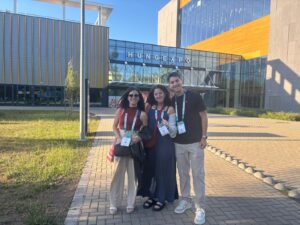
Elisa Sorrenti: When I returned home, I was excited to share with my colleagues some of the innovative research presented at the congress, as well as new experimental approaches and technologies that could be useful for our work. This experience was extremely valuable for my scientific development, giving me the opportunity to learn directly from researchers at the forefront of cancer research. Being able to discuss science and exchange ideas with such leading experts was something I had never experienced before, and it provided me with new perspectives and inspiration for my future research.
One of the most memorable moments for me was having the opportunity to speak with Maria Rescigno, a scientist whose work I have long admired and whom I consider a true pioneer in the field. Being able to discuss science and exchange ideas with such inspiring experts was something I had never experienced before, and it gave me new motivation and perspectives for my future research.