
The Cancer Researcher
  • Home
  • About
  • The Cancer Researcher Podcast
  • #KeepResearchCurious
No Result
View All Result
  • Home
  • About
  • The Cancer Researcher Podcast
  • #KeepResearchCurious
No Result
View All Result
The Cancer Researcher
No Result
View All Result

Highlights in Cancer Research: December 2025

December 8, 2025
Highlights in Cancer Research: November 2022

The EACR’s ‘Highlights in Cancer Research’ is a regular summary of the most interesting and impactful recent papers in cancer research, curated by the Board of the European Association for Cancer Research (EACR).

The list below appears in no particular order, and the summary information has been provided by the authors unless otherwise indicated.

Use the dropdown menu or ‘Previous’ and ‘Next’ buttons to navigate the list.


2. PPP2R1A mutations portend improved survival after cancer immunotherapy

  • 1. Long-Term Latency of Highly Mutated Cells in Normal Mouse Skin Is Reversed by Exposure to Tumor Promoters and Chronic Tissue Damage
  • 2. PPP2R1A mutations portend improved survival after cancer immunotherapy
  • 3. Neutrophils physically interact with tumor cells to form a signaling niche promoting breast cancer aggressiveness
  • 4. Spatial mapping of transcriptomic plasticity in metastatic pancreatic cancer
  • 5. Impaired T cell and neoantigen retention in time-serial analysis of metastatic non-small cell lung cancer in patients unresponsive to TIL cell therapy
  • 6. The source of dietary fat influences anti-tumour immunity in obese mice
  • 7. Nerve-to-cancer transfer of mitochondria during cancer metastasis
  • 8. Stromal lipid species dictate melanoma metastasis and tropism
  • 9. TIM3+ breast cancer cells license immune evasion during micrometastasis outbreak
  • 10. IL-17A-secreting γδ T cells promote resistance to CDK4/CDK6 inhibitors in HR+HER2- breast cancer via CX3CR1+ macrophages
Previous
Next

Dai, Y., Knisely, A., Yano, M., Dang, M. et al. Nature. 644: 537–546. (2025).
doi: 10.1038/s41586-025-09203-8.

Summary of the findings

Immune checkpoint blockade (ICB) has limited efficacy in ovarian cancer, where predictive biomarkers are lacking. However, about 5-15% of patients respond and are often over-represented in the clear cell histological subtype. In this study, we identified several lines of evidence pointing to loss-of-function somatic mutations in PPP2R1A, a scaffold subunit of the phosphatase 2 A (PP2A) complex, as a predictor of improved outcomes with ICB. Among patients with platinum-resistant ovarian clear cell carcinomas (OCCC), PPP2R1A-mutated tumors were associated with significantly prolonged overall and progression-free survival compared to wild-type cases. Validation across independent ICB-treated cohorts from multiple cancer types confirmed this association. Mechanistic analyses demonstrated that PPP2R1A mutations enhanced IFNγ signaling, increased immune infiltration, and promoted expansion of CD45RO⁺CD8⁺ T cells, with evidence of tertiary lymphoid structures. Preclinical models further showed that genetic or pharmacologic inhibition of PPP2R1A sensitized tumors to ICB and CAR-T therapies. Collectively, these findings suggest that PPP2R1A mutations represent a predictive biomarker of ICB response and a potential therapeutic target. Further studies are ongoing to clarify mechanisms and evaluate PP2A inhibition as a strategy to broaden immunotherapy benefit.
.

Future Impact

If validated, our findings establish PPP2R1A mutations leasing to PP2A inhibition as a predictive biomarker for immune checkpoint blockade responsiveness, with potential relevance across multiple tumor types. Beyond biomarker development, pharmacologic inhibition of PP2A may replicate the immunologic advantages of PPP2R1A loss, offering a strategy to sensitize otherwise resistant tumors to immunotherapy. Integration of PPP2R1A testing into clinical trials could guide patient selection, while PP2A-targeted therapies may expand treatment options. Together, these approaches could transform immunotherapy for ovarian clear cell carcinoma and other malignancies, improving durability and breadth of clinical benefit.

.
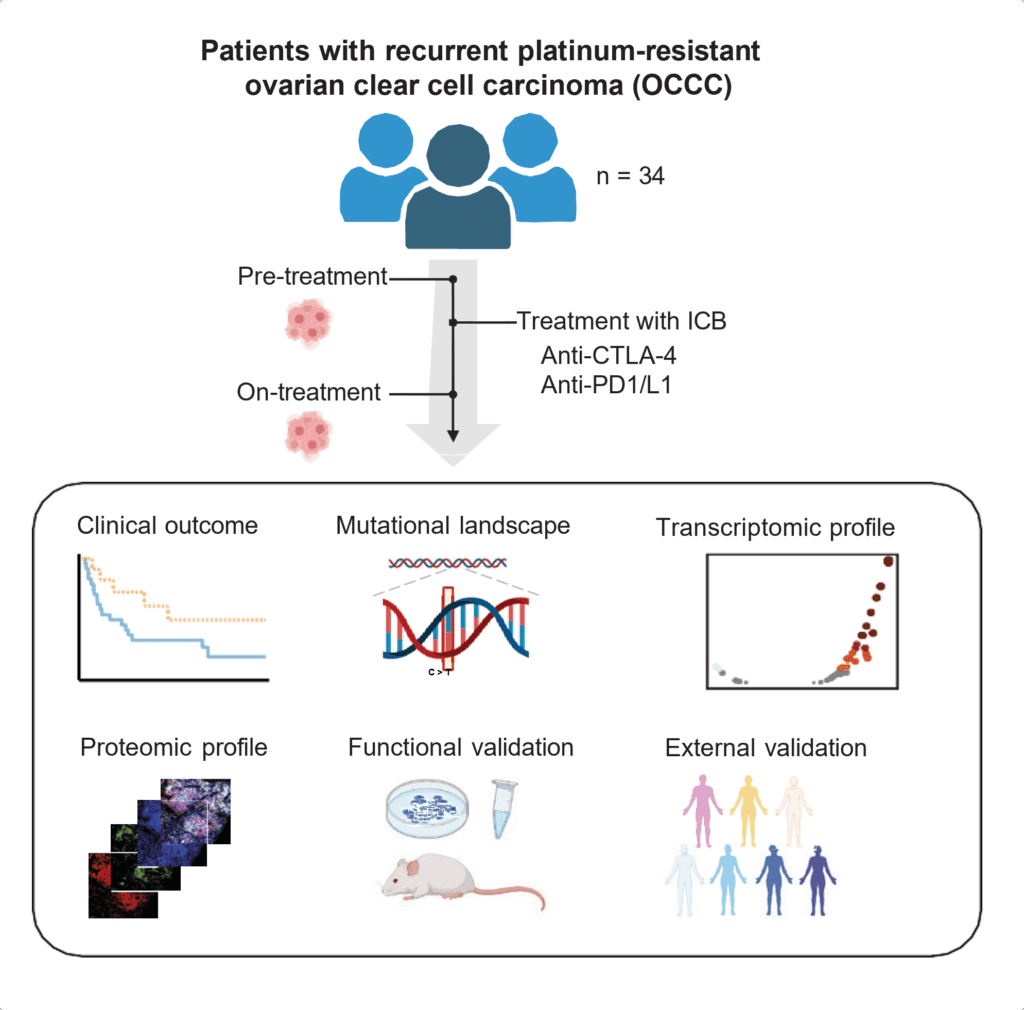
The figure was taken from the original publication ‘PPP2R1A mutations portend improved survival after cancer immunotherapy’ published open access under the Creative Commons Attribution-NonCommercial-NoDerivatives 4.0 International License. http://creativecommons.org/licenses/by-nc-nd/4.0/
..
Read more in Nature
.

2. PPP2R1A mutations portend improved survival after cancer immunotherapy

  • 1. Long-Term Latency of Highly Mutated Cells in Normal Mouse Skin Is Reversed by Exposure to Tumor Promoters and Chronic Tissue Damage
  • 2. PPP2R1A mutations portend improved survival after cancer immunotherapy
  • 3. Neutrophils physically interact with tumor cells to form a signaling niche promoting breast cancer aggressiveness
  • 4. Spatial mapping of transcriptomic plasticity in metastatic pancreatic cancer
  • 5. Impaired T cell and neoantigen retention in time-serial analysis of metastatic non-small cell lung cancer in patients unresponsive to TIL cell therapy
  • 6. The source of dietary fat influences anti-tumour immunity in obese mice
  • 7. Nerve-to-cancer transfer of mitochondria during cancer metastasis
  • 8. Stromal lipid species dictate melanoma metastasis and tropism
  • 9. TIM3+ breast cancer cells license immune evasion during micrometastasis outbreak
  • 10. IL-17A-secreting γδ T cells promote resistance to CDK4/CDK6 inhibitors in HR+HER2- breast cancer via CX3CR1+ macrophages
Previous
Next


Tags: EACR Top Ten Cancer Research PublicationsHighlights in Cancer Research

Related Posts

“The best scientific event I have ever participated in”: Rafaela’s EACR Travel Grant leads to new opportunities

“The best scientific event I have ever participated in”: Rafaela’s EACR Travel Grant leads to new opportunities

April 20, 2026

The EACR, AACR, and The Mark Foundation for Cancer Research recently teamed up to offer a number of travel grants to help EACR or AACR members...

VIDEO | Streamlining Tumour Interpretation with the Cancer Genome Interpreter

VIDEO | Streamlining Tumour Interpretation with the Cancer Genome Interpreter

April 22, 2026

https://www.youtube.com/watch?v=KdMqmIIgNYo Click above to watch On 9 April 2026, the EACR hosted a free webinar bringing together leading experts to explore the Cancer Genome Interpreter (CGI)...

Patients Shaping Cancer Research – Episode 31 of The Cancer Researcher Podcast

Patients Shaping Cancer Research – Episode 31 of The Cancer Researcher Podcast

April 13, 2026

What does it take to bridge the gap between researchers and patients? In this episode, scientists, oncologists, and patient advocates from Canada, the United States, and...

The Cancer Researcher EACR logo

About Us

The Cancer Researcher is an online magazine for the cancer research community from the European Association for Cancer Research.

The EACR, a registered charity, is a global community for those working and studying in cancer research. Our mission is “The advancement of cancer research for the public benefit: from basic research to prevention, treatment and care.”

RECENT POSTS

“The best scientific event I have ever participated in”: Rafaela’s EACR Travel Grant leads to new opportunities
Community

“The best scientific event I have ever participated in”: Rafaela’s EACR Travel Grant leads to new opportunities

April 20, 2026
VIDEO | Streamlining Tumour Interpretation with the Cancer Genome Interpreter
Features

VIDEO | Streamlining Tumour Interpretation with the Cancer Genome Interpreter

April 22, 2026
The Cancer Researcher

© 2025 EACR

Navigate site

  • About
  • Privacy
  • Main EACR website

Follow us

No Result
View All Result
  • Home
  • About
  • The Cancer Researcher Podcast
  • #KeepResearchCurious

© 2025 EACR