


The EACR’s ‘Highlights in Cancer Research’ is a regular summary of the most interesting and impactful recent papers in cancer research, curated by the Board of the European Association for Cancer Research (EACR).
The list below appears in no particular order, and the summary information has been provided by the authors unless otherwise indicated.
Use the dropdown menu or ‘Previous’ and ‘Next’ buttons to navigate the list.
Dai, Y., Knisely, A., Yano, M., Dang, M. et al. Nature. 644: 537–546. (2025).
doi: 10.1038/s41586-025-09203-8.

Summary of the findings
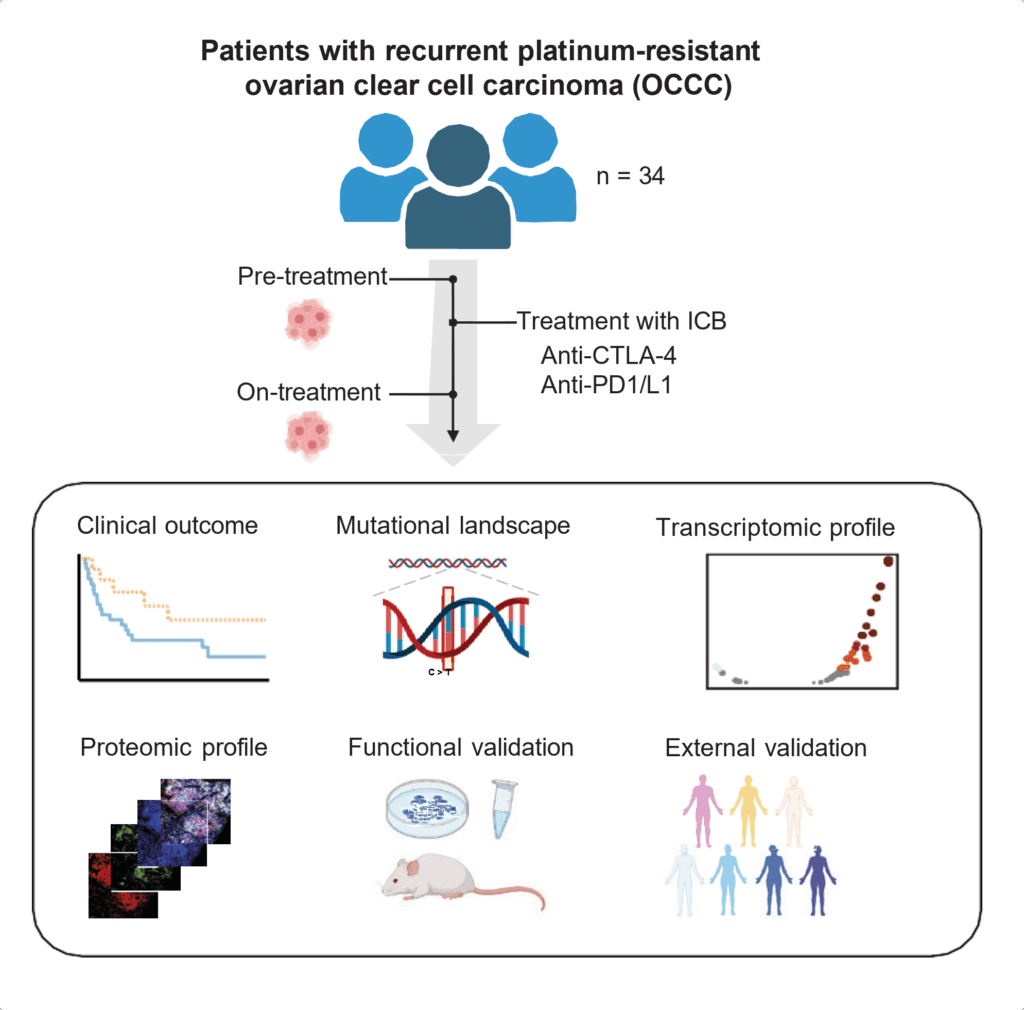
Immune checkpoint blockade (ICB) has limited efficacy in ovarian cancer, where predictive biomarkers are lacking. However, about 5-15% of patients respond and are often over-represented in the clear cell histological subtype. In this study, we identified several lines of evidence pointing to loss-of-function somatic mutations in PPP2R1A, a scaffold subunit of the phosphatase 2 A (PP2A) complex, as a predictor of improved outcomes with ICB. Among patients with platinum-resistant ovarian clear cell carcinomas (OCCC), PPP2R1A-mutated tumors were associated with significantly prolonged overall and progression-free survival compared to wild-type cases. Validation across independent ICB-treated cohorts from multiple cancer types confirmed this association. Mechanistic analyses demonstrated that PPP2R1A mutations enhanced IFNγ signaling, increased immune infiltration, and promoted expansion of CD45RO⁺CD8⁺ T cells, with evidence of tertiary lymphoid structures. Preclinical models further showed that genetic or pharmacologic inhibition of PPP2R1A sensitized tumors to ICB and CAR-T therapies. Collectively, these findings suggest that PPP2R1A mutations represent a predictive biomarker of ICB response and a potential therapeutic target. Further studies are ongoing to clarify mechanisms and evaluate PP2A inhibition as a strategy to broaden immunotherapy benefit.
.
Future Impact
If validated, our findings establish PPP2R1A mutations leasing to PP2A inhibition as a predictive biomarker for immune checkpoint blockade responsiveness, with potential relevance across multiple tumor types. Beyond biomarker development, pharmacologic inhibition of PP2A may replicate the immunologic advantages of PPP2R1A loss, offering a strategy to sensitize otherwise resistant tumors to immunotherapy. Integration of PPP2R1A testing into clinical trials could guide patient selection, while PP2A-targeted therapies may expand treatment options. Together, these approaches could transform immunotherapy for ovarian clear cell carcinoma and other malignancies, improving durability and breadth of clinical benefit.
.
..