
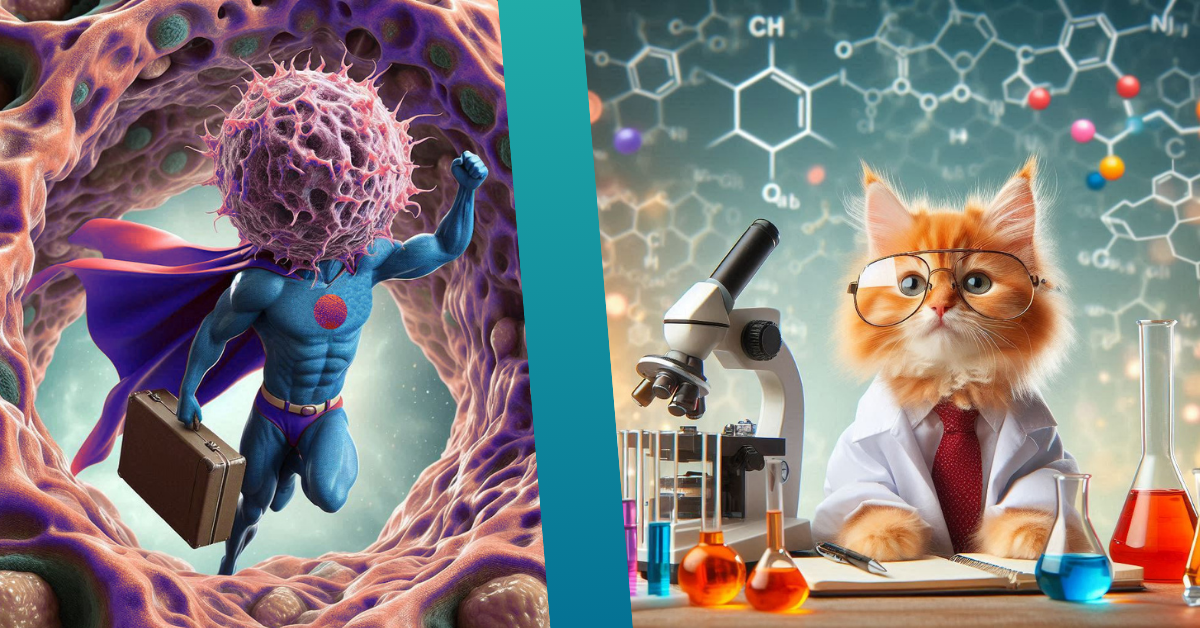
Imagine a teeny-tiny cell living peacefully in some organ alongside its clone-sisters. Now, picture it suddenly, somehow, acquiring superpowers: it is now able to grow faster, change shape, and even travel long distances and ‘move abroad’. But how did it gain these abilities? Will they last forever? Is there a kryptonite? Will this cell conquer the body, or ultimately surrender?

Cancer research seeks to unravel these and many other questions, exploring every possible outcome of this biological suspense. Curiosity fuels this quest for knowledge across all fields, from the smallest atom to the vast expanse of stars in the universe. As stated by American writer Zora Neale Hurston, “Research is formalised curiosity. It is poking and prying with a purpose. It is a seeking that he who wishes may know the cosmic secrets of the world and they that dwell therein.” Our innate human inquisitiveness, which has been observing and “playing” with its surroundings since the dawn of our species, is the essential driver in the pursuit of answers to questions that haven’t even been formulated… yet.
Personally, I find the distinction between hypothesis-driven and curiosity-driven research to be somewhat conflicting. A hypothesis, by definition, is “an idea or explanation based on known facts but not yet proven”. To hypothesise, one must wonder, think, and conjecture—all of which stem from an “eager wish to know or learn about something” (note the definition of curiosity). Scientists are constantly thinking, hypothesising, and mentally designing experiments, no matter what they are doing. This is not necessarily because we are workaholics; it is our curious minds that keep the wheels turning, even after hours. Whether driven by altruistic, economic, or merely scientific motives, every piece of research is preceded by pure curiosity. The urge to better understand the intricate mechanisms that allow a group of cells to take over an entire organism is an itch that desperately needs scratching.
People often say that we, as cancer researchers, are incredibly kind-hearted. In truth, many of us simply find cancer deeply fascinating. Our thirst for knowledge brought us here—the intrinsic need to understand this cellular-level evolution that creates smart, yet self-destructive, tumoral colonies. We are fortunate that our passions harmonise with the opportunity to improve lives (maybe even save some) and make a meaningful difference for cancer patients. This is certainly an immensely rewarding outcome, for which we owe our curiosity.
Nevertheless, we must never lose sight that curiosity is not only in our nature; it is also a flame that needs to be kindled. As teachers, mentors, and even colleagues, we must promote and reward great ideas, even if they do not work out. Increasingly, we face pressure to prioritise trending topics, sometimes suppressing our instincts and interests, and impeding innovation. We must join forces to keep research curious. Questioning and critical thinking should be praised, as they are the first steps in advancing research. Even great Albert Einstein humbly said curiosity was more important than knowledge, claiming he had no special talents, only passionate curiosity. Being deeply interested in a subject is the key to a successful research career and to remarkable, transformative, groundbreaking discoveries. It will empower researchers to be resilient in the face of failure and inspire us to continue pursuing answers. We should ensure this spark never perishes.
While it is said that curiosity killed the cat, the often-forgotten second part of the proverb assures us satisfaction brought it back. And even if not, that cat most definitely died fulfilled, having learned a thing or two more!

 About the author:
 About the author:
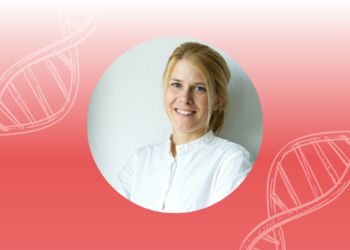
Agustina Sabater is a biotechnologist and a third-year PhD student at Universidad de Buenos Aires (UBA), Argentina. She also serves as Head of Practical Assignments at Universidad Argentina de la Empresa (UADE). Sabater’s research focuses on developing transcriptional signatures to predict prostate cancer prognosis and support clinical decision-making. Agustina was granted the Global Scholar-In-Training Award from AACR, and a Travel Grant from EACR. She is also an active participant in the EACR Ambassador Programme and co-chair of the Communication Committee of her institution. In addition to her academic work, she enjoys teaching sciences, writing and communicating science to the public.