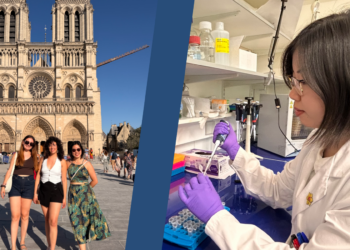

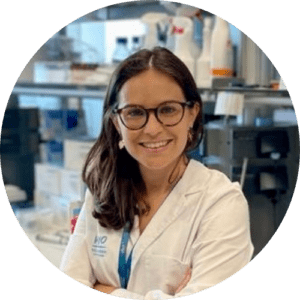
Irene Casanova Salas was the 2024 recipient of an EACR-AstraZeneca Postdoctoral Fellowship, funding that is awarded for a period of up to three years to support excellent postdoctoral researchers in laboratories throughout Europe and the world.
She is a Postdoctoral Research Fellow at the Vall d’Hebron Institute of Oncology (VHIO), where she studies prostate cancer (PC), and hopes to develop a new extracellular vesicle-based liquid biopsy assay to monitor prostate cancer tumor evolution and therapy adaptation. We recently caught up with her to hear about the progress she has made in her research during these first two years of her fellowship.
Can you tell us about the topic of the research you are undertaking during your fellowship?
My current research focuses on monitoring adaptive transcriptomic changes during therapy resistance and disease progression using a novel extracellular vesicle (EV)-based liquid biopsy assay. This innovative approach will be applied to larger cohorts of patient samples and patient-derived xenograft (PDX) models to identify biomarkers of treatment response and disease evolution. This minimally invasive method aims to provide real-time insights into cancer progression and resistance mechanisms.
What have been your highlights of the second year of the fellowship?
The second year of my fellowship was marked by significant scientific and career milestones. I presented my work at the ISEV Annual Meeting in Vienna (April 2025), highlighting advances in extracellular vesicle–based biomarkers, and delivered a talk at the AACR Prostate Cancer Meeting in Boston (January 2026), where I shared results from our integrative liquid biopsy analyses.
A major achievement was the completion of ctDNA and EV-RNA isolation, sequencing, and integrative analysis in a prospective cohort of more than 145 patients with metastatic prostate cancer. These data provide important insights into the genomic and transcriptomic landscape of advanced disease, and a manuscript is currently in preparation.
In parallel, I developed and conducted therapeutic studies in PDX models, incorporating plasma EV-RNA sequencing to assess transcriptomic adaptations to different treatment strategies. This work strengthens the translational bridge between preclinical models and liquid biopsy profiling.
Finally, I was awarded both a Ramón y Cajal fellowship and an ERC Starting Grant, key recognitions that support my transition toward research independence.
At this stage, how do you think the fellowship has been beneficial to your research and your career?
This fellowship is playing a pivotal role in consolidating my transition toward independence as a junior group leader. The dedicated funding has significantly increased the productivity and continuity of my projects, enabling me to manage larger and more complex translational studies. It also provides the stability needed to generate high-quality data that will underpin future grant applications and long-term research directions. Beyond financial support, the fellowship strengthens my integration within an international scientific network, expanding collaborative opportunities and enhancing the visibility and impact of my work in the field.
More about EACR-AstraZeneca Postdoctoral Fellowships
The aims of this funding are to support the career development of outstanding EACR members in the early stage of their careers, and to train the next generation of scientists engaged in innovative research in areas where AstraZeneca has demonstrated leadership through its pipeline and research programs. Learn more here.