
The Cancer Researcher
  • Home
  • About
  • The Cancer Researcher Podcast
  • #KeepResearchCurious
No Result
View All Result
  • Home
  • About
  • The Cancer Researcher Podcast
  • #KeepResearchCurious
No Result
View All Result
The Cancer Researcher
No Result
View All Result

The EACR’s Top 10 Cancer Research Publications: February 2022

October 17, 2025
EACR top 10 cancer research publications

The EACR’s Top 10 Cancer Research Publications is a regular summary of the most interesting and impactful recent papers in cancer research. It is curated by the Board of the European Association for Cancer Research (EACR).

The list below appears in no particular order, and the summary information has been provided by the authors.

Use the dropdown menu or ‘Previous’ and ‘Next’ buttons to navigate the list.

5. Acquired resistance to anti-MAPK targeted therapy confers an immune-evasive tumor microenvironment and cross-resistance to immunotherapy in melanoma

  • 1. Hepatic stellate cells suppress NK cell-sustained breast cancer dormancy
  • 2. Commensal bacteria promote endocrine resistance in prostate cancer through androgen biosynthesis
  • 3. Phase I/II Trial of Vemurafenib in Dogs with Naturally Occurring, BRAF-mutated Urothelial Carcinoma
  • 4. Dietary palmitic acid promotes a prometastatic memory via Schwann cells
  • 5. Acquired resistance to anti-MAPK targeted therapy confers an immune-evasive tumor microenvironment and cross-resistance to immunotherapy in melanoma
  • 6. Fasting-Mimicking Diet Is Safe and Reshapes Metabolism and Antitumor Immunity in Patients with Cancer
  • 7. Low neoantigen expression and poor T-cell priming underlie early immune escape in colorectal cancer
  • 8. Multi-omic machine learning predictor of breast cancer therapy response
  • 9. Pharmacologic Reduction of Mitochondrial Iron Triggers a Noncanonical BAX/BAK-Dependent Cell Death
  • 10. Fecal microbiota transplant promotes response in immunotherapy-refractory melanoma patients
Previous
Next

Haas, L., Elewaut, A., Gerard, C.L. et al. Nat Cancer 2, 693–708 (2021).

“This article shows the importance of preclinical studies to identify the best combination strategy of targeted and immuno-therapies.”

EACR Board

Summary of the findings

The combination (or sequential application) of different cancer therapies represents a powerful opportunity to increase response and cure rates for cancer patients. However, how cancer cells and the crosstalk within the tumor microenvironment change upon different therapeutic challenges, and how this might influence the outcome of subsequent therapies is poorly understood.

In this study we show that when tumors relapse after targeted therapy with MAPK pathway inhibitors, they are cross-resistant to immunotherapies, despite the different modes of action of these therapies. We found that cross-resistance is mediated by a cancer cell–instructed, immunosuppressive tumor microenvironment that lacks functional CD103+ dendritic cells, precluding an effective T cell response. Restoring the numbers and functionality of CD103+ dendritic cells can re-sensitize cross-resistant tumors to immunotherapy. We showed that cross-resistance is controlled by a reactivated and rewired MAPK signaling pathway, which not only restores its cancer cell-intrinsic oncogenic functions but, in addition, drives an immune-evasive gene expression program that establishes a completely different immune phenotype conferring resistance to immunotherapy. Importantly, this rewired state not only dominates RAFi and RAFi/MEKi-resistant tumors but is already present in a subset of therapy-naïve tumors that respond poorly to immunotherapy. Our work provides mechanistic evidence for cross-resistance between two unrelated therapies, and a scientific rationale for treating patients with immunotherapy before they acquire resistance to targeted therapy.

Future impact of the findings

Currently, more than half of BRAF-mutant patients initially receive targeted therapy, often until they acquire resistance. Our data, together with other work and data from prospective phase III clinical trials e.g. DREAMseq/NCT02224781, provide a strong scientific rationale for using immunotherapy as a first-line treatment. The concept of targeted-therapy/immunotherapy cross-resistance in BRAF-mutant melanoma may also extend to other tumor types and therapies, which should be evaluated. Collectively, our work highlights the importance of understanding the complex and dynamic biology of cancer cells and the tumor microenvironment in all three phases of therapy, i.e., the therapy-naïve, the responding/adapting, and the therapy-resistant state in order to guide the rational combination and optimal sequence of therapies.

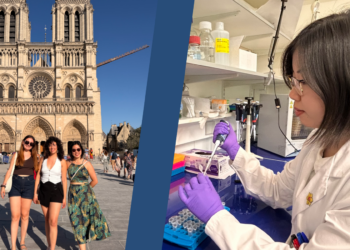
Read more in Nature Cancer

5. Acquired resistance to anti-MAPK targeted therapy confers an immune-evasive tumor microenvironment and cross-resistance to immunotherapy in melanoma

  • 1. Hepatic stellate cells suppress NK cell-sustained breast cancer dormancy
  • 2. Commensal bacteria promote endocrine resistance in prostate cancer through androgen biosynthesis
  • 3. Phase I/II Trial of Vemurafenib in Dogs with Naturally Occurring, BRAF-mutated Urothelial Carcinoma
  • 4. Dietary palmitic acid promotes a prometastatic memory via Schwann cells
  • 5. Acquired resistance to anti-MAPK targeted therapy confers an immune-evasive tumor microenvironment and cross-resistance to immunotherapy in melanoma
  • 6. Fasting-Mimicking Diet Is Safe and Reshapes Metabolism and Antitumor Immunity in Patients with Cancer
  • 7. Low neoantigen expression and poor T-cell priming underlie early immune escape in colorectal cancer
  • 8. Multi-omic machine learning predictor of breast cancer therapy response
  • 9. Pharmacologic Reduction of Mitochondrial Iron Triggers a Noncanonical BAX/BAK-Dependent Cell Death
  • 10. Fecal microbiota transplant promotes response in immunotherapy-refractory melanoma patients
Previous
Next
Tags: EACR Top Ten Cancer Research Publications

Related Posts

“The best scientific event I have ever participated in”: Rafaela’s EACR Travel Grant leads to new opportunities

“The best scientific event I have ever participated in”: Rafaela’s EACR Travel Grant leads to new opportunities

April 20, 2026

The EACR, AACR, and The Mark Foundation for Cancer Research recently teamed up to offer a number of travel grants to help EACR or AACR members...

VIDEO | Streamlining Tumour Interpretation with the Cancer Genome Interpreter

VIDEO | Streamlining Tumour Interpretation with the Cancer Genome Interpreter

April 22, 2026

https://www.youtube.com/watch?v=KdMqmIIgNYo Click above to watch On 9 April 2026, the EACR hosted a free webinar bringing together leading experts to explore the Cancer Genome Interpreter (CGI)...

Patients Shaping Cancer Research – Episode 31 of The Cancer Researcher Podcast

Patients Shaping Cancer Research – Episode 31 of The Cancer Researcher Podcast

April 13, 2026

What does it take to bridge the gap between researchers and patients? In this episode, scientists, oncologists, and patient advocates from Canada, the United States, and...

The Cancer Researcher EACR logo

About Us

The Cancer Researcher is an online magazine for the cancer research community from the European Association for Cancer Research.

The EACR, a registered charity, is a global community for those working and studying in cancer research. Our mission is “The advancement of cancer research for the public benefit: from basic research to prevention, treatment and care.”

RECENT POSTS

“The best scientific event I have ever participated in”: Rafaela’s EACR Travel Grant leads to new opportunities
Community

“The best scientific event I have ever participated in”: Rafaela’s EACR Travel Grant leads to new opportunities

April 20, 2026
VIDEO | Streamlining Tumour Interpretation with the Cancer Genome Interpreter
Features

VIDEO | Streamlining Tumour Interpretation with the Cancer Genome Interpreter

April 22, 2026
The Cancer Researcher

© 2025 EACR

Navigate site

  • About
  • Privacy
  • Main EACR website

Follow us

No Result
View All Result
  • Home
  • About
  • The Cancer Researcher Podcast
  • #KeepResearchCurious

© 2025 EACR