
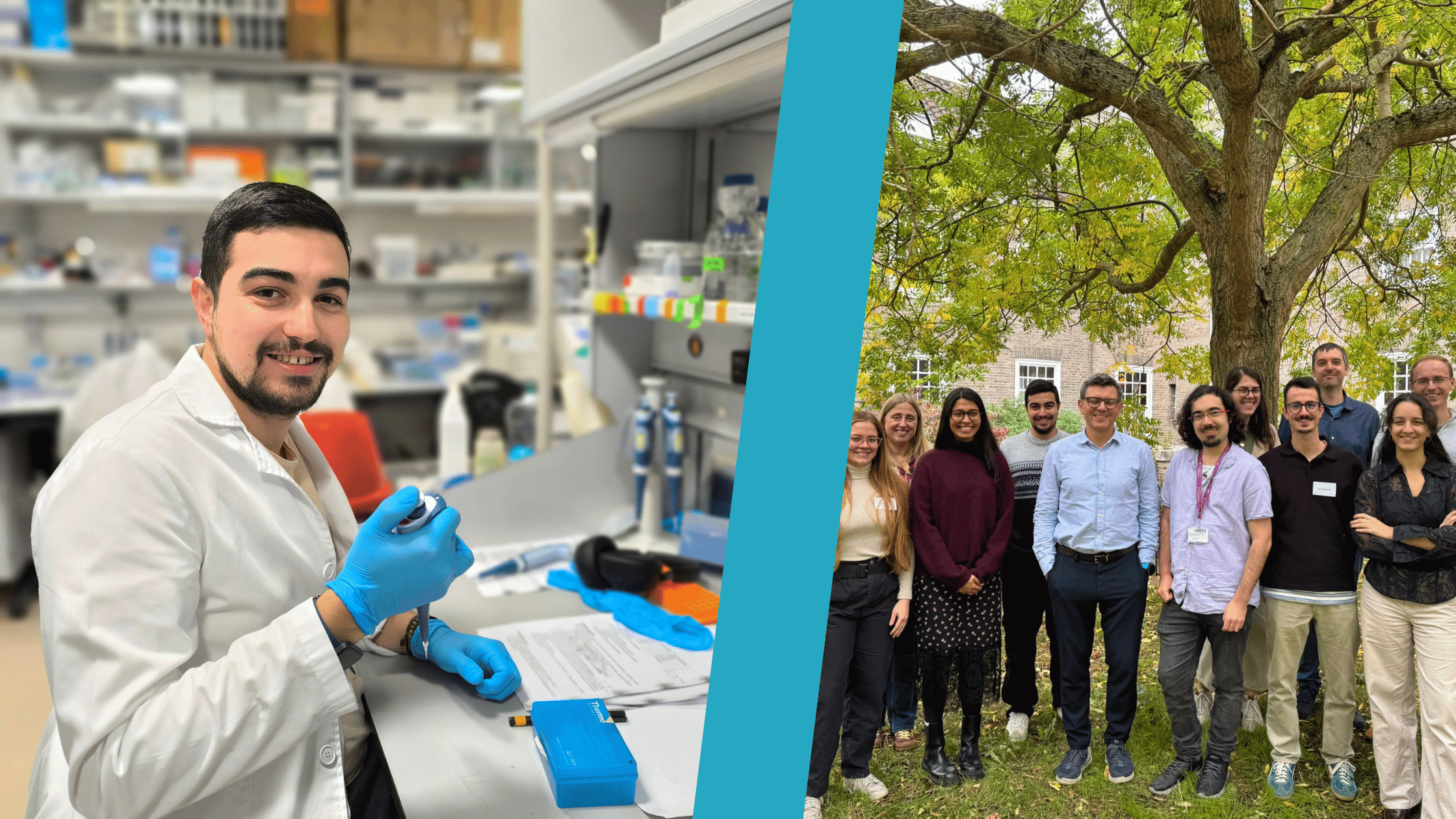
Óscar Monteagudo García is a PhD student at the Centro de Investigación del Cáncer (CIC) – Instituto de Biología Molecular y Celular del Cáncer (IBMCC), Salamanca, Spain who received an EACR Travel Fellowship to visit and work at Medical Research Council – Mitochondrial biology Unit (MRC-MBU), in Cambridge, UK between 23 September and 23 December 2025.
The EACR, with support from Worldwide Cancer Research, provides Travel Fellowships of up to €3,500 to enable early-career cancer researchers to gain new skills through a short-term visit to a lab or research group in another country.
You can read about other Travel Fellows and their experiences here.
What is the topic of your current research?
In recent years, one of the main problems in prostate cancer is that tumours can become resistant to available treatments, leaving very limited options for patients. Our work aims to understand what happens inside cancer cells when this resistance develops. By studying these changes, we hope to identify new weaknesses in the tumour and propose alternative or more specific treatments for patients whose cancer no longer responds to standard therapies.
Why did your decide to apply for an EACR Travel Fellowship?
This fellowship was a very good opportunity for me to continue developing my scientific career by learning a different research topic directly from experts in the field. It also allowed me to see how research is carried out in another laboratory and in another country, which helped me understand different ways of working. I decided to apply for the EACR Travel Fellowship because it came at the right moment in my career. I have always been interested in cancer research, and receiving support from the EACR was very motivating for me.
Why did you choose the host lab?
The project I am working on started to point towards mitochondrial bioenergetics, but my home lab mainly focuses on RNA biology and has limited experience in mitochondrial research. For this reason, we looked for a laboratory with strong expertise in mitochondria. The host lab at Cambridge had a solid background in this field and was therefore a very good fit for our project.
Can you summarise the research you did or what you learned on your visit?
During my visit, I learned several techniques for studying mitochondrial bioenergetics. We already knew that our protein of interest affected mitochondrial function, but we did not know how. During the stay, I analyzed mitochondrial protein synthesis in chemotherapy-resistant cells and after depletion of the protein of interest. I also studied the assembly of the mitochondrial electron transport chain complexes. In addition, since our protein is involved in the methylation of mitochondrial tRNAs, I assessed mitochondrial tRNA methylation levels.
Did you take part in any interesting local activities?
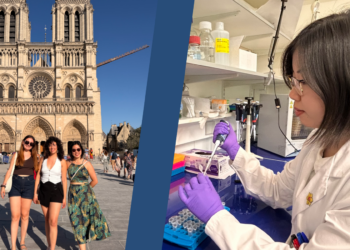
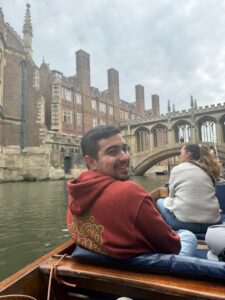
I went punting on the River Cam, which is a common local activity. I also visited different university colleges and museums in the city. During my stay, I had the opportunity to visit London and see the British Museum. As I was there during the Christmas period, I also visited the Christmas markets and took part in the lab’s Christmas celebration.
“The techniques I learned can now be implemented in our home laboratory and applied to future projects.”
Was there anything you particularly liked about the host institution? Did you have a personal mentor or anyone who particularly helped you?
There were some differences compared to my home institution. The laboratories were larger and there was more space to work. They also had separate office areas, which made it easier to focus on computer work. In general, the equipment was newer and shared among different groups. I also liked that they organised regular social activities, which helped interaction between labs. Regarding supervision, guidance depended on the technique. For each experiment, I was helped by the person in the lab with the most experience in that method, which allowed me to learn from many different lab members.
Have you brought back any specific knowledge or techniques that benefitted your home lab?
Yes, I learned several techniques that were not previously established in my home lab, such as Blue Native electrophoresis, metabolic labeling, mitochondrial tRNA methylation assays by primer extension, and glucose/galactose growth curves. These techniques can now be implemented in our laboratory and applied to future projects. We plan to continue the collaboration between our labs on the project developed during my internship, as we hope to publish the resulting manuscript. After that, there is also the possibility of continuing the collaboration through a parallel project in the same research direction.
How has this visit been beneficial to your research and your career?
This visit was very useful for my research, as I learned new techniques that were not established in my home lab and performed them with expert supervision. This was especially helpful in cases of troubleshooting. From a career perspective, it allowed me to gain basic but solid knowledge of mitochondrial biology, a field in which I previously had little experience. The seminars and lab meetings were also very helpful and will be useful for my PhD and future research work.
Want to find out more?

If you are interested in applying for the Travel Fellowship scheme, please click here for more information: EACR Travel Fellowships