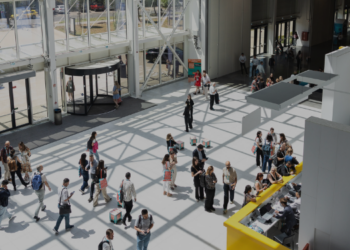
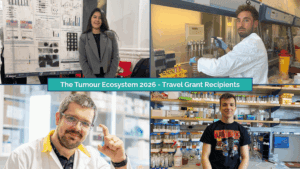
We met in Bergamo, Italy for the EACR Conference: The Tumour Ecosystem between 17 and 19 March 2026. This EACR conference covered the latest exciting breakthroughs on multiple aspects of the tumour microenvironment, including the intricate interactions of cancer cells with the immune system and with specific stromal cells in multiple organs.
Supported by Worldwide Cancer Research, we were delighted to award several Travel Grants to help cancer researchers in need of financial assistance to attend the event.
Read on to learn about their experience of the conference.
Maria Clara da Silva Souza
PhD Student, Institute of Biomedical Sciences, University of Sao Paulo, Brazil
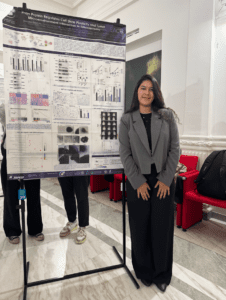
Research: Glioblastoma (GBM) is the most common malignant brain tumour in adults, characterised by significant heterogeneity, high invasiveness, and limited response to therapy. At the Laboratory of Neurobiology and Stem Cells, my research focuses on understanding the role of the cellular prion protein (PrPC) in GBM progression. As a membrane scaffold protein, PrPC regulates neural functions essential for brain homeostasis and interactions between cells and the extracellular matrix. By combining a human-induced GBM model and PRNP CRISPR-mediated gene editing, we demonstrate that PrPC plays a vital role in supporting the most aggressive subtype of GBM. Understanding PrPC’s function in GBM during tumour molecular transition may lead to new strategies against cancer aggressiveness and improve patient outcomes.
What was a personal highlight of the conference for you?
For me, three moments stood out as personal highlights of the event. First, the “Meet the Expert” panel discussion offered valuable insights into academic careers and progression. Hearing leading researchers discuss work–life balance and the transition from early-career stages to principal investigator roles highlighted how career paths can vary across institutions, reinforcing the importance of choosing environments aligned with one’s goals. As a PhD student, engaging in these discussions gave me a strong sense of belonging and greater clarity for future decisions. Second, presenting my work during the poster session was a key experience, as the feedback I received was both insightful and directly applicable to advancing my research. Finally, the closing keynote by Frank Winkler was particularly inspiring, emphasising the importance of approaching scientific questions from multiple perspectives, an approach reflected in his outstanding work.
Were there any networking moments that stood out to you?
The conference was a great source of inspiration for my research, providing valuable insights and fostering productive discussions on future directions. The community was highly approachable, and the organising committee created a welcoming environment. As a solo attendee, I particularly appreciated the opportunity to connect with peers during networking sessions and poster discussions. Notably, I had the chance to engage with a leading researcher in my field who studies my protein of interest, opening potential avenues for a future postdoctoral position. Presenting my work to her and receiving such positive feedback from an expert was especially meaningful. In addition, attending the lectures by Johanna Joyce and Frank Winkler was highly inspiring, offering
valuable perspectives on tumour biology and the tumour microenvironment. The conference dinner was another highlight, providing a relaxed setting for direct conversations with established researchers and encouraging open scientific exchange and potential collaborations.
How was this conference different from others you have attended?
The Tumour Ecosystem conference was my first EACR meeting, and I greatly enjoyed the experience. Its smaller scale facilitated personal and meaningful interactions with students and researchers from diverse backgrounds. The scientific programme also included several dedicated networking activities, such as the solo meet-up, poster discussions, and the networking quiz, which fostered connections and encouraged the exchange of ideas across different career stages. Particularly, this conference offered a distinct perspective compared to others I have attended, emphasising tumours as complex ecosystems shaped by interactions among “healthy” cell types and matrix. In contrast, my previous experiences were largely focused only on tumour cells, with limited attention to the microenvironment. This shift in perspective reinforced the importance of incorporating this complexity to capture tumour biology.
Is there anything else you’d like to mention?
I would like to thank the Worldwide Cancer Research and EACR for the travel grant. Without their support, I would not have been able to participate and present my work. I am very grateful for the opportunity to attend so many inspiring lectures, discover new research approaches, and connect with researchers from around the world. I am immensely grateful for the environment and the chance to present my research! It was unforgettable. The conference was scientifically enriching, providing new perspectives for my own work. I look forward to participating in future editions!
Manuel Mastel
Postdoctoral Researcher, German Cancer Research Center (DKFZ), Heidelberg, Germany
Research: I study how colorectal cancer cells escape the immune system and spread in the body. I found that some tumour cells switch into a special state that helps them hide from immune attack. These cells use specific proteins to block part of the immune defense, effectively shielding themselves from destruction. By targeting this mechanism, we can restore immune control and potentially prevent metastasis. My work aims to uncover these hidden survival strategies and translate them into new therapies for cancer patients.
What was a personal highlight of the conference for you?
A personal highlight of the conference was the dinner at a traditional Italian restaurant. After a long and intellectually stimulating day, sharing authentic Italian food while engaging with fellow participants was particularly rewarding. These informal conversations provided a valuable extension of the scientific programme, allowing us to reflect on the day’s findings and exchange perspectives on our respective research. Beyond the scientific discussions, I found it especially meaningful to learn about the individual journeys, motivations, and backgrounds of other attendees. This combination of scientific exchange and personal connection made the experience both enriching and memorable.
How was this conference different from others you have attended?
In my experience, this conference stood out in several important ways. First, the organisation was excellent, smooth, welcoming, and thoughtfully structured, creating an inclusive atmosphere in which participants felt integrated and engaged. Second, the scientific content was of outstanding quality and highly relevant to my research, allowing me to gain valuable insights and new perspectives.
The setting in Bergamo also contributed significantly, providing a beautiful and relaxed environment that encouraged open discussion and interaction. In addition, the size of the conference struck an ideal balance: large enough to offer diverse viewpoints, yet small enough to enable meaningful exchanges and personal connections.
Most importantly, the community itself made a lasting impression. The openness, constructive feedback, and genuine willingness to support one another fostered a collaborative spirit that is essential for advancing the field. The combination of these factors made this conference a particularly memorable and impactful experience for me.
Did you take part in any interesting local activities in your free time outside of the conference?
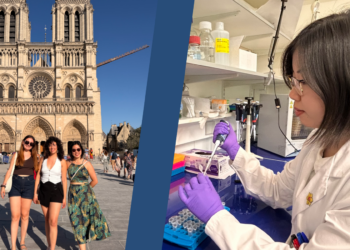
Yes, absolutely. Bergamo is a beautiful and culturally rich city that is well worth exploring. I visited the historic Città Alta (Upper Town), including its UNESCO-listed Venetian walls, which offer stunning views and a unique atmosphere. Exploring the old town also provided the perfect opportunity to experience local cuisine. I tried the famous Stracciatella gelato, which originated in Bergamo, as well as the traditional pasta dish Casoncelli alla Bergamasca. These small excursions offered a refreshing balance to the intensive conference schedule, helping me process both the culinary and scientific input of the day. Overall, engaging with the local culture added an important and enriching dimension to the conference experience.
Is there anything else you would like to mention?
I would like to sincerely thank the EACR and Worldwide Cancer Research for supporting this travel grant, which made it possible for me to attend the conference. I am also very grateful to the organising committee and the EACR team for delivering such a well-structured and inspiring event.
My goal is to continuously grow, both as a researcher and as an individual. This conference provided valuable input on both levels. The scientific discussions have helped shape my thinking and advance my research, while the personal interactions have been equally motivating. Overall, this experience has strengthened my commitment to conducting research that ultimately aims to contribute to and positively impact patients’ lives.
Sebastian Igelmann
Postdoctoral Researcher, VIB-KuLeuven Center for Cancer Biology, Leuven, Belgium
Research: My research explores why melanoma, a skin cancer, spreads more easily to the liver as we age. I study immune cells called NK cells and T cells which normally detect and eliminate cancer. In older individuals, these cells become less effective due to age-driven changes in their metabolism and how they communicate with the liver environment. These weaknesses give melanoma an opportunity to grow. By uncovering how ageing reshapes liver immunity, we aim to develop immunotherapies that boost NK and T cell function specifically in the liver, helping to prevent or treat metastatic disease in older patients.
What was a personal highlight of the conference for you?
A major highlight of the conference for me was the networking. I had the chance to discuss my research with world leaders in the tumour microenvironment field, especially those studying how tumours interact with environmental factors like ageing and metabolism. Moreover, I got interesting comments on my work following my presentation that will further guide my future research.
Were there any social or networking highlights you want to tell us about?
Discussing my research with experts such as Ashani Weeraratna, Direna Alonso-Curbelo, or Jacco van Rheenen on how ageing can drive tumour progression was valuable as the conversations inspired ideas around how to tackle some of the ageing-related research questions. Likewise, having discussions with immunology experts such as Andrea Schietinger and Anna Obenauf provided insights into how immune dysfunction shapes cancer progression and how to better approach NK and T cell–focused research.
How was this conference different from others you have attended?
The EACR Conference on The Tumour Ecosystem: From Mechanisms to Novel Therapeutics stood out from other meetings I’ve attended because of its focused, smaller format, which created great opportunities for networking and scientific discussions. Its three‑day duration made it easy to fit into a busy schedule while still offering a concentrated programme of high‑quality talks and interactions that felt both productive and energising.
How has the conference inspired you in your research?
The conference really gave me a boost. Hearing people talk so openly about their latest ideas—especially around ageing, metabolism, and immune responses—made me rethink a few angles in my own project. The mix of talks and casual discussions helped me see new ways to approach the NK/T cell questions I’m working on. It was also motivating to meet so many researchers who are genuinely excited about the same problems. I came back with fresh ideas, more confidence in my direction, and a lot of energy to try new things in the lab.
Nicolae Ciobu Zubenco
PhD Student, Columbia University, USA
Research: My research focuses on how diet and obesity can influence liver cancer and the body’s ability to fight it. We study how certain fats from Western-style diets are used by tumour cells to weaken immune cells that would normally attack the cancer. By understanding how food, metabolism, and the immune system interact, we hope to identify new ways to improve cancer treatments and develop therapies that help the immune system work more effectively against liver tumours.
What was a personal highlight of the conference for you?
A personal highlight of the conference was the opportunity to engage with the European research community and learn more about the exciting work being done in cancer immunology. As someone who looks forward to returning to Europe, it was especially meaningful to connect with researchers there. I was very excited to discuss ongoing research, exchange new ideas, and meet both peers and established leaders in the field. Those interactions made the experience particularly inspiring and memorable.
I also had the opportunity to reconnect with lab mates I had worked with during my undergraduate studies. It was very exciting to see how our projects and careers have progressed over time, and to revisit and discuss research we had previously worked on together. These interactions highlighted how meaningful long-term scientific connections can be, both personally and professionally.
How was this conference different from others you have attended?
I was particularly enthusiastic about the opportunity to present an oral communication at the conference, as it allowed me to share the results of my nearly completed thesis project. I was grateful to see that some people approached me to engage in further scientific discussions. In several cases, these conversations are now evolving into potential collaborations. This not only strengthened my confidence in communicating my work but also expanded my perspective on how research can develop through collaboration and shared ideas.
Did you take part in any interesting local activities in your free time outside of the conference?
I was very excited to travel back to Europe, especially to Bergamo, Italy, which I had not visited before. My first impression of Bergamo was that it is a small but very enchanting city, which felt very peaceful, yet full of history and charm. I could visit the beautiful fortress in the upper part. I also found it fascinating that Bergamo is the birthplace of Stracciatella ice cream. Overall, the atmosphere and the venue for the conference sessions were amazing, which made the whole experience even more enjoyable.
I could also spend time with both old and new friends outside the conference. We explored Bergamo, had some drinks together, and shared a great social experience. One particularly memorable moment was watching an intense Champions League football match, which added to the excitement of the trip and gave me a chance to experience the local passion for sport and community.
Interested in EACR Conferences and further Travel Grants?
We organise a variety of excellent cancer research conferences, both in person and virtual, where the latest research topics and interaction for participants are the very highest priorities.
To assist researchers who need financial assistance to attend our in-person conferences, we offer EACR-Worldwide Cancer Research Travel Grants. Recipients also get the opportunity to present their work as an oral or poster presentation. Each Travel Grant includes a free registration and funds to support travel and accommodation costs.
Make sure you add the dates of upcoming EACR Conferences to your diary now. Don’t forget we offer EACR member discounts on all of our registration fees