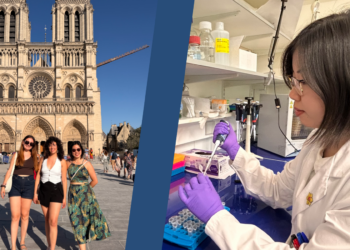


Research is serious business – except when it’s not! While most people imagine scientists wearing white lab coats and peering into microscopes with stern expressions, the truth is, research is often an unpredictable adventure full of excitement, curiosity, and, yes, even the occasional chaos. It’s like cooking without a recipe, except you’re mixing chemicals instead of ingredients (and trying not to blow anything up).
In a typical biology lab, we’re often deep into hypothesis-driven research, following careful steps and protocols. There’s order to this madness, and yes, it’s important. But here’s the thing: it’s curiosity that really keeps the flame burning. Curiosity is what led to some of the most avant-garde discoveries in biology, from the double-helix structure of DNA to CRISPR-Cas9, our modern molecular scissors. Without curiosity, research would just be another job. And where’s the fun in that?
Take my own experience in the lab (yes, I’ve had my fair share of pipette battles). The meticulous cumbersome repetition of experiments can make you feel like a research robot – until curiosity suddenly hits, and you find yourself straying off the beaten path. I remember one time when I was running a protein expression experiment (super exciting stuff, right?). I followed the standard protocol and got… well, standard results. But just as I was about to call it a day, curiosity kicked in. “What if I tweak this buffer composition a little?” I wondered. I went off-script, and guess what? I stumbled upon an unexpected protein interaction! That moment felt like finding treasure where I didn’t even know to look.
Sometimes, the best results come when you’re not trying to solve a big problem, but simply asking “What if?” You never know where those seemingly random questions will lead, and that’s the beauty of keeping research curious. One great example is the story of penicillin. Did you know Alexander Fleming wasn’t actively trying to find antibiotics when he discovered mould growing in his petri dishes (classic case of not cleaning up, right?). But his curiosity about why the mould was killing bacteria led to the development of one of the most important medical breakthroughs in history.
Curiosity-driven research also has its ‘unintended’ benefits, especially in cancer research. Did you know that the enzyme telomerase, which plays a crucial role in cancer cell immortality, was first discovered in a study on aging? The researchers weren’t thinking about cancer at all, but their work opened doors to progressive cancer therapies down the line. It’s amazing how many times curiosity in one field can spill over and create solutions in another – like when you go looking for a specific protein and end up unlocking a whole new pathway!
But let’s be honest: staying curious in the lab isn’t always easy. Between the pressure to publish, chase funding, and meet tight deadlines, it’s easy to fall into routine. Keeping that spark of curiosity alive requires effort, and sometimes a little stubbornness. Sure, the funding agencies want deliverables, but they can’t stop you from pursuing that nagging question at the back of your mind! (Well, maybe just after you submit the grant proposal…)
For the next generation of scientists, let’s make sure we pass on that sense of wonder. I am lucky enough to have mentors who encourages me to be curious, to question the status quo, and to explore paths that weren’t on the map. That’s the kind of inspiration we need more of – because at the end of the day, science thrives on curiosity. Whether you’re studying cancer, protein folding, or the obscure behavior of yeast cells, curiosity will lead you down unexpected, thrilling paths.
So, here’s to the magic of the “what if?” moments in science! Keep your research curious, and you never know what you’ll discover. Just don’t forget to clean up your petri dishes – you never know when mould might change the world.
About the author:
Meet Neelabh Datta, a molecular and cell biology nerd who’s obsessed with unlocking life’s tiniest mysteries . Currently a postgraduate student with a lab coat and big dreams, Neelabh is on a mission to discover the ultimate cancer cure and unlock the secrets of the RNA. Always eager to learn, collaborate, and make a difference, Neelabh’s goal is to positively impact millions of lives!
About this article
This is one of our shortlisted entries for the 2024 EACR Science Communication Prize themed around our #KeepResearchCurious campaign. Choosing a winner was incredibly difficult and we’re delighted to share our shortlist with you.
The header image of this article was created using AI.