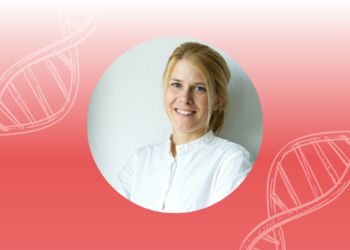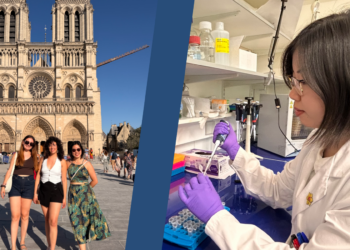

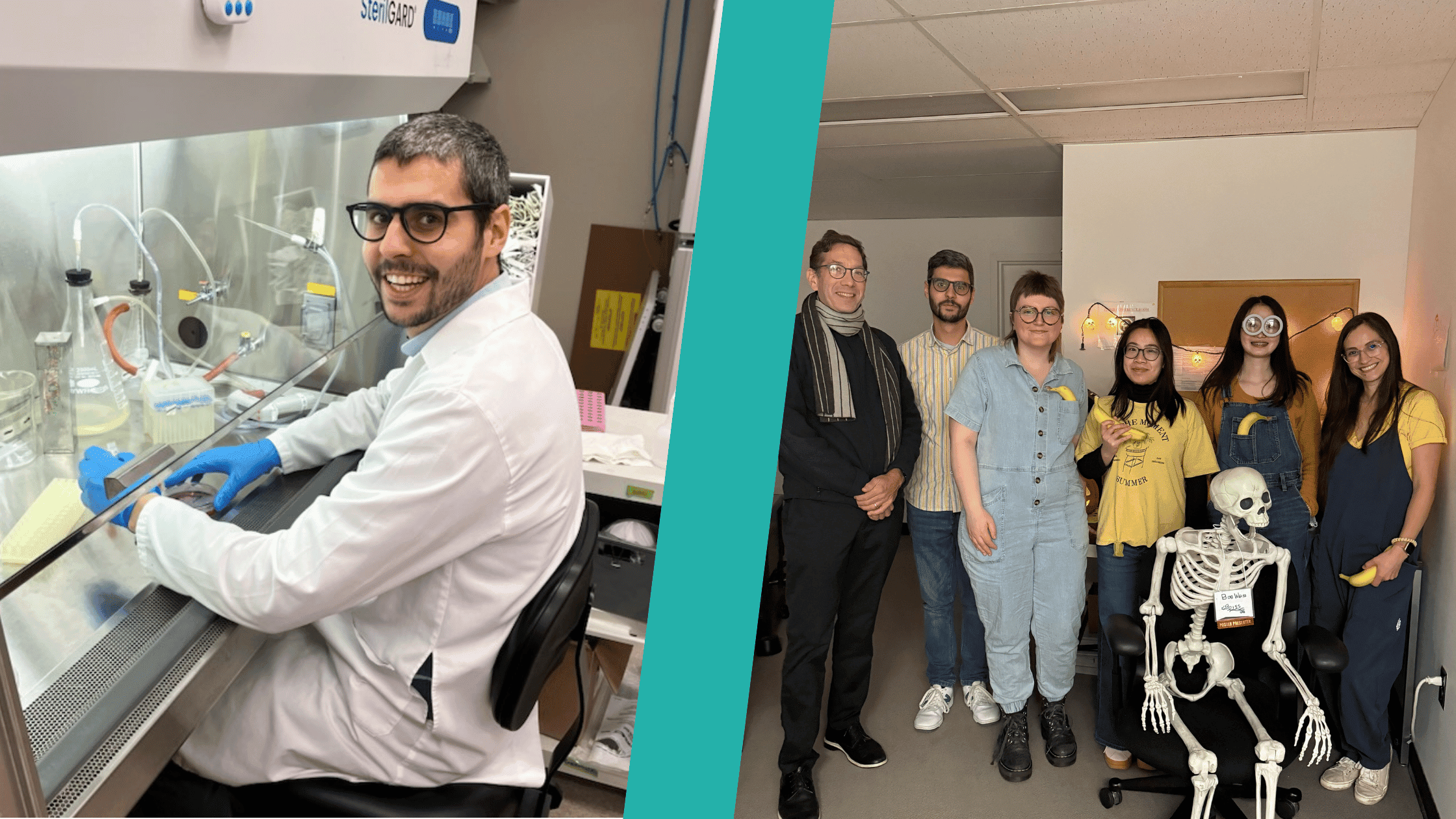
Nuno Tiago Fidalgo Tavares is a PhD student at the Portuguese Oncology Institute of Porto – Research Centre, Portugal who received an EACR Travel Fellowship to visit and work at Cornell University, in Ithaca, New York between 20 October 2025 and 20 January 2026.
The EACR, with support from Worldwide Cancer Research, provides Travel Fellowships of up to €3,500 to enable early-career cancer researchers to gain new skills through a short-term visit to a lab or research group in another country. Nuno was also supported by Fundação para a Ciência e Tecnologia and Fulbright Portugal.
You can read about other Travel Fellows and their experiences here.
What is the topic of your current research?
Testicular cancer is the most common tumour type in young adult men. Although it is usually curable with chemotherapy, there is percentage of patients who develop resistance to the treatment and thus have poor prognoses. Our research is focused on finding novel biomarkers and developing treatments with epigenetic drugs that can be effective for these patients, giving them more effective therapeutic options in the future.
Why did you choose this particular host lab?
I met Professor Robert Weiss at an international conference on testicular cancer last year in Prague and approached him to explore a possible collaboration. I chose Dr. Robert Weiss’s laboratory as the research objectives on testicular germ cell tumors (TGCT) at Cornell complemented the aims of my home laboratory. His laboratory is recognized for having extensive expertise in germ cell tumour animal models and for having the only available genetically engineered mouse model of malignant TGCT, the gPAK mouse. Therefore, this provided me with the opportunity to have access to unique cancer models which allowed me to test novel therapies, acquire new skills, and form a new collaboration between our research groups.
Describe a ‘typical day’ on your visit.
My “typical” workday usually began around 8 am. I worked primarily with another PhD student in the group, Michelle Liu, who also worked on TGCTs. The mornings were mostly dedicated to in vitro experiments and data analysis, whereas in the afternoons I would usually perform in vivo work. The conclusion of my day would depend on the volume of experiments, but I would usually have completed all tasks between 5 and 6 pm. Furthermore, we also had weekly meetings with the Primary Investigator, which was really helpful in experiment planning and scientific discussion.
What were you able to do that you could not have achieved in your home lab?
At my home lab, we do not have access to or extensive experience with mouse animal experiments, so that was a big part of why I chose Dr. Weiss’s lab. Additionally, it has the only available genetically engineered mouse model of malignant TGCT, which was an ideal model to test the therapies we are assessing in vitro. Furthermore, contact with other groups on the Cornell campus allowed me to acquire more knowledge about germ cell biology, as well as guidance on specific techniques, such as bulk/small RNA sequencing analysis pipelines.
Did you take part in any interesting local or cultural activities?
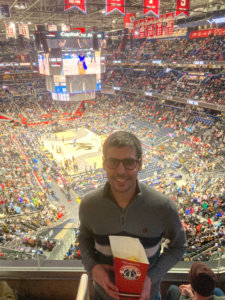
We celebrated Halloween and Thanksgiving in the lab, which gave me a great chance to experience the way these holidays are celebrated in the USA. Over the Christmas and New Year breaks, I had the opportunity to visit New York City and Washington, DC for a few days, and both were very unique places which were widely different from European cities. Additionally, I had the experience of watching a NBA game and college ice hockey games, which were definitely very entertaining moments. Ithaca is surrounded by nature, waterfalls and hiking trails, so I would also usually walk a lot in nature, when the weather was not too cold.
“All my lab colleagues were very helpful whenever I had doubts or queries within or outside of the lab.”
Did you have a personal mentor or anyone who particularly helped you? Tell us about them.
The people who guided me during my stay were mainly the PI, Dr. Robert Weiss, and Michelle Liu, a PhD student from the group. Michelle also works in TGCTs, and provided many insights on the work and was always available to discuss new options when we hit hurdles along the way. Furthermore, I was also very well received by everyone else in the group — Dr. Weiss and all my lab colleagues were very helpful whenever I had doubts or queries within or outside of the lab.
Does your lab plan to do any future collaborations with the host lab?
Yes, we plan to continue forming this ongoing collaboration between the two labs. We will be working on two publications over this next year, and I am confident we will continue cooperating on further projects which benefit both research groups.
How has this visit been beneficial to your research and your career?
As this was the first time that I spent significant time abroad for the purpose of pursuing my research, this visit was very beneficial for my PhD project and my scientific and personal growth. Thus, I want to genuinely thank EACR for the support on this experience.
Want to find out more?

If you are interested in applying for the Travel Fellowship scheme, please click here for more information: EACR Travel Fellowships