
EACR Travel Fellowships are co-sponsored by Worldwide Cancer Research and provide funds up to €3,000 to early-career cancer researchers. For more information on how to apply for Travel Fellowships, you can visit the EACR website.
Home institution and country: Laboratory of Molecular Cancer Genetics, CIBIO – University of Trento, Italy
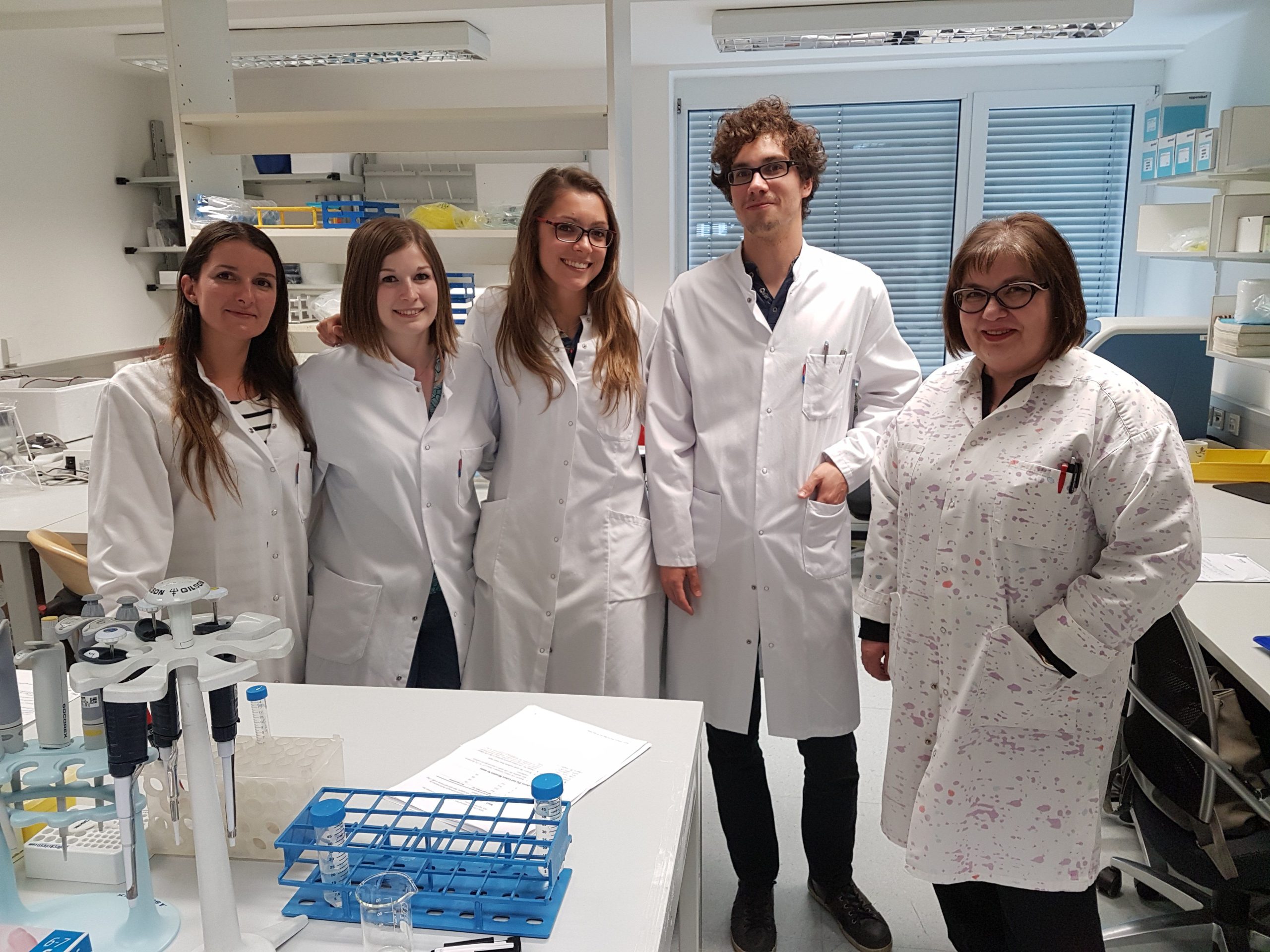
Host institution and country: : Laboratory for Experimental and Translational Research on Radiation Oncology (EXTRO-Lab), Medical University of Innsbruck, Austria
Dates of visit: 15 April 2018 – 17 June 2018
Breast cancer is the most common cancer amongst women, with 1 out of 8 of them developing it in their lifetime. The main causes of death from breast cancer are the formation of metastasis and the development of resistance to current therapies. My work investigates molecular mechanisms driving the resistance to standard chemotherapy and radiotherapy. My work is focused on a protein, which is frequently deregulated in breast cancer, and I am exploring its roles in the sensitivity of tumours to chemotherapy and radiotherapy and on breast cancer aggressiveness.
Why did you decide to apply for an EACR Travel Fellowship?
I heard about EACR Travel Fellowships from my PhD supervisor and through e-mail bulletins from the EACR. I decided to apply to support my visit in Innsbruck because the evaluation process was very fast and allowed me to organise my visit in a short period of time. Moreover, obtaining an EACR Travel Fellowship would strengthen my career aspects.
Why did you choose the host lab?
I chose the host lab because I had the chance to participate to a seminar held by Prof. Skvortsova, in which I could appreciate our common research interests, focusing on breast cancer stem cells. Moreover, I chose the host lab because of the expertise and instruments available, particularly relevant to the study of radiotherapy resistance in breast cancer.
the evaluation process was very fast and allowed me to organise my visit in a short period of time
Can you summarise the research you did or what you learned on your visit?
During my stay I tested the effects of the protein I am studying (ETV7) on the sensitivity to radiotherapy by viability assay (ViCell) and apoptosis assay (AnnexinV/PI staining). I further tested the effects of radiotherapy on the cell cycle and the DNA repair capacity of cells in response to radiation therapy. Furthermore, I analysed some metabolic properties, mitochondrial respiration and glycolysis rate, of the cells over-expressing ETV7 by Agilent Seahorse XF Instrument and the metabolic response of the cells to radiotherapy. I learned new viability assay techniques and how to perform a COMET assay analysis to analyse the DNA damage. Finally, I learned how to use the Agilent Seahorse XF Instrument for metabolic analyses.
How has the trip inspired you in your research?
Yes, my visit inspired my research because I had the chance to meet very motivated people with whom I could consult and discuss, giving me a new outlook. Furthermore, given the medical background of Prof. Skvortsova, I had the chance to look at my project with a new perspective and explore new avenues of research.
Does your lab plan to do any future collaboration with the host lab?
After my visit to Prof. Skvortsova’s lab, my home and host laboratories are planning to continue the collaboration on my project, which would hopefully result in a publication. They are also planning a new project for a grant proposal according to common interests and different expertise. Finally, one of the PhD students working in the host lab will probably visit our lab in the next year to address some experiments relevant for his project.
spending this period abroad is beneficial for my future career aspects
How has this visit been beneficial to your research and your career?
My visit to Prof. Skvortsova’s lab was positive both for my research as well as for my career. During my stay in Innsbruck I obtained some interesting results that will be relevant for a future publication and for my PhD thesis. Moreover, since I spent most of my career at my home University, I believe that spending this period abroad is beneficial for my future career aspects and could open some possibilities to join a laboratory abroad after the completion of my PhD.