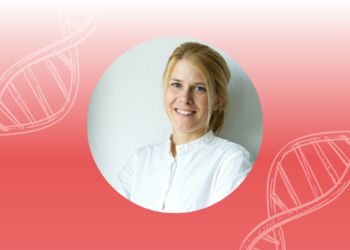


Viktoria Humhal is a PhD student at the St. Anna Children’s Cancer Research Institute in Austria who received an EACR Travel Fellowship to visit and work at the Comprehensive Childhood Research Centre at Ludwig-Maximilians-University, Germany between 04 – 30 November 2024.
The EACR, with support from Worldwide Cancer Research, provides Travel Fellowships of up to €3,500 to enable early-career cancer researchers to gain new skills through a short-term visit to a lab or research group in another country.
You can read about other Travel Fellows and their experiences here.
 Name: Viktoria Humhal
Job title: PhD student
Home institute: St. Anna Children’s Cancer Research Institute in Austria
Host institute: Comprehensive Childhood Research Centre at Ludwig-Maximilians-University, Germany
Dates of visit: 04 – 30 November 2024
Research: Neuroblastoma is the most common solid extracranial tumour in infants, with a 60% 5-year overall survival rate despite aggressive multimodal treatment. In high-risk cases, the bone marrow niche represents the most common site of metastasis and relapse. My research focuses on modelling this niche in-vitro to study how neuroblastoma cells interact with immune cells, driving substantial immune system rewiring. By examining the cellular and molecular changes that occur during metastasis, I aim to uncover the key signals promoting tumour spread and identify potential therapeutic targets, improving outcomes for children facing this aggressive cancer type.
Why did you choose to apply for an EACR Travel Fellowship?
I applied for the EACR Travel Fellowship because it supports early-career researchers in acquiring specialised research skills abroad and fostering international collaborations. The fellowship enabled me to advance my research on neuroblastoma metastasis by collaborating with leading experts in the field of in vitro models and accessing unique techniques and resources not available at my home institute. This opportunity equipped me with essential skills in pluripotent stem cell differentiation, crucial for the next steps of my PhD, while it also helped me to expand my professional network.
Why did you choose the host lab?
I chose Dr. Klein’s lab at Ludwig-Maximilians-University (LMU) Munich as collaboration partner due to their renowned expertise in modelling the bone marrow niche in vitro and in pediatric hemtalology and oncology. Their advanced bone marrow organoid model, developed using human induced pluripotent stem cells, is ideally suited to address my research questions. The lab’s cutting-edge methodologies and collaborative environment provided the setting to gain hands-on experience and address my specific research questions effectively.
 Did you take part in any interesting local or cultural activities?
 Did you take part in any interesting local or cultural activities?
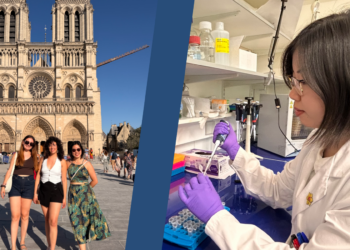
Being in Munich during the festive pre-Christmas season was a wonderful experience. I explored the city’s rich history, enjoyed the vibrant atmosphere of the famous Christmas markets and admired cultural landmarks like the English Garden. I also enjoyed traditional Bavarian food at one of Munich’s iconic Augustiner Bräus. The festive atmosphere combined with Munich’s cultural and natural beauty made my stay very enriching and memorable.
How has this visit been beneficial to your research?
My time at LMU Munich provided invaluable expertise in pluripotent stem cell differentiation protocols that mimic hematopoietic development in vitro. I learned how to process these organoids using various biochemical assays and could with the expertise of our collaboration partners conceptualise an adapted protocol for our specific research questions. These skills allow me to establish the protocols in my home lab and building on this knowledge. I am now developing a metastatic bone marrow niche model by co-culturing these organoids with neuroblastoma cells. With this model system, we aim to unravel the mechanisms behind immune system rewiring during metastasis, benefiting both my PhD project and future research projects at my institute.
Does your lab plan to do any future collaboration with the host lab?
The hands-on training and insights gained during my visit to Dr. Christoph Klein’s lab have laid the foundation for the next steps of my PhD project and for a continued collaboration. This collaboration aims to generate impactful data that will hopefully result in joint publications. By combining our expertise, we hope to make significant advancements in the field and ultimately contribute to the development of novel therapeutic strategies to improve the outcome for children facing this aggressive cancer type.
Is there anything else you’d like to mention?
I would like to take this opportunity to express my sincere gratitude to both my home-supervisor, Dr. Sabine Taschner-Mandl and my host-supervisor, Dr. Christoph Klein, for establishing this collaboration and providing me with the opportunity to work for one month in a lab abroad. A special thanks to Dr. Stephanie Frenz-Wiessner and Isabel Goek, my direct supervisors in the host lab, for their assistance and mentorship before and during my research stay. I am also thankful for the warm welcome and support from all members of Dr. Klein’s lab. Finally, I sincerely appreciate EACR for their financial support, which made this enriching and productive trip possible!
Want to find out more?

If you are interested in applying for the Travel Fellowship scheme, please click here for more information: EACR Travel Fellowships.