
Patrycja Fryzik is a PhD student at the Princess Maxima Center for Pediatric Oncology, The Netherlands, who received an EACR Travel Fellowship to visit and work at the Institut Curie, France from April to July 2026.
The EACR, with support from Worldwide Cancer Research, provides Travel Fellowships of up to €3,500 to enable early-career cancer researchers to gain new skills through a short-term visit to a lab or research group in another country.
You can read about other Travel Fellows and their experiences here.
Tell us a little bit about your research.
Bone marrow (BM) is the spongy tissue inside of the bones that is responsible for blood production throughout our lives. In some children, BM stops working properly and the effective blood production malfunctions for an unknown reason, which causes a disease called pediatric myelodysplastic syndrome (pMDS). In my research, I leverage single-cell RNA sequencing and spatial transcriptomics technologies to investigate BM cell states in detail, find the underlying mechanism for BM failure in pMDS patients and compare it to the BM of healthy children, with the aim being to uncover novel therapeutic targets.
Why did you decide to apply for an EACR Travel Fellowship?
I decided to apply for the EACR Travel Fellowship for two main reasons. First, as a MSCA Fellowship-sponsored PhD student, I am required to complete two 3-month minimum secondments during my PhD duration, including one abroad. The MSCA fellowship itself doesn’t provide the budget to cover the travel, commute and accommodation costs. Seeking external funding for the project, specifically the EACR Travel Fellowship, provided a solution to bridge that gap. Second, I believed that the EACR Travel Fellowship was fantastic opportunity to structure my project, network, and try to obtain my first grant for scientific work.
Why did you choose the host lab?
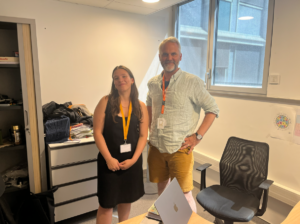
I chose the team of Joshua Waterfall, who leads the Integrative Genomics of Cancer laboratory in Institut Curie in Paris for several reasons. First, as our labs had ongoing projects together, we had a pre-established contact. Second, J. Waterfall’s team is internationally recognised for their work and expertise in computational cancer genomics, gene and isoform discovery, and short- and long-read RNA sequencing analysis and method development, which provided a strong basis for carrying out the proposed work. Third, both J. Waterfall and Alexander Lanau, a PhD student from the Waterfall lab who was helping me with the analysis, were highly enthusiastic about this project and the prospect of collaborating.
Can you summarise the research you did or what you learned on your visit?
The basis of this project was investigating splicing aberrations in refractory cytopenia of childhood, a subtype of pediatric myelodysplastic syndrome (MDS) and their contribution to bone marrow failure of these patients. To achieve this, we did Oxford Nanopore Technology (ONT) long-read RNA sequencing, on pre-existing cDNA made for short read sequencing. During my visit I specifically wanted to investigate the potential splicing aberrations in the most primitive subset of hematopoietic stem and progenitor (HSPCs) in MDS. I learned how to run isoform discovery and properly analyse long-read datasets, including quality controls, data integration, annotation and downstream analysis with scanpy and other Python-based packages, as until now I was only doing my analysis in R. Moreover, I learned how to apply machine-learning based classifiers on my data and leverage it for donor cell annotation.
Did you take part in any interesting local or cultural activities?
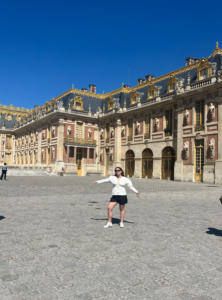
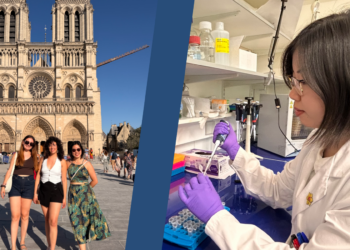
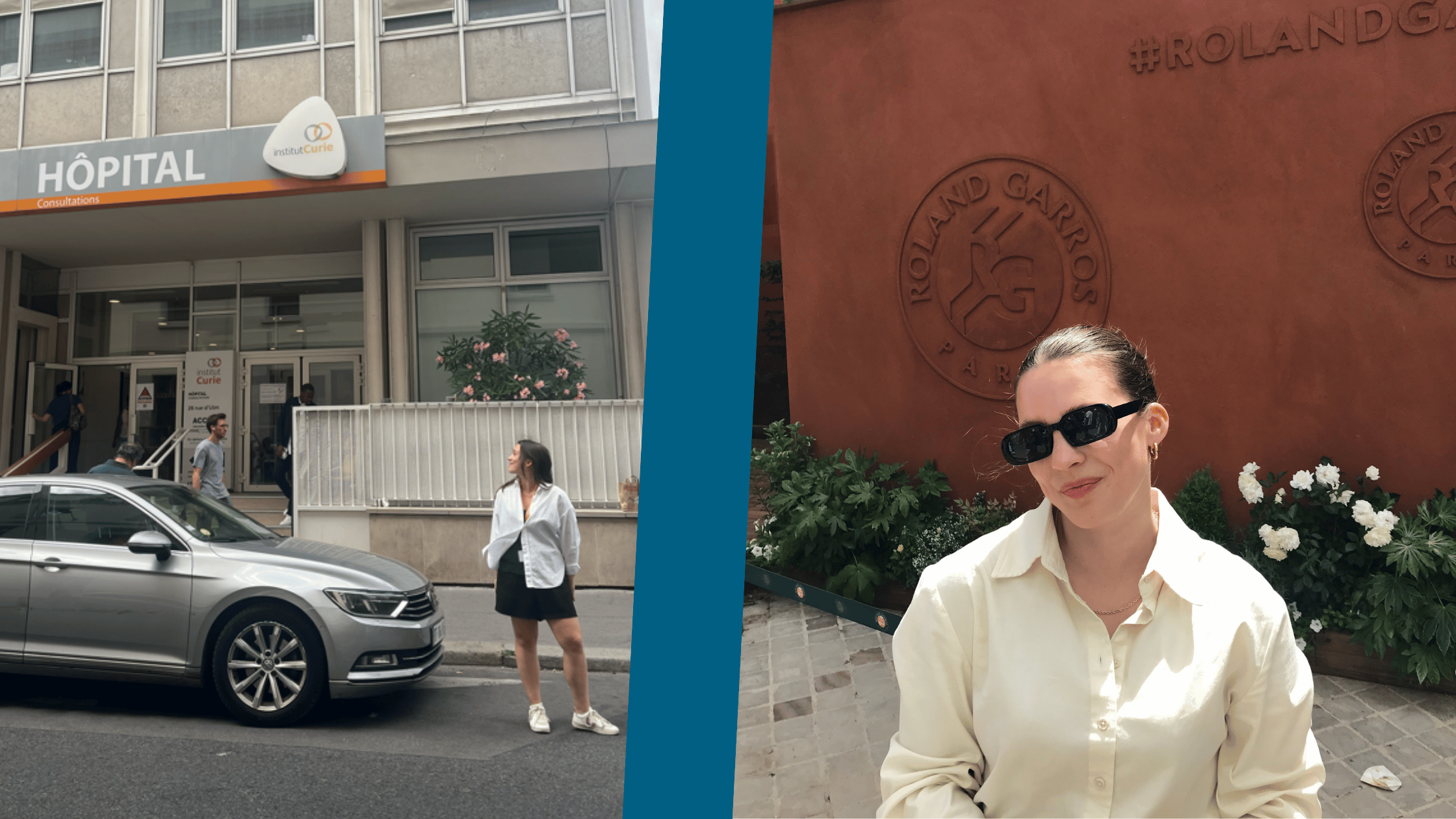
I was fortunate to have my travel fellowship in the very vibrant and interesting city that is Paris. The city had massive potential for exploring, which I tried to maximise outside of working hours. Being under 26, I enjoyed free access to many museums and cultural sites, and I tried to visit as many as possible in the three months that I was there. My personal favourites include the Matisse exhibition in the Grand Palais, Calder in Fondation Louis Vuitton, and Renoir in Musee d’Orsay. Moreover, I tried a lot of great pain au chocolates and other highlights of French boulangeries.
What was a personal highlight of your trip?
My personal highlight that I had the (very last minute) opportunity to participate in was watching Women’s Semi-Final matches at the Roland Garros tournament. Privately, I am a big tennis fan and I am thrilled that I had this once-in-a-lifetime chance to see Mirra Andreeva versus Marta Kostyuk and Maja Chwalinska versus Diana Shnaider in the Grand Slam semis, as the tournament was hosted during my stay in Paris. It was even more special because I could cheer on a player from my own country of Poland (M. Chwalinska), who went from being a qualifier all the way to the final, which has never happened in the tournament’s history.
Have you brought back any specific knowledge that has benefited your home lab?
I established pipelines for data quality control, integration, annotation and downstream analysis that I have now implemented in my home lab.
During my stay I worked for the first time with the Oxford Nanopore Technology (ONT) long-read RNA sequencing, and with the support of the host group I learned the state-of-the-art approaches to handling this kind of data. As the first person to work with ONT in my group, I established pipelines for data quality control, integration, annotation and downstream analysis that I have now implemented in my home lab. I also learned how to implement machine learning-based classifiers in my work. Moreover, if needed, I can also leverage my new knowledge to help others in my group that would like to work with this ONT sequencing in the future.
Want to find out more?

If you are interested in applying for the Travel Fellowship scheme, please click here for more information: EACR Travel Fellowships