
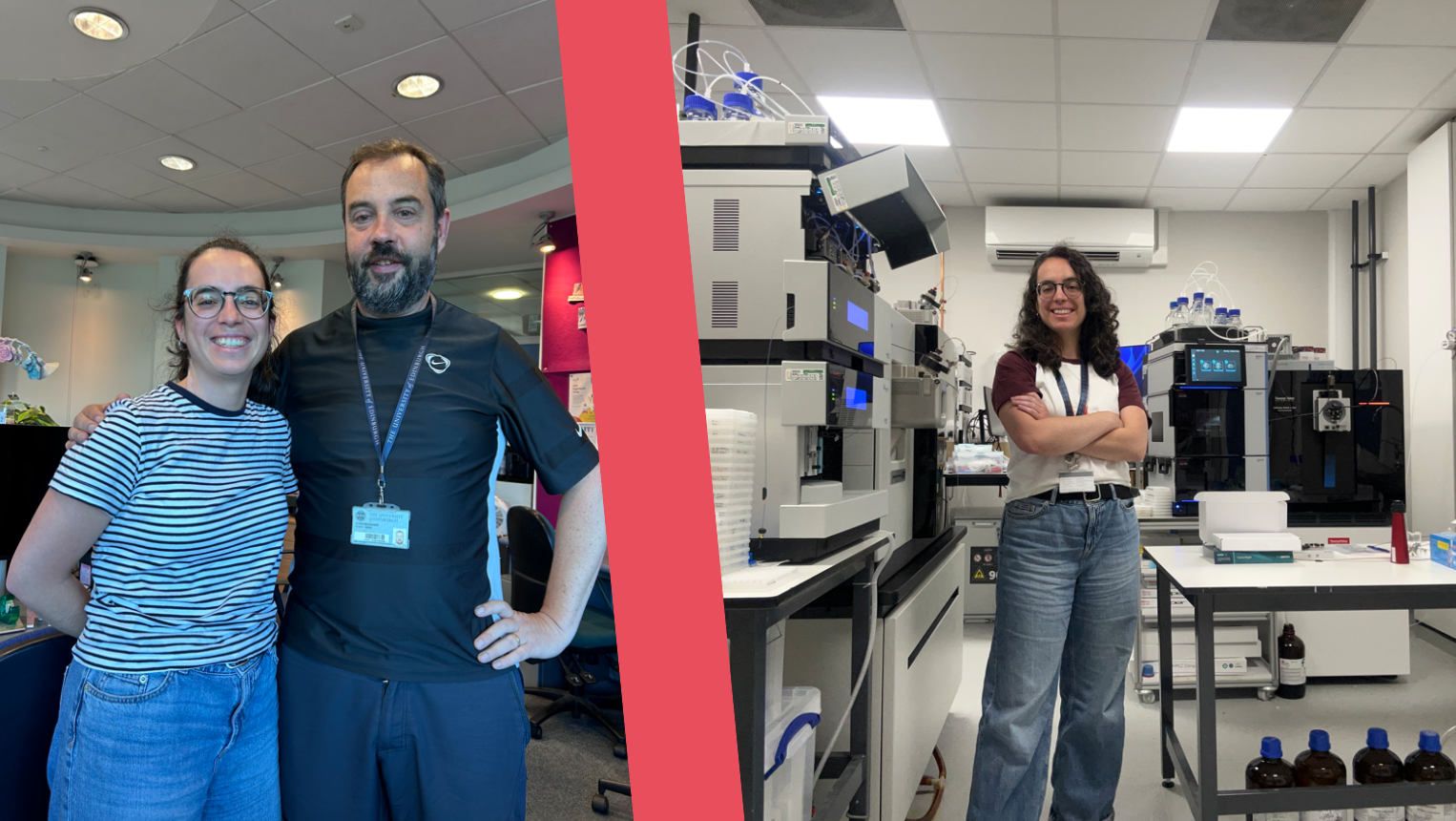
Patricia Carnicero is a PhD student at the Institute of Biotechnology and Biomedicine of Cantabria (IBBTEC), Santander, Spain, who received an EACR Travel Fellowship to visit and work at the Institute of Genetics and Cancer, Edinburgh, UK, from May to August 2026.
The EACR, with support from Worldwide Cancer Research, provides Travel Fellowships of up to €3,500 to enable early-career cancer researchers to gain new skills through a short-term visit to a lab or research group in another country.
You can read about other Travel Fellows and their experiences here.
Tell us a little bit about your research.
Tumours grow in a complex environment made up of cancer cells, immune cells, and other supporting cells. Among these are cancer-associated fibroblasts (CAFs), which help build and reshape the tissue around the tumour and send signals that support cancer growth and spread.
Our research focuses on a biological “switch” called the Wnt/β-catenin pathway, which is constantly active in CAFs. We want to understand and control this switch to stop CAFs from helping the tumour and suppressing the immune system. Ultimately, this could help slow cancer progression and make tumours more responsive to existing treatments.
Why did you decide to apply for an EACR Travel Fellowship?
The EACR Travel Fellowship offers an excellent opportunity for scientists to grow both professionally and personally.
The experience of travelling and living abroad provides the opportunity to develop valuable scientific, interpersonal, and cultural skills. I therefore applied for this fellowship to broaden my experience, strengthen my scientific skills, and gain valuable international exposure.
Why did you choose the host lab?
I chose Dr. von Kriegsheim’s lab because of its strong expertise in proteomics and highly sensitive mass spectrometry, as well as its state-of-the-art instrumentation. This internship allowed me to gain specialised technical knowledge that I can apply to my PhD project and which will strengthen our future research collaboration opportunities.
Describe a ‘typical day’ on your visit.
A typical day during my visit involved working on learning the bioinformatic aspect on the proteomics analyses related to my project. Other days were divided between practical laboratory work, learning and applying mass spectrometry techniques, and analysing data. I also attended group meetings and had regular scientific discussions, which allowed me to learn from the team’s expertise and gain insight into working in an international research environment.
What was a personal highlight of your trip?
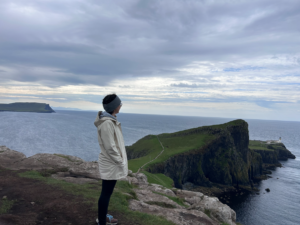
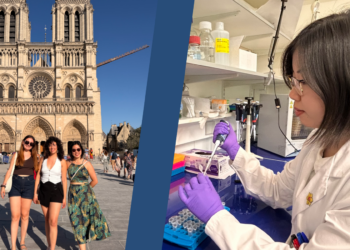
I had the opportunity to visit a lot of different places in Scotland, learning about the rich Scottish history and culture, and enjoying a few of the sweetest treats of Edinburgh. Beyond the scientific experience, I also learned from experiencing a different work environment and personally I grew from the experience of living outside my home country.
I return home with many valuable memories and experiences that I will carry with me.
Did you have a personal mentor or anyone who particularly helped you?
Working closely with Dr. von Kriegsheim’s team helped me achieve everything I had planned to do and more. They are a very talented and powerful team, always helping each other along the way. I appreciate all of the effort and help they gave me during my visit.
Have you brought back any specific knowledge that has benefited your home lab?
I plan to apply the knowledge and skills gained during the internship in my home laboratory, using the resulting data to guide the final experiments of my PhD thesis and support future publication. The experience will also strengthen our collaboration with Dr. von Kriegsheim’s group and facilitate future proteomic studies.
In addition, I had the chance to meet other investigators (Dr. Patrizia Cammareri) who taught me to generate intestine and colon organoids. This new technique will be also applied in my home lab to complement the current knowledge.
How has this visit been beneficial to your research and your career?
This visit has made a significant contribution to my PhD thesis by strengthening and completing an important aspect of my research. In addition, potential new targets have been identified, which will be investigated in the future. Overall, the internship has been highly productive and has significantly advanced my research.
Want to find out more?

If you are interested in applying for the Travel Fellowship scheme, please click here for more information: EACR Travel Fellowships