
As an international community of cancer researchers, the European Association for Cancer Research stands united in support of our scientific colleagues in Ukraine. We offer financial support to displaced researchers from Ukraine in the form of funded short-term placements in international cancer research labs to help give them time and safety in which to plan their next move or apply for other roles. You can learn more about this support here.
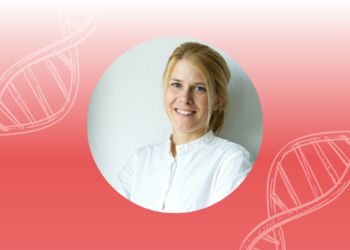
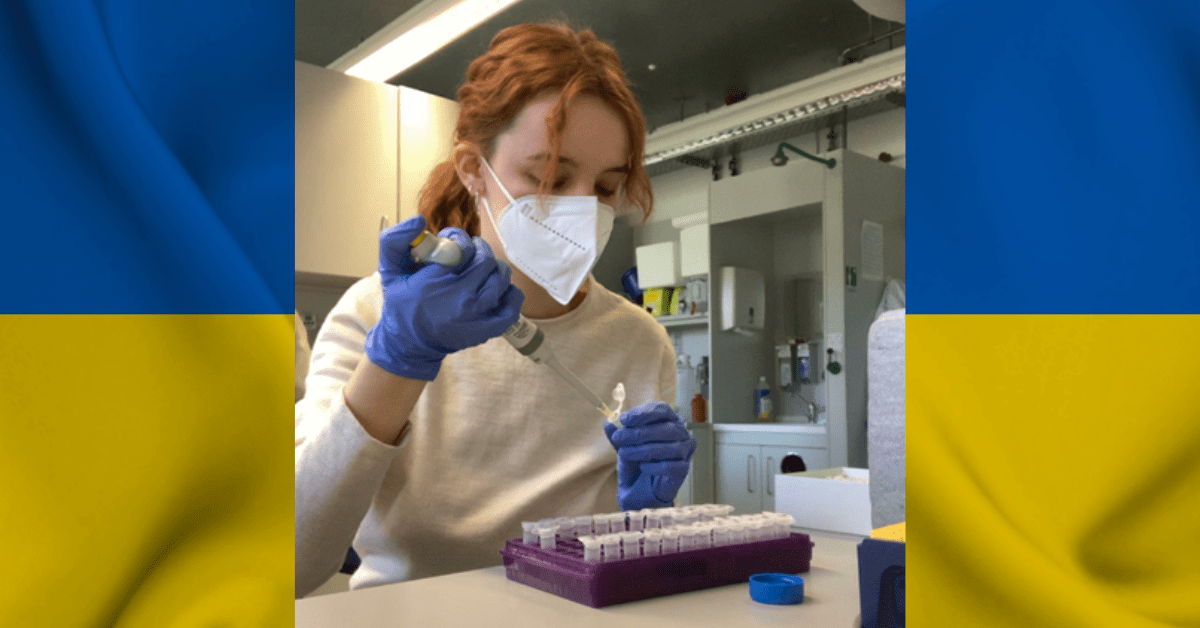
 Stanislava Livandovska was a Bachelor student at the Taras Shevchenko National University of Kyiv in Ukraine who received EACR Ukraine Grant funding to help her take up a placement at the Mannheim Medical Faculty of Heidelberg University in Germany between February and June 2023.
She writes here about her experience.
How did you come to apply for an EACR Ukraine Grant?
I found a post about this grant on Instagram. One of the Ukrainian researchers posted several prepositions for Ukrainian scientists on IG stories, so I used the opportunity, contacted several supervisors on the list of those, who offered a lab position and chose the most suitable for me at that time.
Now that your placement has finished, will you be returning to Ukraine?
Yes, I returned to Ukraine. It has been a good experience, a nice opportunity to learn something new and expand my knowledge in cancer research. Now I came back home to make new steps in my education and career.
How did you choose the host lab?
First of all, the topic of the project seemed the most interesting for me among all the offers. Also, my supervisor contacted me immediately after the request and helped me with further steps. I received then some information about the theme of the project and decided that it is a match.
 Can you summarise the research you did or what you learned on your placement?
 Can you summarise the research you did or what you learned on your placement?
As a part of my program, I had been participating in establishment of an in vivo metastasis assay using patient derived macrophages to investigate their influence on colorectal cancer cell lines after induction of a TAM like cell phenotype.
How has the trip inspired you, either in your research or otherwise?
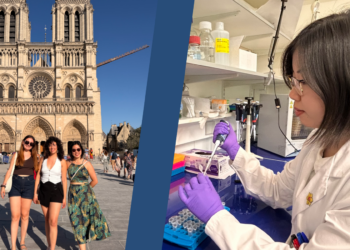
I have met lots of new people, found new friends and visited interesting places. Everything was new for me back then, but it was a really useful experience. Furthermore, those few months inspired me to move forward professionaly, study harder, dive deeper into research and focus on my biology career.
Have you learned any specific knowledge or technique that could benefit your home lab in future?
Despite the knowledge with which I came to the Mannheim Medical Faculty, I had the opportunity to learn a new technique for myself – the isolation of macrophages from blood samples. This method is not widely used, but it was quite useful, informative, and I am sure that in the future I will need the experience gained in my work in the laboratory.
How has this visit been beneficial to your research and your career?
This program gave me the opportunity to learn more about scientific work, the principles of conducting experiments and the organisation of the research process. In addition, during this time I realised which direction of research interesting the most for me and how I would like to develop further as a scientist.
A short summary of Stanislava’s current research: I had been participating in establishment of an in vivo metastasis assay using patient derived macrophages to investigate their influence on colorectal cancer cell lines after induction of a TAM like cell phenotype. Generally, we tried to grow a tumor sample in a chicken egg to investigate processes in it.
Want to find out more?

To find out about our Ukraine Grants, please click here for more information: EACR Ukraine Grants.