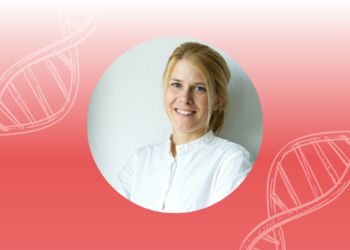
Chloe Gulliver is an EACR Travel Fellowship recipient who returned from the University of South Alabama, US in September 2022.
The EACR has joined forces with Worldwide Cancer Research to provide Travel Fellowships of up to €3,000 to enable early-career cancer researchers to gain new skills through a short-term visit to a lab or research group in another country.
You can read about other Travel Fellowship awardees and their experiences here.

Name: Chloe Gulliver
Job title: PhD Student
Home institute: University of Glasgow, UK
Host institute: University of South Alabama, US
Dates of visit: 29 August – 30 September 2022
Research: The prostate gland is highly susceptible to inflammation, leading to enhanced risk of cancer development. Prostate cancer is the second most common cancer in men worldwide, with the highest incidence rates in Northern and Western Europe. My research focusses on characterising biomarkers in prostate cancer to further understand disease mechanisms. A biomarker is a term given to any biological molecule or characteristic which can correlate with a disease or physiological state. Disease-specific biomarkers are useful for not only improving diagnostics/prognostics, but also enhancing our understanding of the molecular mechanisms promoting prostate cancer development, aiding in identification of novel therapeutic avenues.
Why did you choose this host lab?
Professor Thomas Rich is a pioneer in FRET techniques, and his lab has developed and implemented hyperspectral imaging and analysis approaches, and 5-dimensional FRET measurements. This put them in a unique position to help me visualise changes in intracellular cyclic AMP levels and PKA activity in prostate cancer cells, allowing me to acquire high speed multiplexed signals in real time in two (x,y), or three spatial dimensions (x,y,z).
Can you shortly summarise the research you did and what you learned on your visit?
My PhD research focusses on PDE4D7, a phosphodiesterase which modulates cyclic AMP (cAMP) signalling, in prostate cancer. Its downregulated expression correlates with aggressive disease and disease recurrence highlighting its importance in disease progression. As PDE4D7 is membrane localised, by using FRET techniques my project sought to determine how disease-related PDE4D7 knockdown affects localised cAMP signalling at distinct cellular compartments upon different drug treatments or cellular conditions.
Using their state-of-the-art hyperspectral imaging systems and novel FRET probes, I assessed intracellular cAMP signalling in genetically modified prostate cancer cell lines displaying varying levels of PDE4D7 expression. This allowed me to compare PDE4D7’s effect on cAMP signalling in phenotypically aggressive androgen-insensitive cells against early-stage androgen-sensitive cells.
Additionally, I analysed localised cAMP fluctuations following treatment with phosphodiesterase-inhibiting or PKA-activating compounds, to further uncover how PDE4D7 expression influences spatial cAMP gradients in response to these treatments in live single cells. This allowed me to advance my own research by further understanding the precise intracellular signalling conditions associated with prostate cancer progression and development of drug resistance.
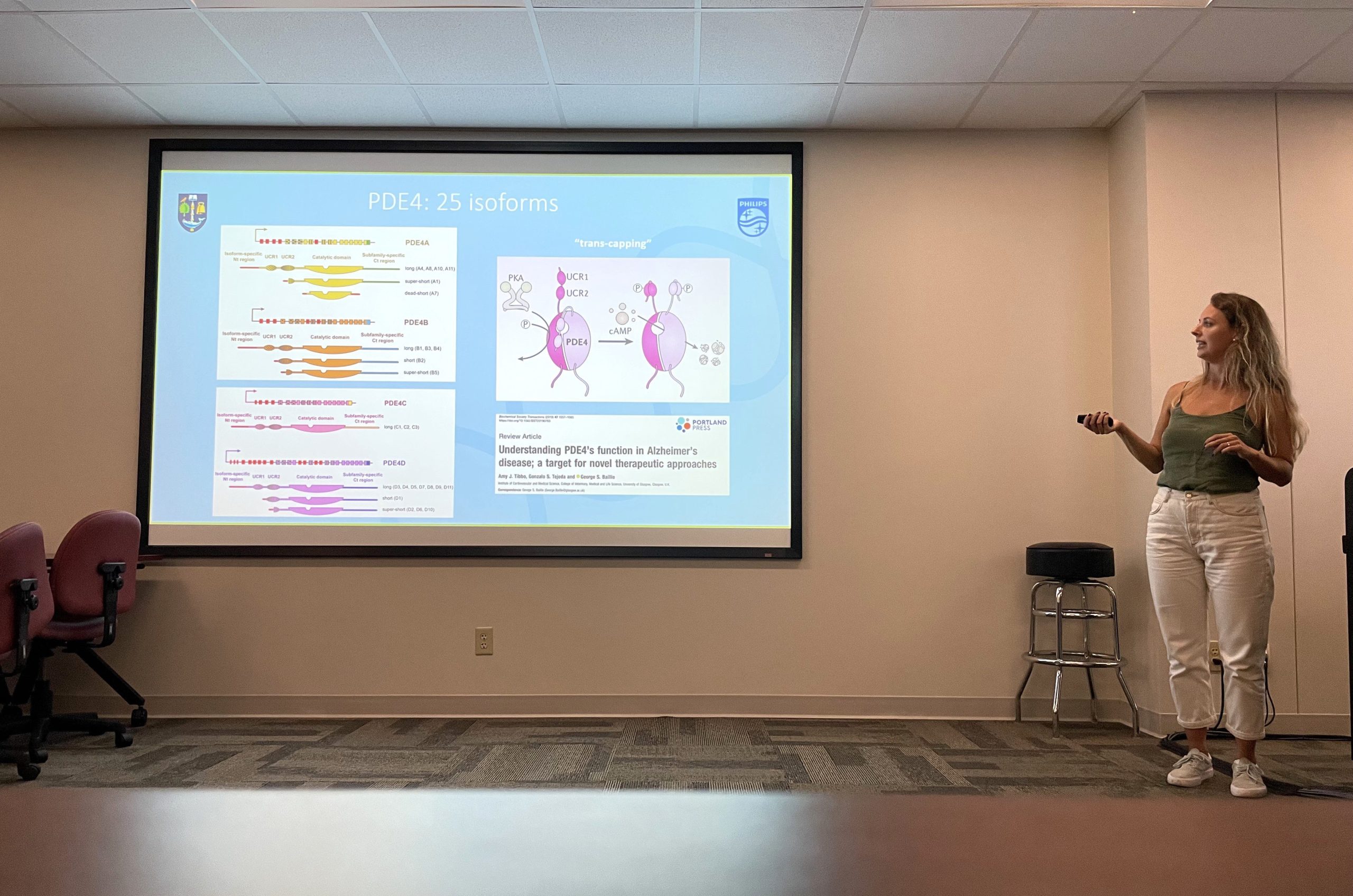
“I was invited to give a talk at the institute during my trip, where I presented my project and all of the research I am doing back in Glasgow”
Did you take part in any interesting local or cultural activities?
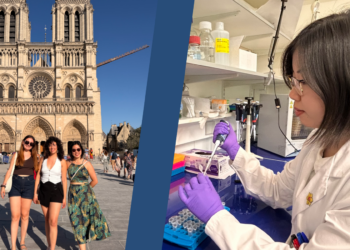
As a Brit on their first time in the US, I was very keen to go watch an American football game so I saw the University of South Alabama Jaguars’ first game of the season. I definitely had no idea what was going on most of the time but loved the atmosphere. Also saw alligators and sharks for the first time ever in Alabama, so that was pretty cool. I was fortunate enough to be able to travel a bit as well – Mobile is located not far from Florida where I got to spend some time on the gorgeous beaches, and also a short drive to New Orleans, Louisiana. I really enjoyed New Orleans and saw lots of local jazz bands and filled up on southern food.

What was a personal highlight on your trip?
Without sounding too cliché, the highlight for me was the people. Everybody that I met was so friendly and accommodating and would go out of their way to make sure that I had the best trip possible. The Rich lab group really took care of me and made me feel like part of the crew immediately. Turning up to the lab each day very quickly felt so normal, and it was genuinely really hard to have to say my goodbyes at the end of the trip. I feel I’ve made both professional and personal connections that will stay with me.
Did you have a personal mentor or anyone who particularly helped you?
I was fortunate enough to have a few mentors throughout my trip. Firstly Santina, a PhD student, took me under her wing and helped me to understand the premise behind hyperspectral imaging and how to use the microscopes. Additionally, the lab technician Andrea helped me out day-to-day with any wet-lab based work and was always available for me when I had questions. I was also directly involved with Prof Tom Rich a lot, who would often meet with me to help me with the experimental plan and taught me a lot about FRET. However, not only were these three people extremely helpful with my research, they also looked out for me outside of the lab too – helping me to get anywhere I needed to go in the city and hanging out with me in the evenings/weekends.

How has this visit been beneficial to your research and your career?
Through this visit I gained even more than I originally thought I would. Not only did I get to enhance my research skills and generate some awesome data for my PhD project, but I also made a lot of connections both in the Rich lab and neighbouring lab groups. I was invited to give a talk at the institute during my trip, where I presented my project and all of the research I am doing back in Glasgow. That was the first invited talk I’ve ever given and gave me some good insight and experience for doing more of these throughout my career. I hope to expand upon the connections that I made during my visit for future collaborations.
Want to find out more?

If you are interested in applying for the Travel Fellowship scheme, please click here for more information: EACR Travel Fellowships.