
The Cancer Researcher
  • Home
  • About
  • The Cancer Researcher Podcast
  • #KeepResearchCurious
No Result
View All Result
  • Home
  • About
  • The Cancer Researcher Podcast
  • #KeepResearchCurious
No Result
View All Result
The Cancer Researcher
No Result
View All Result

The EACR’s Top 10 Cancer Research Publications: November 2019

October 17, 2025
EACR top 10 cancer research publications

The EACR’s Top 10 Cancer Research Publications is a regular summary of the most interesting and impactful recent papers in cancer research. It is curated by the Board of the European Association for Cancer Research (EACR).

The list below appears in no particular order, and the summary information has been provided by the authors.

Use the dropdown menu or ‘Previous’ and ‘Next’ buttons to navigate the list.

1. Adaptive Immune Resistance Emerges from Tumor-Initiating Stem Cells

  • 1. Adaptive Immune Resistance Emerges from Tumor-Initiating Stem Cells
  • 2. Visualizing Engrafted Human Cancer and Therapy Responses in Immunodeficient Zebrafish
  • 3. Patient-derived organoids can predict response to chemotherapy in metastatic colorectal cancer patients
  • 4. Human colon mucosal biofilms from healthy or colon cancer hosts are carcinogenic
  • 5. Intraclonal Plasticity in Mammary Tumors Revealed through Large-Scale Single-Cell Resolution 3D Imaging
  • 6. Partner-independent fusion gene detection by multiplexed CRISPR/Cas9 enrichment and long-read Nanopore sequencing
  • 7. Quantitative evidence for early metastatic seeding in colorectal cancer
  • 8. Metabolic landscape of the tumor microenvironment at single cell resolution
  • 9. Flower isoforms promote competitive growth in cancer
  • 10. Tumor Microbiome Diversity and Composition Influence Pancreatic Cancer Outcomes
Previous
Next

Y. Miao et al., Cell Volume 177, Issue 5, 16 May 2019, Pages 1172-1186.e14

ACT treatment: The EACR’s Top 10 Cancer Research Publications

Summary of the findings

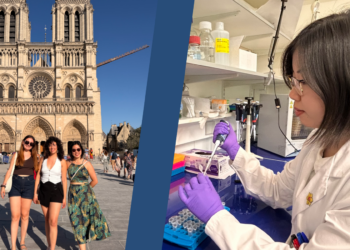
Cancer treatments have been revolutionized by the development of immunotherapies. Adoptive T cell transfer (ACT)-based immunotherapy is a major current strategy in which a cancer patient’s cytotoxic T cells are engineered to recognize a tumor-specific neoantigen, then are reintroduced into the body to selectively attack the tumor.

Unfortunately, the majority of patients receiving ACT therapy experience tumor relapse, the nature of which is still poorly understood but vital for advancing clinical outcomes. To understand why, we designed a skin squamous cell carcinoma (SCC) mouse model that can be effectively targeted by ACT. Transcriptome profiling and lineage tracing revealed that a subset of TGFβ-responding cells, with characteristics of tumor-initiating stem cells, are refractory to the immunotherapy treatment and are the root of tumor relapse. We discovered that these TGFβ-responding cells survive by selectively acquiring CD80, a surface immune modulatory ligand previously thought to be exclusive to immune cells. Moreover, upon contact with CTLA4 expressed by the cytotoxic T cells, the CD80-expressing cancer cells directly dampened their activity. Our findings place tumor-initiating stem cells at the crux of how immune checkpoint pathways are activated.

Future impact of the findings

This study unraveled an unrecognized intrinsic mechanism that protects cancer-causing cells from anti-tumor immunity. The work represents a major conceptual advance in the cancer immunology field, with clinical ramifications. Although CTLA4 has been a target of current cancer immune checkpoint blockade therapies, it has long been assumed that it targets the regulatory T cell in the tumor-periphery. The finding that CD80 can be expressed by TGFβ-responding, tumor-initiating stem cells exposes a new target for CTLA4 blocking antibodies, and suggests their possible potency in conjunction with TGFβ-inhibitors.
Read more in Cell

1. Adaptive Immune Resistance Emerges from Tumor-Initiating Stem Cells

  • 1. Adaptive Immune Resistance Emerges from Tumor-Initiating Stem Cells
  • 2. Visualizing Engrafted Human Cancer and Therapy Responses in Immunodeficient Zebrafish
  • 3. Patient-derived organoids can predict response to chemotherapy in metastatic colorectal cancer patients
  • 4. Human colon mucosal biofilms from healthy or colon cancer hosts are carcinogenic
  • 5. Intraclonal Plasticity in Mammary Tumors Revealed through Large-Scale Single-Cell Resolution 3D Imaging
  • 6. Partner-independent fusion gene detection by multiplexed CRISPR/Cas9 enrichment and long-read Nanopore sequencing
  • 7. Quantitative evidence for early metastatic seeding in colorectal cancer
  • 8. Metabolic landscape of the tumor microenvironment at single cell resolution
  • 9. Flower isoforms promote competitive growth in cancer
  • 10. Tumor Microbiome Diversity and Composition Influence Pancreatic Cancer Outcomes
Previous
Next
Tags: EACR BoardEACR Top Ten Cancer Research Publicationspublication

Related Posts

How the EACR Congress inspired translational innovation and the launch of a spin-out company

How the EACR Congress inspired translational innovation and the launch of a spin-out company

May 14, 2026

EACR member Munitta Muthana provides some insight into her team’s experience at EACR 2025 in Lisbon, and how it catalysed the momentum and vision for their...

How Nerves Shape Cancer: From Energy Rewiring to Metastasis – Episode 32 of The Cancer Researcher Podcast

How Nerves Shape Cancer: From Energy Rewiring to Metastasis – Episode 32 of The Cancer Researcher Podcast

May 11, 2026

In recent years, the neuronal component of the cancer microenvironment and the metabolic plasticity of cancer cells have become increasingly recognised as essential for cancer progression....

Highlights in Cancer Research: November 2022

Highlights in Cancer Research: April 2026

April 28, 2026

The EACR's 'Highlights in Cancer Research' is a regular summary of the most interesting and impactful recent papers in cancer research, curated by the Board of...

The Cancer Researcher EACR logo

About Us

The Cancer Researcher is an online magazine for the cancer research community from the European Association for Cancer Research.

The EACR, a registered charity, is a global community for those working and studying in cancer research. Our mission is “The advancement of cancer research for the public benefit: from basic research to prevention, treatment and care.”

Advertisement Advertisement Advertisement
ADVERTISEMENT

RECENT POSTS

How the EACR Congress inspired translational innovation and the launch of a spin-out company
Career

How the EACR Congress inspired translational innovation and the launch of a spin-out company

May 14, 2026
“This technique is highly complex and would not have been possible to perform in my lab”: María Martínez Fernández’s EACR Travel Fellowship
Community

“This technique is highly complex and would not have been possible to perform in my lab”: María Martínez Fernández’s EACR Travel Fellowship

May 12, 2026
The Cancer Researcher

© 2025 EACR

Navigate site

  • About
  • Privacy
  • Main EACR website

Follow us

No Result
View All Result
  • Home
  • About
  • The Cancer Researcher Podcast
  • #KeepResearchCurious

© 2025 EACR