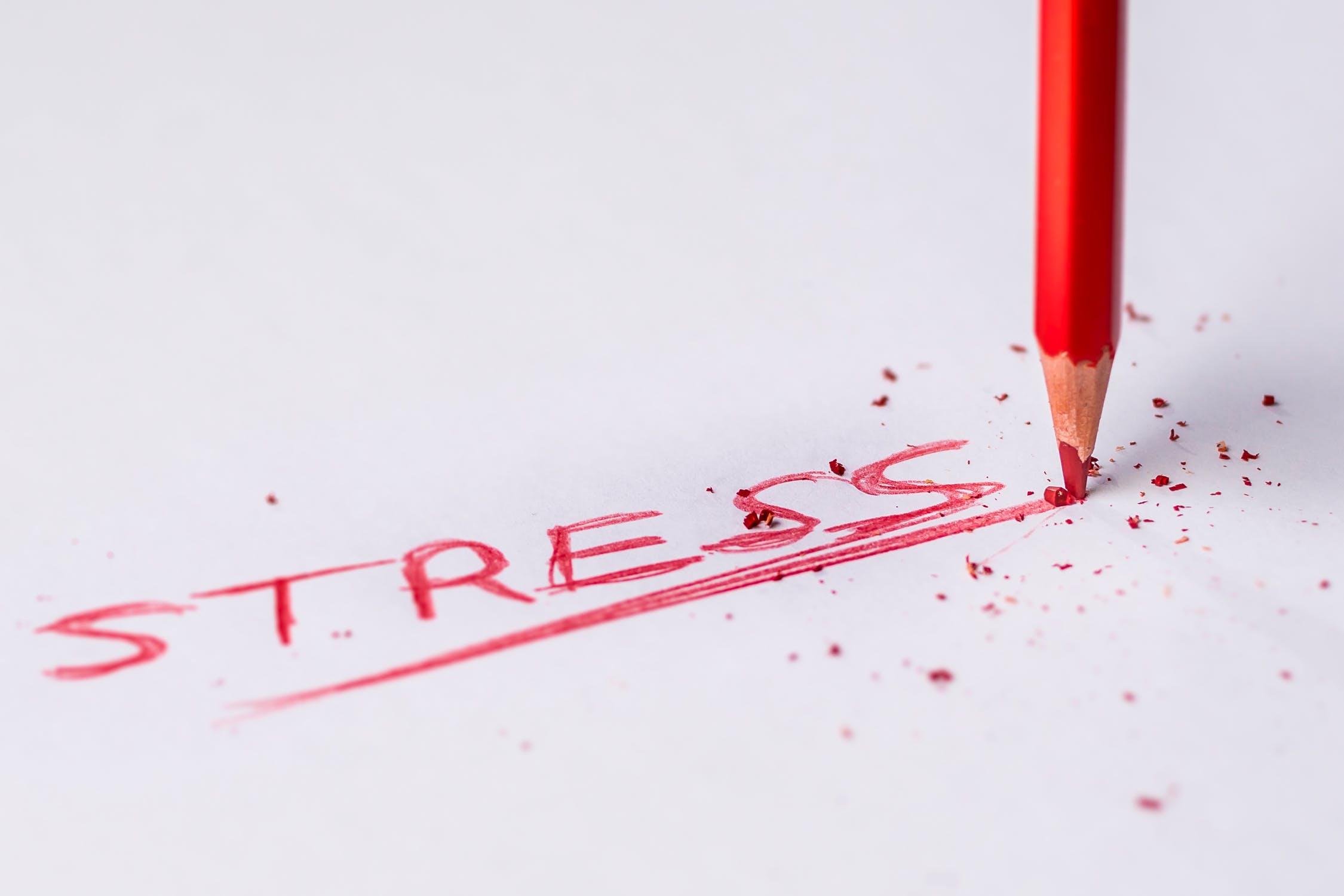

PhD students have a 2.43 times higher risk of developing a psychiatric disorder than the rest of the highly educated population. Females and gender-nonconforming PhD students are significantly more likely to experience anxiety than male counterparts, and men are less likely to seek professional or interpersonal help. This has been studied and recognised in the U.S. and Europe with Science and Nature already talking about it.
Doing a PhD is challenging, no doubt about it. But we can only find strategies to cope with anxiety and detect stress sources if we start the debate about mental health. This is not admitting defeat, this is taking care of ourselves. Let’s break the taboo!
7 reasons why we get stressed during our PhD:
No more tick boxes
 During our studies we were trained to do short projects, with constant feedback of our performance through graded tests, which were designed to be solved. Now, we are in a world of open ended projects on our own, with abstract goals. We won’t solve problems simply by working longer and harder.
Failing and competition
 School was mostly a breeze and we still did pretty well in University. But suddenly we have to deal with the frustrations of constant failed experiments. We wonder what went wrong, especially when our peers get scholarships and papers. Don’t forget that tasks at school and university were designed to be solved. In research, we are at the edge of knowledge and failing is pretty much part of the job.
Feeling like an impostor
 Does it feel like everyone around you is just so much smarter than you? Actually, 7 in 10 people experience impostor syndrome throughout their career. Impostors have a hard time accepting positive feedback and often deny their success is related to their own abilities, and think they are not good enough. Tip: use it as a strength. Taking time to celebrate achievements helps to embrace our impostor-self.
Feeling guilty and isolated
 In our studies, we were always surrounded by many students, but in the lab we are often part of a very small team or working on our own. It can get particularly lonely if we moved to a foreign country for our PhD or during a writing phase. On top of this, we constantly feel bad for neglecting friends and family. Whereas, when we force ourselves to go to social events we feel guilt for not working.
Work-life (in)balance
 More than half of PhD students are concerned about work-life balance as long working hours are widely accepted and even promoted in academia. In fact, 40% of academics report working more than 50 hours a week. Alarmingly, this was found to be a significant predictor of depressive symptoms. Long working hours skew our work-life balance and can create a sense of loss of control and signal to ourselves that whatever we do is not enough.
Fear of the future
 Although a PhD seems long at the beginning, time passes quickly and the end can be an even more stressful time. Besides finishing our thesis and paper, we have to start thinking about our future career whilst faced with the fear of running out of funding before we finish.
Power abuse is not an acceptable source of stress
 Harassment is the mistreatment of someone, usually in a situation of abuse of power which leaves victims anxious and humiliated. There is a unique set of social interactions in academia that allow power abuse to fester. This is no excuse to minimize its impact on our lives, nor to normalize or oversimplify it behind a #phdlife. This source of stress should not happen in our PhDs.
[td_smart_list_end]
Read more on this topic
Take a look at our article Feeling overwhelmed by academia? You are not alone. It summarises advice from several researchers on how to maintain good mental health in the hyper-competitive environment of science.
Or take a look at the Downloadable poster guide: Mental Health During Your PhD
About the authors
 Marta Oliveira is a PhD researcher in MDC Berlin, Germany, studying the role of microtubule dynamics in angiogenesis. She is passionate about transforming academia into a safe, inclusive and dynamic workspace.
Marta, an EACR member, has written a series of articles for us around the topic of mental health. This series is an adaptation of a project she, Laura Breimann and Lorena Lopez Zepeda developed as MDC PhD representatives. The original project website can be found here.
Marta’s email: marta.oliveira.scientist@gmail.com
Marta’s LinkedIn & Twitter.
 Laura Breimann currently does her PhD at the Berlin Institute at the Berlin Institute for Medical Systems Biology at MDC Berlin. She is interested in transcription regulation in the context of dosage compensation in C. elegans. She believes that collaboration and community are important in science and especially so in the stressful lives of PhD students. You can reach her on twitter: @Laura_Breimann.
Icons made by Freepik from www.flaticon.com.