The Cancer Researcher
  • Home
  • About
  • The Cancer Researcher Podcast
  • #KeepResearchCurious
No Result
View All Result
  • Home
  • About
  • The Cancer Researcher Podcast
  • #KeepResearchCurious
No Result
View All Result
The Cancer Researcher
No Result
View All Result

News Summary: CancerSEEK blood test, immune system vs. CRISPR

July 17, 2018
News Summary: CancerSEEK blood test, immune system vs. CRISPR

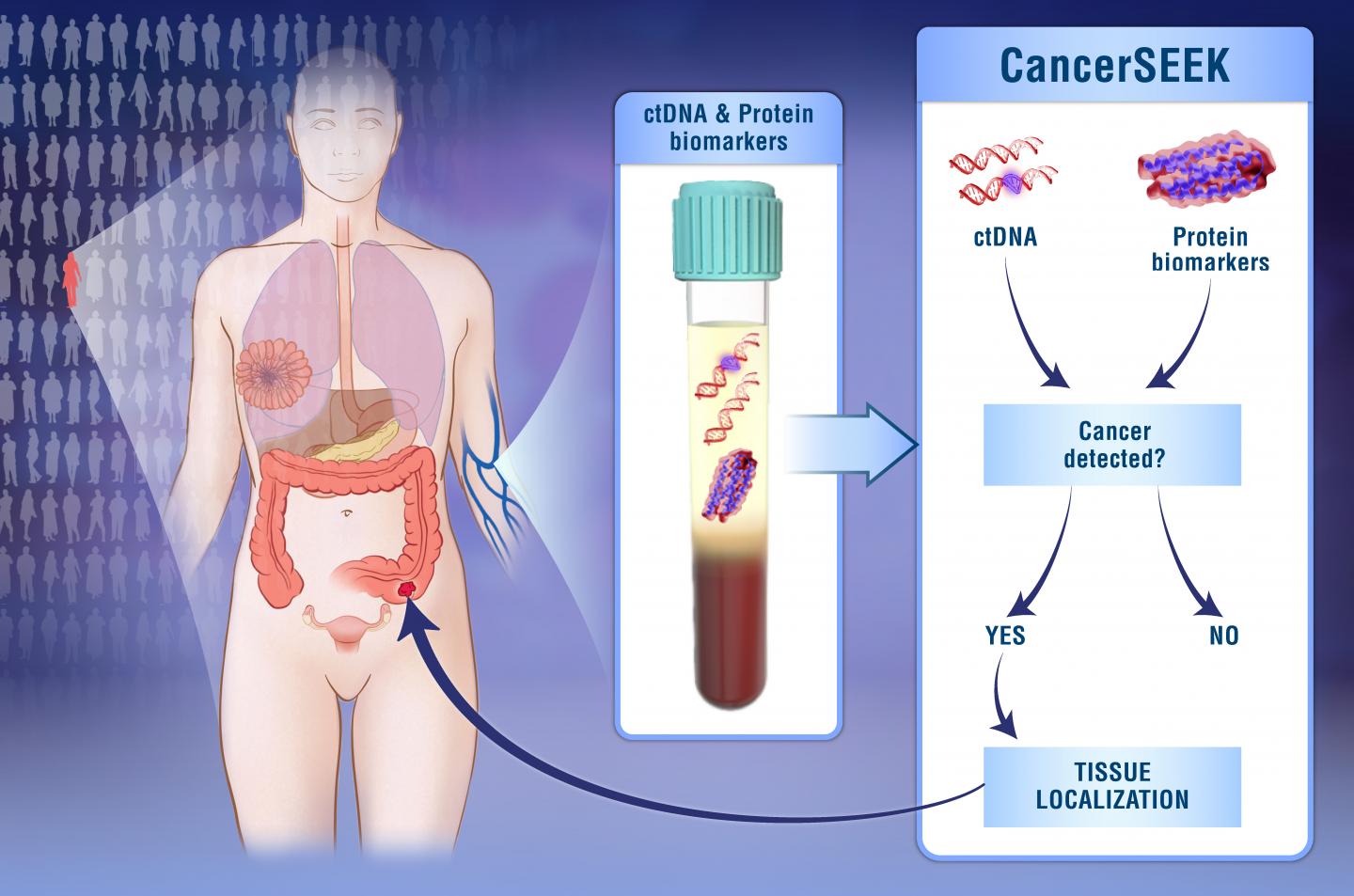
Credit: Illustration by Elizabeth Cook & Kaitlin Lindsay

CancerSEEK blood test detects 8 common cancers

A team of researchers from Johns Hopkins University have trialled a blood test, CancerSEEK, that could identify non-metastastic cancers in the ovary, liver, esophagus, pancreas, stomach, colorectal, lung, and breast.

The CancerSEEK test looks for mutations in 16 genes that regularly arise in cancer and eight proteins that are often released. It could allow for earlier detection of cancers as well as being non-invasive and low-cost.

The test was trialled on over 1000 patients already diagnosed with non-metastatic cancers, and detected cancer with a sensitivity of 69 to 98% (depending on cancer type). The results have been published in the journal Science. View the abstract here.

EACR Past President Professor Richard Marais was interviewed by the BBC about the significance of the development. Watch a short clip here.


The immune system could thwart some CRISPR gene therapies

The body’s own immune system could thwart some efforts to develop gene therapies based on the trendy genome-editing tool called CRISPR-Cas9, according to a study released on 5 January.

The study is a Preprint at bioRxiv: Identification of Pre-Existing Adaptive Immunity to Cas9 Proteins in Humans

Click here to read an in-depth Nature News article explaining the process


Thermo Fisher Scientific and Illumina sign agreement to provide research market broader access to Ion AmpliSeq technology

Thermo Fisher Scientific and Illumina, Inc. have signed a commercial agreement that enables Illumina to sell Thermo Fisher’s  Ion AmpliSeq technology to researchers who conduct scientific studies on Illumina’s next-generation sequencing platforms. Ion AmpliSeq technology is used to capture DNA and RNA from minute amounts of samples for application in multiple areas of research.

The agreement enables Illumina customers to utilize targeted resequencing as a follow-up to larger-scale exome and whole genome discovery studies.

Read the full announcement on Business Wire


Tags: CancerSEEKCRISPRnews summary

Related Posts

Scientific Highlights from ‘Cancer Genomics, Multiomics and Computational Biology’ 2026

Scientific Highlights from ‘Cancer Genomics, Multiomics and Computational Biology’ 2026

July 15, 2026

The EACR's Cancer Genomics, Multiomics and Computational Biology conference (Essen, 12–14 May 2026) centred on integrating high-resolution genomic and multi-omic data with advanced computational and AI-driven...

EACR 2026 Annual Congress in review: “Exceptional networking opportunities and invaluable knowledge sharing”

EACR 2026 Annual Congress in review: “Exceptional networking opportunities and invaluable knowledge sharing”

July 1, 2026

We were delighted to welcome the cancer research community to Budapest, Hungary for the EACR Annual Congress 2026: Innovative Cancer Science between 08 - 11 June...

Mac4Me Consortium concludes the second meeting and in-person doctoral training session in Nottingham

Mac4Me Consortium concludes the second meeting and in-person doctoral training session in Nottingham

June 19, 2026

The Horizon Europe MSCA Doctoral Network Mac4Me (Macrophage Targets for Metastatic Treatment), of which the EACR is an Associated Partner, concluded its second consortium meeting and...

The Cancer Researcher EACR logo

About Us

The Cancer Researcher is an online magazine for the cancer research community from the European Association for Cancer Research.

The EACR, a registered charity, is a global community for those working and studying in cancer research. Our mission is “The advancement of cancer research for the public benefit: from basic research to prevention, treatment and care.”

Advertisement Advertisement Advertisement
ADVERTISEMENT

RECENT POSTS

GBM cell painting / GBM E13 spheroid
Community

Rethinking drug discovery in glioblastoma

July 16, 2026
Scientific Highlights from ‘Cancer Genomics, Multiomics and Computational Biology’ 2026
News

Scientific Highlights from ‘Cancer Genomics, Multiomics and Computational Biology’ 2026

July 15, 2026
The Cancer Researcher

© 2025 EACR

Navigate site

  • About
  • Privacy
  • Main EACR website

Follow us

No Result
View All Result
  • Home
  • About
  • The Cancer Researcher Podcast
  • #KeepResearchCurious

© 2025 EACR