We met in Lyon, France for the EACR Conference Liquid Biopsies between 22 and 24 September 2026. This EACR conference brought together world-leading experts and emerging investigators to explore the latest advances in circulating nucleic acids, circulating tumour cells (CTCs), and extracellular vesicles (EVs) across the cancer continuum.
The cutting-edge programme covered developments in ultrasensitive detection and clinical utility of cell-free nucleic acids, therapeutic decision-making guided by circulating biomarkers, tumour dormancy, ctDNA release biology, and novel technological frontiers including fragmentomics, spatial transcriptomics, and EV-based biomarkers.
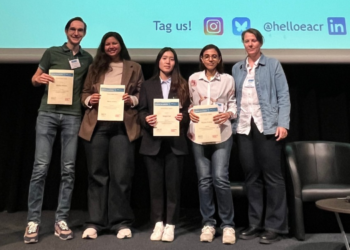
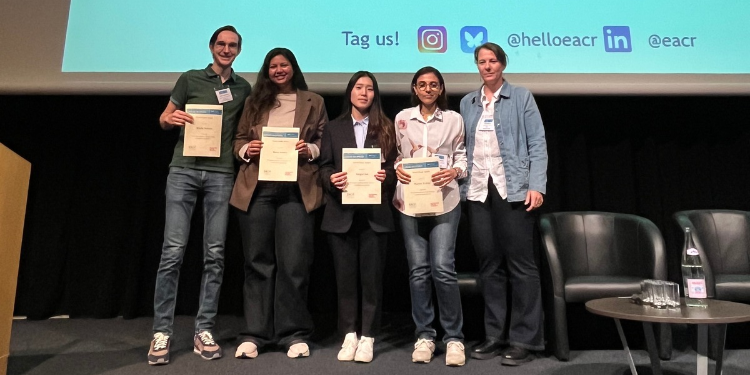
Supported by Worldwide Cancer Research, we were delighted to award several Travel Grants to help cancer researchers in need of financial assistance to attend the event.
Read on to learn about their experiences of the conference.
Anton Fornies Marine
PhD Student, IDIBAPS, Barcelona, Spain
Research
My research focuses on using circulating cell-free DNA (cfDNA) to study melanoma through a range of fragmentomic features. In particular, I analyse cfDNA whole-genome sequencing data using a Nextflow pipeline and combine fragmentomic profiles, including Windowed Protection Scores (WPS), with single-cell RNA sequencing data to infer the relative contribution of different cell types to cfDNA. I also investigate other features, such as fragment length and DNA end motifs, to identify differences between healthy controls, congenital melanocytic nevi and melanoma patients. In the future, we aim to explore whether these approaches can help predict relapse and distinguish patients with different clinical outcomes.
What was a personal highlight of the conference for you?
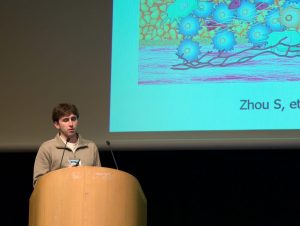
A personal highlight was giving my first oral presentation at an international conference. It was a valuable experience because it allowed me to communicate my research to a broader scientific audience and gain experience presenting my work in a more public and accessible way. I also really enjoyed the atmosphere of the conference. Liquid biopsy, cfDNA and fragmentomics were central topics throughout the programme, so many of the talks and discussions were directly relevant to my research. The venue was also very nice, and the friendly atmosphere made it easy to interact with other researchers.
Were there any social or networking highlights you want to tell us about?
As this was my first international conference, I did not know anyone before attending apart from my supervisors, so it was a great opportunity to meet researchers working in similar areas. I spoke with a PhD Student from the Netherlands Cancer Institute, who also works on melanoma and is planning to start using Oxford Nanopore sequencing for fragmentomics. We discussed the possibility of comparing results, discussing methodological approaches, and potentially sharing samples in the future. I also met Aram from Manchester, who is developing a fragmentomics pipeline in Nextflow, similar to ours. We discussed our respective approaches and the possibility of joining efforts and collaborating on the development of the pipeline in the future.
How has the conference inspired you in your research?
The conference gave me several ideas that I would like to explore in our own work. Sangmi Lee, for example, presented a metric that distinguishes between “end motif in” and “end motif out”, which we have not yet implemented and which I found particularly interesting. The FRAGILE-FLOW pipeline also gave us ideas about tools and approaches that could potentially be incorporated into our own pipeline.
Did you take part in any interesting local activities in your free time outside of the conference?
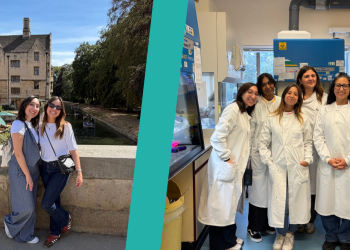
Outside the conference, I had the opportunity to explore Lyon with my colleagues. We visited the city centre and walked along the river, visited the Basilica of Notre-Dame de Fourvière and explored some of the traditional traboules. We also enjoyed some typical Lyonnaise food for dinner.
How has the conference inspired you in your research?
One of the most inspiring talks for me was given by Claus from Aarhus, who presented clinical trials using ctDNA to guide adjuvant chemotherapy and to detect relapse before it becomes clinically apparent. Seeing these approaches being taken into clinical trials was very motivating, as it showed me that, with continued research and effort, liquid biopsy technologies can eventually move from biomarker discovery towards clinical applications. It gave me a clearer perspective on the potential long-term impact of our research and motivated me to think about how the work we are doing today could contribute to this transition in the future.
Mischa Steketee
PhD Student, Amsterdam UMC, The Netherlands
Research
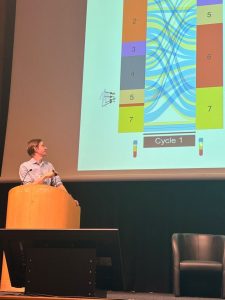
Whether a treatment works is not just determined by the tumour itself. The tumour microenvironment, the immune and other cells surrounding the tumour, are just as important for a patient’s response to treatment.
Using a minimally-invasive blood test, we capture signals from the tumour and its microenvironment, as well as their interaction with cells in the rest of the body. This enables us to assess the efficacy of the treatment for each patient very early on, without the need for an invasive tissue biopsy, ensuring that each patient receives the right treatment.
What was a personal highlight of the conference for you?
I had the honour of presenting my work during the first day of the conference. Beforehand, I was a bit nervous of course, as I hadn’t presented my research to such a large audience before, especially not at an international conference. I specifically remember walking into the room with Chris Iliffe, the EACR Conference Officer, for the first time to upload my presentation; the only thought going through my mind was, ‘This is huge!’. In the end, it went very well and was a really cool experience. Afterwards, I got a lot of positive comments on my work and had some nice and insightful discussions.
Were there any social or networking highlights you want to tell us about?
During one of the coffee breaks, we ended up talking to one of the other speakers, as her work aligns very nicely with ours. She presented some beautiful EV-mRNA + cfDNA data with matched tissues, on which we would like to try our new computational technique. At the conference we already planted the seed for a potential collaboration and now, a few weeks after the conference ended, we are actively searching for a date to discuss the potential collaboration.
How was this conference different from others you have attended?
This was the first liquid biopsy conference for me, as before my research has mostly been focused on tissues. Therefore, it was very nice to see all the experts in the field together in one place, it immediately brought me up to speed with all the different subfields of liquid biopsies.
Another nice thing about this conference was that it was quite small in terms of number of participants. This allowed for better networking, as the bar to talk to other people is somehow lower than when you are in a conference with more than a thousand people.
How has the conference inspired you in your research?
The conference gave me a lot of insight into what people in the field are working on. This has really motivated me to work hard on finishing my manuscript, as I realised a lot of people are interested in my topic and therefore also working on it. It also inspired me on where to go next with my work, as during the expert panel talk it was clear that the future lays in functional liquid biopsies with predictive and not just prognostic power.
Roma Sunder
PhD student, Vall d’Hebron Institut d’Oncologia, Barcelona, Spain
Research
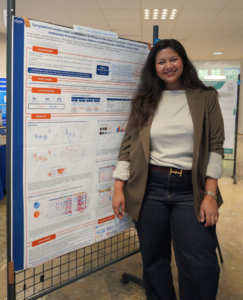
Metastatic prostate cancer evolves under treatment, and tissue biopsies, imaging, and the PSA blood test capture only part of how it changes. Tumours shed DNA (circulating tumour DNA), whole circulating tumour cells, and proteins into the bloodstream. In the MARION study, we collect blood from patients before treatment, during treatment, and at progression. We analyse these components together using genome sequencing, cell counting, and protein profiling, alongside PSMA-PET imaging. I am also validating these findings in mouse models. The goal is to identify blood-based biomarkers that detect treatment response or resistance early, so that therapy can be adjusted sooner.
What was a personal highlight of the conference for you?
My highlight was realising how large and active the liquid biopsy community is. Before the meeting, my work on the MARION study felt quite specialised: longitudinal cfDNA, ctDNA, CTCs, and plasma proteomics in metastatic prostate cancer. Seeing so many groups tackling the same questions from different angles showed me how much progress the field is making and how quickly. Presenting our poster and talking it through with people who understood the challenges reassured me that the work is relevant and worthwhile. It gave me real confidence that my PhD is heading in the right direction and that the questions we are asking matter to the wider community.
How was this conference different from others you have attended?
This conference was much more focused than others I have attended. Because it was dedicated to liquid biopsy in cancer, almost every conversation was directly relevant to my research. Whether I was at a poster, in a coffee break, or at a talk, I was speaking with people who work with cfDNA, ctDNA, CTCs or EVs every day. It quickly became clear that we all face similar problems: the same technical hurdles with low tumour fraction samples and the same biological complexity in interpreting what we measure. Often another group had already worked through a step we are still struggling with. That made the discussions practical and useful and I came away with ideas I can apply directly to our analyses.
Did you take part in any interesting local or cultural activities in your free time outside of the conference?
Yes. Lyon is a beautiful city, and I made the most of my free time. I visited the Basilica of Notre-Dame de Fourvière, which overlooks the whole city and watched the sunset from the Jardin des Curiosités, one of the most memorable moments of the trip. What struck me most was Lyon’s reading culture: people were reading books in cafés, in parks, on the trams, and along the riverbanks. It was lovely to see and it inspired me to explore some local bookshops, where I ended up buying a few books to bring home. It was a nice balance to the intensity of the scientific programme.
How has the conference inspired you in your research?
The conference strengthened my trust in what liquid biopsy can do. Seeing the range of applications presented, from early detection to tracking resistance during therapy, reinforced my belief that these tools can genuinely change how metastatic prostate cancer is monitored. It also motivated me to keep pushing the integrative side of our work, so that each analyte adds complementary information and the combined picture reflects how tumours adapt under treatment.
When you got home, is there anything from the conference that you immediately wanted to tell your colleagues about?
I wanted to tell my group that our research is on the right track. Many studies still focus on a single analyte and discussions at the meeting confirmed that integrating several liquid biopsy components in the same patients over time is something the field still needs. In the MARION study, we combine cfDNA and ctDNA kinetics, CTC enumeration including PSMA-positive CTCs, and plasma proteomics alongside PSMA-PET imaging. Our poster was well received, and people particularly appreciated this multi-analyte, longitudinal approach. It was encouraging to share that external validation with the team and it confirmed that we are asking the right questions.
Sangmi (Sandra) Lee
Postdoctoral Researcher, Harvard Medical School, USA
Research
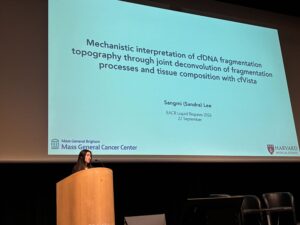
When cells die or break down, they release tiny pieces of DNA into our blood. I study how these pieces can reveal what is happening inside the body, particularly when cancer is present. We developed ‘cfVista’, a computer tool that examines their sizes and ends to estimate which tissues they came from and how the DNA was cut across the genome. In people with metastatic breast cancer, we found changes in DNA from tissues affected by cancer’s spread. Our goal is to use these clues to help detect cancer and track how it affects the body through a simple non-invasive blood test.
Were there any social or networking highlights you want to tell us about?
A highlight was the conference dinner, where I sat with a principal investigator from INSERM. We discussed a potential collaboration as she was very interested in our tool and I was equally interested in the sequencing data her lab had generated. I also enjoyed meeting researchers from different institutions working on other aspects of liquid biopsies, including extracellular vesicles and circulating tumour cells. It was inspiring to exchange ideas about how our complementary approaches could help improve the quality of life of cancer patients.
How was this conference different from others you have attended?
What stood out was the conference’s clear focus on liquid biopsies. Most talks were closely connected to my research, so I found them easy to follow and engaging. That shared focus made every day enjoyable, and I stayed absorbed throughout. Compared with other conferences I’ve attended, the time seemed to fly by!
Did you take part in any interesting local or cultural activities in your free time outside of the conference?
Yes! With Lyon’s reputation as the food capital of France, I visited Le Neuvième Art by Christophe Roure, which was my first experience at a two-Michelin-star restaurant. The modern French tasting menu lasted three and a half hours, making it one of the longest dinners I’ve had in a while! The food was wonderful, and I thoroughly enjoyed the experience. I also visited several churches, including the Basilica of Notre-Dame de Fourvière, where I was struck by the beauty and intricate detail of the stained-glass windows. I loved Lyon’s relaxed vibe and especially enjoyed wandering through the narrow, tucked-away streets of Vieux Lyon.
How has the conference inspired you in your research?
I had the honour to present our work in the opening session on the first day. During the break immediately afterward, several people approached me to ask about our tool and whether a preprint or publication was available. These conversations continued throughout all three days, and I was delighted and surprised by the enthusiasm and thoughtful questions our work generated. Their interest helped me appreciate the value of our research and gave me fresh motivation to finish the manuscript. We hope to submit it and share a preprint very soon!
Sherien Eldaly
Associate Professor, National Research Centre, Cairo, Egypt
Research
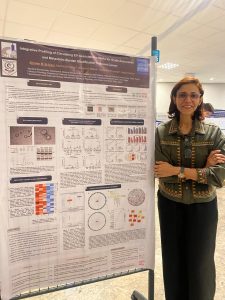
My current research focuses on extracellular vesicles (EVs) as liquid biopsy biomarkers for cancer. These tiny particles are released by cells into the blood and carry biological information from the cells they come from. I study the molecules they contain, particularly microRNAs, to determine whether they can help detect cancer, distinguish different stages of disease, and monitor progression or response to treatment. My aim is to develop simple blood-based biomarkers that could complement current diagnostic methods and support more personalised cancer monitoring.
What was a personal highlight of the conference for you?
One of the main highlights of the conference for me was the opportunity to meet and interact with several leading scientists in the liquid biopsy field, including researchers whose work I have been following and citing for years. Attending lectures by Ellen Heitzer, Maximilian Diehn, and Amin El-Heliebi was particularly valuable, as I had been looking forward to the opportunity to discuss aspects of my own work with them and explore potential areas of collaboration.
I also had the opportunity to connect with Irene Casanova, and we discussed the possibility of applying together for future joint funding opportunities between Egypt and Spain. Another pleasant networking highlight was meeting an old colleague, Emmanuel Acheampong from the University of Leicester, who is also an EACR Ambassador. We discussed staying in contact after the conference and exploring the possibility of developing a research collaboration.
How was this conference different from others you have attended?
This conference was particularly different for me because it was the first time I attended a meeting focused entirely on liquid biopsy, which is closely related to my current research theme. I regularly attend the EACR Congress, which I value for its broad range of cancer research topics, but a highly specialised meeting like this offered a different experience. I was able to attend almost all of the scientific sessions, whereas in larger multidisciplinary conferences, several interesting lectures are often scheduled in parallel, and it is difficult to attend everything relevant. This focused format allowed me to follow the discussions more closely and gain a more complete view of recent advances in the field.
I had applied for a travel grant to attend this conference on previous occasions but was not successful, so I was especially pleased to have the opportunity this year. The experience confirmed that my persistence in trying to attend this particular meeting was worthwhile.
Did you take part in any interesting local activities in your free time outside of the conference?
I made sure to use my free time after the scientific sessions to explore Lyon and experience the city. On the first evening, I visited Place Bellecour and then walked through Vieux Lyon, where I enjoyed discovering the old streets and the atmosphere of the historic part of the city. On the second evening, I went to the Palais de la Bourse and later walked along the Saône River. On the final day of the conference, before returning to Cairo, I was also able to make a short visit to the Fourvière Basilica, one of Lyon’s most important landmarks. I found Lyon a beautiful, very pleasant city to explore, and I felt very safe moving around on my own. I think it is an excellent choice of location for the conference.
How has the conference inspired you in your research?
The conference inspired me particularly through the impressive results presented on ctDNA. Most of my current research has focused on other components of liquid biopsy, especially circulating and extracellular-vesicle-associated biomarkers, so the breadth of applications and the clinical potential demonstrated for ctDNA were very motivating. The lectures encouraged me to consider expanding my future research in this direction and, more importantly, to explore how ctDNA could be integrated with the biomarker approaches I am already working on. I believe that combining different liquid-biopsy components, rather than studying each in isolation, could open new possibilities for more informative and clinically relevant cancer monitoring.
Is there anything else you’d like to mention?
I would like to sincerely thank EACR and Worldwide Cancer Research for giving me the opportunity to attend this conference through the travel grant. I was very much hoping to attend this meeting, and without this support, it would have been very difficult for me to participate.
I especially appreciate that the grant is available to researchers from emerging economies without age restrictions. This is an important point that is sometimes overlooked. Many experienced researchers from these countries may no longer be eligible for early-career travel awards, although attending international conferences remains essential for maintaining scientific exchange, establishing collaborations, and keeping pace with new developments. With the current economic challenges affecting many emerging countries, conference travel is often not a funding priority. Supporting researchers from these regions benefits not only individual scientists but also the wider research community, as meaningful scientific progress increasingly depends on international collaboration.
Interested in EACR Conferences and further Travel Grants?
We organise a variety of excellent cancer research conferences, both in person and virtual, where the latest research topics and interaction for participants are the very highest priorities.
To assist researchers who need financial assistance to attend our in-person conferences, we offer EACR-Worldwide Cancer Research Travel Grants. Recipients also get the opportunity to present their work as an oral or poster presentation. Each Travel Grant includes a free registration and funds to support travel and accommodation costs.
Make sure you add the dates of upcoming EACR Conferences to your diary now. Don’t forget we offer EACR member discounts on all of our registration fees.