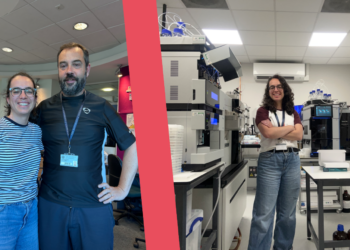

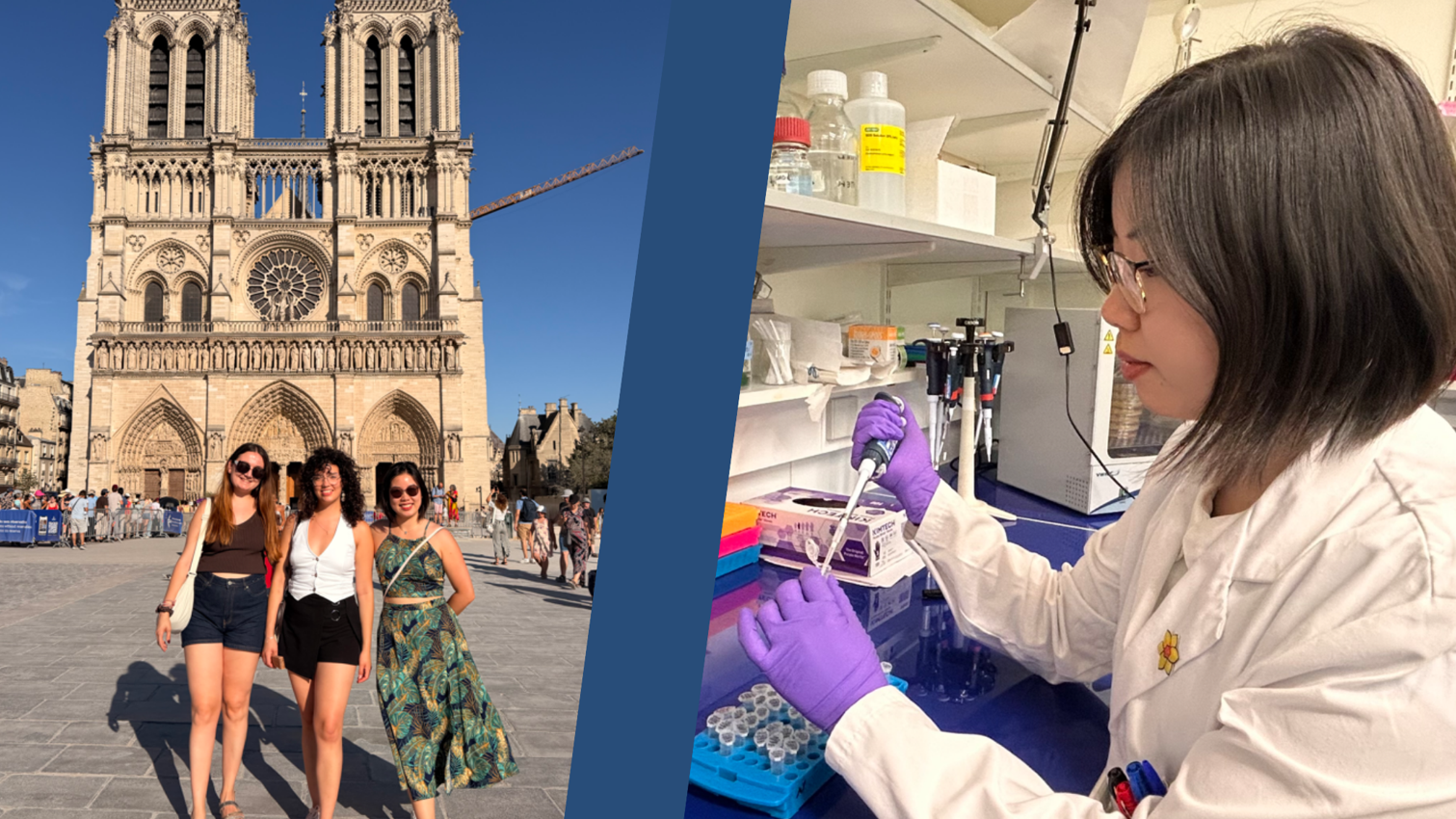
Peijin Jiang is a PhD student at the Vall d’Hebrón Institute of Oncology (VHIO), Spain, who received an EACR Travel Fellowship to visit and work at the Institut Curie, France, from January to July 2026.
The EACR, with support from Worldwide Cancer Research, provides Travel Fellowships of up to €3,500 to enable early-career cancer researchers to gain new skills through a short-term visit to a lab or research group in another country. This trip was also sponsored by an EMBO Scientific Exchange Grant.
You can read about other Travel Fellows and their experiences here.
Tell us a little bit about your research.
Chemotherapy can shrink a tumour dramatically, yet a small population of cancer cells may survive treatment and remain hidden in the body. These persistent cells can eventually restart tumour growth, causing cancer relapse. My research investigates how colorectal cancer cells acquire this ability to survive. We focus on a protein called DPPA3, which appears to help cancer cells adapt to chemotherapy by reshaping their translational machinery. By uncovering and targeting these survival mechanisms, we aim to make current treatments more effective and, ultimately, prevent the cells that escape therapy from driving cancer recurrence.
Why did you decide to apply for an EACR Travel Fellowship?
My PhD project had reached a point where understanding translational regulation had become essential to answering our main biological questions. My research focuses on tumour cell persistence in colorectal cancer, and our preliminary data suggested that DPPA3 overexpression was associated with profound changes in protein synthesis. However, my home laboratory did not have the specialised infrastructure and expertise required to study ribosome dynamics and translational regulation in depth.
The fellowship provided a unique opportunity to undertake an extended scientific visit in a laboratory with complementary expertise. Beyond generating data for my PhD, I wanted to acquire skills that I could bring back to my home institution and use independently in the future.
The EACR Travel Fellowship therefore represented not only financial support for international mobility, but also an important investment in my scientific training, the development of my project, and the establishment of an enriching collaboration between VHIO and Institut Curie.
Why did you choose the host lab?
I chose Professor Stéphan Vagner’s laboratory through a combination of scientific recommendations and a strong overlap between his group’s expertise and the needs of my project. In 2025, my supervisors and I attended the EACR conference ‘Persister Cells: from bacteria to cancer’ in Lyon. There, Professor Caroline Robert recommended Stéphan Vagner’s group as an ideal partner because of their expertise in mRNA translation, RNA biology and cancer persistence.
His research was particularly relevant to our project, including works such as The plasticity of mRNA translation during cancer progression and therapy resistance (PMID: 34341537) and Persistent Cancer Cells: The Deadly Survivors (PMID: 33186528).
We contacted Professor Vagner in July 2025, and subsequently held an initial meeting involving Professor Vagner, Dra. Lucilla Fabbri, my supervisor Isabel Puig and myself. These discussions confirmed that the laboratory could provide the technical and conceptual expertise needed to investigate translational regulation in our colorectal cancer models and led to the development of the scientific exchange.
Can you summarise the research you did on your visit?
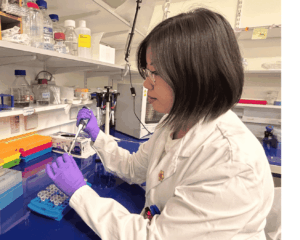
I investigated how DPPA3 overexpression affects ribosome dynamics and translational regulation in colorectal cancer cells. I learned and optimised polysome profiling in SW1222 control and DPPA3-overexpressing cells treated with either vehicle or 5-fluorouracil.
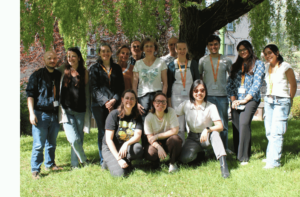
Establishing the workflow required substantial optimisation and troubleshooting, including determining the optimal amount of sample to obtain high-resolution polysome profiles without saturating the UV detector and implementing rigorous RNA quality control. I learned the complete workflow, from cell lysis and sucrose-gradient preparation to fractionation, protein precipitation, RNA extraction and assessment of RNA integrity using the Bioanalyzer.
The final experiment generated reproducible profiles across four biological replicates. Notably, DPPA3-overexpressing cells showed a consistently larger 80S peak, while differences were also observed in the light-polysome region. These findings are consistent with our hypothesis that DPPA3 may promote the maintenance of a pool of non-actively translating ribosomes, potentially contributing to cellular persistence and promote cell regrowth after chemotherapy treatment. I precipitated the proteins for all the polysome fractions to study by Western blot the distribution of protein factors involved in translational processes. I also extracted RNA from the input, 80S and polysomal fractions for subsequent RNA-seq analysis.
What were you able to do that you could not have achieved in your home lab?
The main opportunity provided by my visit was access to specialised equipment and expertise that were not available in my home laboratory. VHIO currently does not have the infrastructure required to perform polysome profiling, including the equipment for preparing and fractionating sucrose gradients and generating UV-based polysome profiles. In addition, our group had limited experience in interpreting these complex translational profiles.
At Institut Curie, I was able to learn the complete experimental workflow using dedicated equipment for sucrose-gradient generation, UV monitoring and automated fraction collection. Equally importantly, I gained practical experience in troubleshooting and optimising the method for our specific colorectal cancer model, as well as in interpreting the resulting polysome profiles.
The visit allowed me to move from having no previous experience with polysome profiling to being able to independently plan and perform the workflow. This would not have been possible through a short visit or by simply receiving protocols remotely. The hands-on training and repeated experimental experience were essential for developing the technical confidence needed to continue this work after returning to Barcelona.
Did you take part in any interesting local or cultural activities?
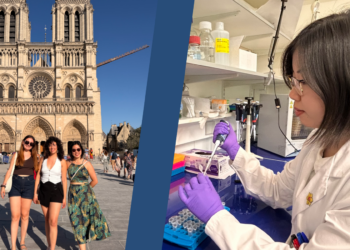
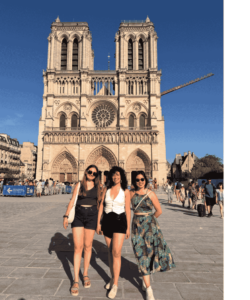 My stay in Paris was scientifically rewarding but also culturally enriching. I visited many museums and emblematic monuments in Paris and took advantage of weekends to explore other regions of France. Some of my favourite trips included visits to Giverny, Honfleur, Saint-Malo, Mont-Saint-Michel and some other regions of Normandy and Brittany.
One of the most valuable aspects of the experience, however, was living in an international environment. I met people from France, India, Singapore, Albania, Colombia, Mexico and Italy, among other countries. Sharing daily life and experiences with people from different cultural backgrounds gave me the opportunity to learn about their cultures while also sharing my own.
I also participated in organising activities with the committee of Colegio de España residents. These experiences helped me become part of an international community beyond the laboratory and significantly improved my confidence in English, which became the language I used in my daily interactions throughout the stay.
What was a personal highlight of your trip?
One of the most rewarding moments of my visit was obtaining the final set of reproducible polysome profiles after a long process of optimisation and troubleshooting. The technique was entirely new to me and establishing it in our colorectal cancer model required repeating the experiment several times and identifying different technical problems along the way.
When we finally obtained consistent profiles across four biological replicates, it was particularly satisfying because the data also provided support for our biological hypothesis. The reproducible increase in the 80S peak in DPPA3-overexpressing cells pointed to the existence of an accumulation of a pool of inactive ribosomes.
On a personal level, another highlight was realising how deeply connected I had become with people I had met during the stay. Although six months initially seemed relatively short, it was enough to build meaningful friendships and professional connections that I have continued to maintain after returning home.
Did you have a personal mentor or anyone who particularly helped you?
Several people played important roles during my stay. Dra Lucilla Fabbri was particularly important during the first stages of my visit. She trained me in several key procedures, including protein precipitation and RNA extraction from polysomal fractions, and helped me develop the confidence to progressively work independently.
I also learned from her scientific approach. She frequently searched for published experiments related to a specific biological question and then critically adapted and combined different approaches to design experiments suitable for our model. This encouraged me to explore the literature more independently and to think more creatively about possible experimental strategies.
Sylvain Martineau, the engineer responsible for the polysome profiling platform, was also an essential source of support. He provided practical guidance on sucrose-gradient preparation, sample fractionation, UV profile acquisition and the technical use of the equipment. Their complementary support was instrumental in helping me acquire the complete workflow.
How has this visit been beneficial to your research and your career?
This visit has had a major impact on both my PhD project and my development as an independent researcher. Scientifically, it provided access to a methodology that was previously unavailable to me and generated preliminary findings that have opened a new direction for understanding the role of DPPA3 in colorectal cancer persistence.
The experience also strengthened my ability to troubleshoot complex experiments, interpret unexpected results and develop new experimental hypotheses. I became progressively more independent during the stay, moving from initial hands-on training to planning and performing most of the workflow myself.
 From a career perspective, working in an international research environment improved my scientific communication skills and confidence in English. I also expanded my professional network and gained experience working with researchers with different scientific backgrounds.
Perhaps most importantly, the visit showed me the value of combining complementary expertise through collaboration. This experience will influence how I approach future research questions and will be an important foundation for my next steps after completing my PhD.
Is there anything else you’d like to mention?
I would like to emphasise that the value of the fellowship extended far beyond the experimental results obtained during the visit. International mobility allowed me to immerse myself in a different scientific environment, learn a complex methodology through hands-on experience and develop meaningful professional and personal connections.
The stay also reinforced an important lesson about research: progress is rarely linear. Establishing a new technique required patience, repeated optimisation and careful troubleshooting, but this process ultimately allowed me to gain a much deeper understanding of the methodology and to work with greater independence.
Living abroad also pushed me outside my comfort zone. Working and communicating in English on a daily basis, interacting with people from many different countries and participating actively in an international community were all important aspects of my personal development.
I am very grateful to the EACR Travel Fellowship for making this experience possible and for supporting an exchange that has had a lasting impact on my research, my laboratory and my development as a cancer researcher.
Want to find out more?

If you are interested in applying for the Travel Fellowship scheme, please click here for more information: EACR Travel Fellowships