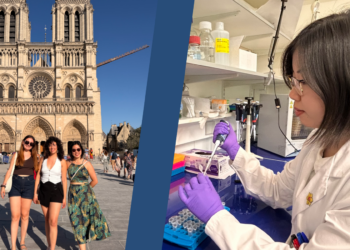

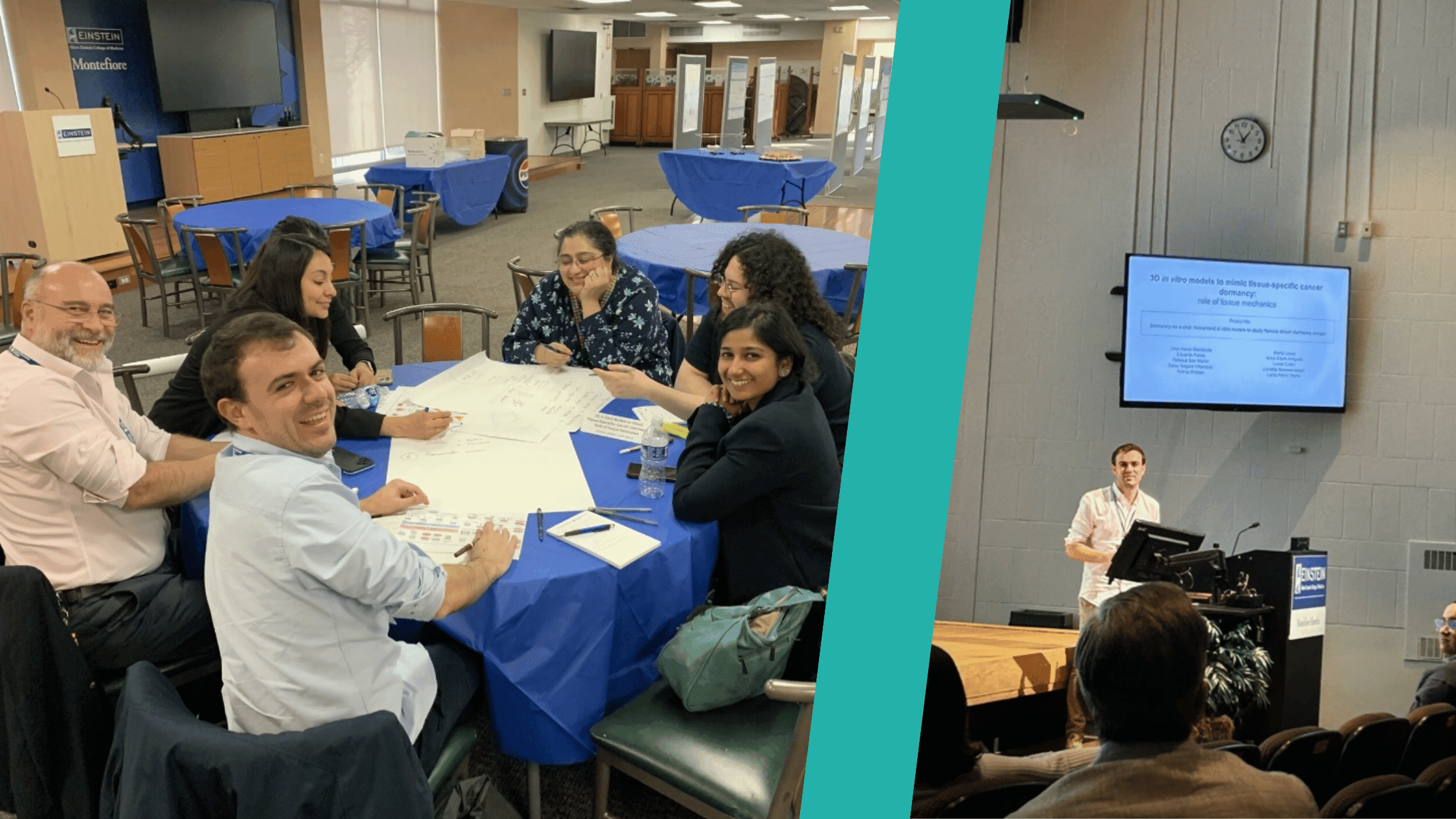
Unai Heras Manterola is a PhD student at the Biogipuzkoa Health Research Institute (Spain) who received an EACR Travel Fellowship to visit and work at the Albert Einstein College of Medicine (USA) between 01 October 2025 and 31 January 2026.
The EACR, with support from Worldwide Cancer Research, provides Travel Fellowships of up to €3,500 to enable early-career cancer researchers to gain new skills through a short-term visit to a lab or research group in another country. Unai was also supported by an EMBO (European Molecular Biology Organization) travel grant.
You can read about other Travel Fellows and their experiences here.
What is the topic of your current research?
My research focuses on developing 3D-bioengineered models that mimic the metastatic niche to understand how breast cancer cells remain “asleep”, a state known as dormancy. I use these models to study how tissue stiffness, the way cancer cells attach to and interact with the surrounding proteins, and the communication with neighbouring cells influence whether cancer cells enter in a dormant state (an asymptomatic stage for patients) or become active (which can lead to metastasis).
Why did you decide to apply for an EACR Travel Fellowship?
I wanted to carry out a research internship in the group of Dr. Aguirre-Ghiso to study how tissue mechanics influence cancer dormancy by combining 3D hydrogels with their mouse models and expertise. As a PhD student, my current fellowship does not cover any travel cost. Therefore, as a member of the EACR community, I saw this fellowship as a great opportunity to support my project in this leading lab in the field.
Why did you choose the host lab?
I met Dr. Aguirre-Ghiso at the 19th ASEICA International Congress held in Zaragoza (Spain) in 2024, where I presented an oral talk. This presentation sparked a scientific discussion with him, allowing me to witness his exceptional leadership and advisory roles. I was already familiar with Dr. Aguirre-Ghiso’s pioneering work on cancer dormancy, making his group the ideal choice to advance my research on breast cancer dormancy. Therefore, I approached the host lab at this conference of ASEICA.
Could you summarise the work you did on your fellowship visit?
During my stay, I used previously characterised alginate-based biomaterials to induce dormant phenotypes in HER2+ breast cancer cells. By adjusting different alginate concentrations, I recreated both soft (healthy) and stiff (fibrotic) microenvironments. To characterise the dormant phenotype of these cells, I used dormancy markers already established in the host lab and evaluated cell behaviour within different 3D hydrogels. Additionally, I gained preliminary insights into the encapsulation of niche cells, setting the context for new co-culture models that better recreate lung microenvironments.
What were you able to do that you could not have achieved in your home lab?
I learned new techniques such as extracting mammary glands from MMTV-HER2 mice and characterising dormant phenotypes in 3D hydrogels. I also learned how to isolate and culture niche cells, followed by their encapsulation in 3D hydrogels. Additionally, I gained experience in new imaging techniques using a spinning disk microscope, which is not available in my home lab or institute.
I am also grateful to the entire group for their kindness, collaboration and friendship.
Did you take part in any interesting local or cultural activities?
I enjoyed many musical activities during my stay, such as joining an open community choir, where I met many local friends. I also took part in musical theatre workshops and attended classical music concerts at the famous Carnegie Hall. These experiences made my time in New York more enjoyable and allowed me to build new friendships and meaningful connections.
How has the trip inspired you in your research?
I felt deeply inspired by Dr. Aguirre-Ghiso’s mentorship. He guided me both scientifically and personally, encouraging me to achieve meaningful results and supporting me in presenting my work to diverse audiences. His leadership and inclusive attitude made me feel like a valued member of his lab, even during this short period. I am also grateful to the entire group for their kindness, collaboration and friendship. They taught me new techniques, shared their knowledge generously and showed me around New York, making my experience both enriching and memorable.
Want to find out more?

If you are interested in applying for the Travel Fellowship scheme, please click here for more information: EACR Travel Fellowships