

In the ever-changing pursuit to challenge, evolve and understand the complexities of this gigantic universe, Newton’s law of motion largely remains true. If we are in motion, we tend to stay in motion. Why shouldn’t that be true for my journey in science?
As a student of engineering, I learnt Carnot’s law which states that no machine can be 100% efficient. However, in my opinion, the healthy human body is the perfect example of a well-oiled machine that disproves the great Carnot. This is why I am fascinated with cancer and how it disrupts the efficiency of this wonderful homeostasis.
I started training as an engineer in India. But instead of being limited to engineering principles, I dreamt of taking advantage of the prowess of technological understanding and machinations to ask questions in cancer biology. This gap between a dream and reality was bridged during my final year of Master’s. I was fortunate to conduct my thesis work in the USA and Germany through the Khorana and DAAD fellowships, respectively.
As expected, the exposure made me fall in love with research and boosted me to take a plunge into being a translational scientist, and not just stay an engineer. This transition was quite intimidating at first. Like many of my fellow researchers, I had to overcome my inner impostor syndrome to start my journey to a new continent away from my friends and family. The dynamism of cancer can be a hard problem to understand, let alone question and chase. But I did persevere. I am now a final year PhD candidate in the Molecular, Cellular and Developmental Biology program (Yes, I know it’s a mouthful!!!) and studying the tumour microenvironment in pancreatic cancer.
“I truly think that the biggest roadblocks in cancer research can only be overcome by willingness to share, learn, and teach”
In the last four years, I have gone through the philosophy of transition everyday, starting as early as the first-year rotations. Exactly when you feel like you have found your footing, it’s time for you to move on to the next task at hand. When I look back to how I felt daunted at solving Fourier transformations for my Biomedical Electronics class, or building a demo CT scanner for a design lab as a Master’s student, to the journey of performing orthotopic mice surgeries and building 3D organoids to culture mini tumour microenvironments during my PhD, I am so proud that I did not sequester myself.
It is terrifying and exciting to transition from questioning how well I understand immunology to writing national level grants with my mentor as well as publishing my own research. Cancer evolves and stays in motion without waiting on us. The more we understand cancer, the more complicated questions present themselves. This requires us to zoom out and approach our problem from different points of view. It makes you think how extremely important it is to break the imaginary walls we build amongst us.
My game changing realisation is that I don’t need to know everything. I just need to be willing to seek help. I am grateful I started to challenge myself and became open to learning the latest research tool (be it bioinformatics or spatial transcriptomics) or collaborating with supportive peers. The art of science is, after all, to stay hungry and question the state of the art. I am approaching a pivotal time in my personal and professional life where I will have to navigate towards the postdoctoral experience while also moving continents with my partner. I truly think that the biggest roadblocks in cancer research can only be overcome by willingness to share, learn, and teach. Here’s hoping our choice of “staying in motion” will help us evolve faster than cancer!
 About the author:
 About the author:
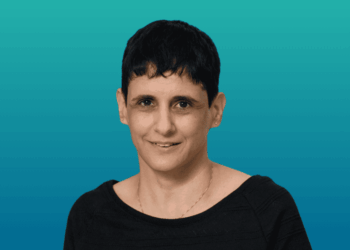
Debi is a final year PhD candidate at The Ohio State University, USA. She is investigating the mechanism behind the anti-cancer action of a naturally occurring metabolite for potential translation as a novel therapeutic in pancreatic cancer. In this regard, she is interested in stress regulatory pathways and their role in carcinogenesis, drug resistance and immunosuppression in the tumor microenvironment. She loves traveling, reading, volunteering, and baking when she is not in the lab. You can follow her on X (Twitter) @Debi_Mukh