Click above to watch
“Alway focused at the latest state of art. Presented very clearly, consistently, in a structured way and adaptable to a large professional audience. Speakers invited are of great expertise and share the most important of their research, including latest advances.” – feedback from a participant
On 27 May 2026, the EACR hosted a webinar in collaboration with SYNENTEC, one of our valued EACR Industry Partners. In this webinar we welcomed Lisa-Marie Philipp from the Institute for Experimental Cancer Research in Kiel, who presented how automated wound healing assays are applied to study pancreatic ductal adenocarcinoma (PDAC) cell migration and treatment responses. We also heard from Reinhild Geisen and Ben Werdelmann from SYNENTEC, who introduced their wound healing workflow and imaging platforms.
Thanks to Dr. Lisa-Marie Philipp and SYNENTEC we are able to provide free on-demand access to the webinar, which can be found above.
Talk abstract
Analyzing cancer cell migration is critical for understanding metastatic mechanisms and identifying novel therapeutic targets. A commonly used method to study this is the scratch or wound healing assay. However, these assays are often manual, time-consuming, and limited in throughput. In addition, they typically involve multiple disconnected steps from image acquisition to data analysis, which can introduce variability, reduce reproducibility, and make it difficult to compare results across experiments or laboratories.
In this joint webinar, Lisa-Marie Philipp from the Institute for Experimental Cancer Research in Kiel will present how automated wound healing assays are applied to study pancreatic ductal adenocarcinoma (PDAC) cell migration and treatment responses. Using label-free live-cell imaging, wound closure dynamics are monitored in 96 wells in real time, providing highly robust, quantitative insights into cellular behavior and treatment effects.
Building on this scientific foundation, Reinhild Geisen from SYNENTEC will introduce their wound healing workflow, combining automated imaging with integrated analysis in a single system. This enables researchers to reduce hands-on time and minimize user bias. Ben will conclude with a short introduction to SYNENTEC’s imaging platforms and how they can be integrated into routine research workflows including fully integrated walk-away automation.
Together, the webinar provides practical insights into improving migration assays and generating more reliable data, so researchers can spend less time on exhausting, repetitive tasks and more time on doing actual science.
Speakers
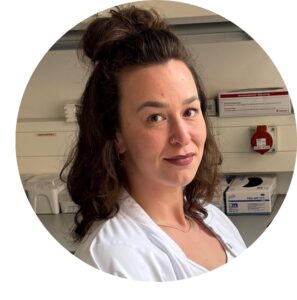
Lisa-Marie Philipp, Ph.D., Institute for Experimental Cancer Research, University Hospital Schleswig-Holstein, Germany
Lisa-Marie Philipp is a postdoctoral researcher at the Institute for Experimental Cancer Research at the University Clinic of Kiel. Her work focuses on pancreatic ductal adenocarcinoma (PDAC), with a particular interest in clonal heterogeneity and cellular plasticity, and how these features influence tumor progression, metastasis and therapy resistance.
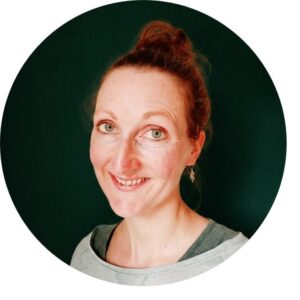
Reinhild Geisen, Ph.D., SYNENTEC GmbH, Elmshorn, Germany
Reinhild Geisen earned her PhD studying the role of inflammation in colorectal and pancreatic cancer. She now leads SYNENTEC’s Cell Culture Application Lab, where she develops and advances cell-based assays using high-throughput microscopy. Her work focuses on simplifying the path from cell images to quantitative data through automated and user-friendly workflows.

Ben Werdelmann, SYNENTEC GmbH, Elmshorn, Germany
As Head of Business Development and Biological Applications at SYNENTEC, Ben Werdelmann develops microscopy solutions for cell culture applications. He specializes in translating complex imaging technologies into robust, easy-to-use workflows that are designed to be integrated into automated end to end workflows. In close collaboration with partners from biotechnology and pharmaceutical research, he helps turn laboratory challenges into practical solutions.
Want more videos?
EACR members get exclusive access to a library of on-demand videos, from talks delivered at previous virtual conferences to webinars with leading authors and industry experts. Explore EACR membership today.
You can find our public videos here in The Cancer Researcher by clicking the tags below.