

by Rosanna Jackson
It hasn’t worked. A sinking in your stomach confirms just how disappointed you are. Just how much you wanted this experiment to work. Imposter syndrome starts to creep in. No one can explain why today your western blot, your DNA extraction, your flow cytometry experiment failed.
It doesn’t matter that this is the one-millionth time you’ve done the experiment, or that, in theory, everything should have worked. It doesn’t even matter that you really, really need these results for a grant application, or that it’s the last figure your supervisor needs for a big paper.
Once experienced, it is impossible to forget the euphoria of discovering a new piece in the complex cancer puzzle.
Hundreds of hypotheses work their way through your mind. Are the antibodies off? Maybe the buffers weren’t made up correctly? Were the gels stored properly? Was it a rogue pipette, not correctly calibrated? Where’s Sherlock when you need him?
You think sadly of the sunny weekends you spent in the lab, diligently looking after cells. The tedious hours you spent labelling hundreds of teeny-tiny tubes, which all those years of studying didn’t quite seem to prepare you for. The evenings you spent collecting the 16 hour time course your PI insisted was highly necessary, whilst your friends with ‘normal jobs’ were hanging out in the pub.
Lab colleagues can do little to remedy the situation, except suggest a cup of tea or (more likely) an increasingly frequent trip to the corner shop for emergency chocolate.
We are shameless science addicts. We’re hooked on the rush of a crucial experiment finally coming together.
So, why do we do it? I’ve hardly sold the job. And it’s not like we’re in it for the money.
It is because we are shameless science addicts. We’re hooked on the rush of a crucial experiment finally coming together. Addicted to the feeling when a western blot turns out perfectly, when a chromatogram peak is beautifully sharp, or an experiment yields the coveted ‘highly significant’ p value.
You have pushed out a tiny corner of the bounds of knowledge.
Once experienced, it is impossible to forget the euphoria of discovering a new piece in the complex cancer puzzle. The size of the discovery doesn’t matter. Because in that moment, you’re the only person in the world who knows the answer to something which, up until now, was a complete mystery. You have pushed out a tiny corner of the bounds of knowledge.
And in that moment, the hard work it took to get there is forgotten. You start to crave the next piece of the puzzle, and so you enthusiastically launch into a new project. The corner shop stocks up on chocolate in preparation.
 About the author
 About the author
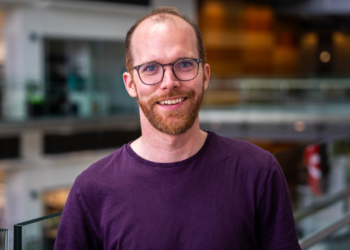
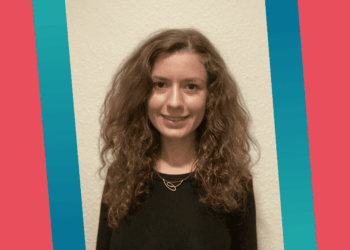
Rosanna Jackson completed her PhD at Newcastle University in November 2017 investigating personalising dexamethasone therapy in childhood ALL. She is now working as a postdoctoral researcher at the University of Auckland in a drug discovery team, currently looking at novel selective DNA-PK inhibitors as radiosensitisers in cancer therapy. She has been a member of the EACR for 5 years.