
The Horizon Europe MSCA Doctoral Network Mac4Me (Macrophage Targets for Metastatic Treatment), of which the EACR is an Associated Partner, concluded its second consortium meeting and in-person doctoral training session last month, hosted by the University of Nottingham from May 18 to 22, 2026. Following the initial kick-off meeting in Rotterdam, this five-day event focused on technical training, interactive research collaboration, patient and public involvement (PPI), and professional communication.
Training
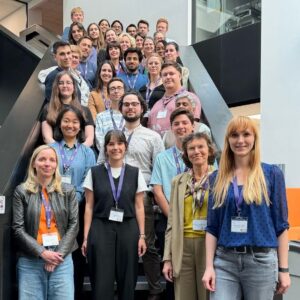
The week opened with a three-day training program designed for the network’s doctoral candidates (DCs). The program began with an introductory session featuring research pitches and discussions led by local investigators from the host university, who shared expertise in oncology, biomaterials, public health, and immunology, among other fields.
After this introduction, the DCs participated in practical workshops focused on specific biomedical methodologies. These included encapsulation in hydrogels, electronic microscopy for high-resolution imaging and analysis of the structural components of matrix-rich environments.
The training also featured a PPI workshop. DCs worked directly with patient partners to improve research accessibility, converting complex scientific projects into three-minute oral presentations and reviewing 200-word plain-language summaries.
Interactive Research Alignment and Collaboration
Following the training, the 2nd Mac4Me Consortium Meeting took place at the University of Nottingham’s Advanced Manufacturing Building. To maximise feedback and encourage active research collaborations across the network, the meeting adopted an interactive format with six round table discussions.
In each session, three DCs gave a 15-minute presentation outlining their specific research tasks, annual goals, recent results, current technical challenges, and plans for the future. Following the presentations, the three speakers each hosted a roundtable. The audience split into small groups and rotated among the tables. This format allowed all consortium members to provide direct feedback or suggestions to each DC on their research. It also encouraged interaction among the different DCs, ensuring that their research is complementary.
The meeting concluded with a dedicated session focused on utilising LinkedIn as a tool to communicate scientific milestones and professional updates.
About Mac4Me
Mac4Me is a 48-month Horizon Europe Marie Skłodowska-Curie Actions Doctoral Network addressing the scientific and societal challenges of cancer metastasis. The project focuses on neuroblastoma, breast cancer, and prostate cancer—three cancer types with a tendency to metastasise to vital organs such as the brain, bone, and liver.
The consortium comprises 14 international partners and 11 associated partners, bridging universities, companies, patient associations, and foundations across Europe and beyond. By integrating disciplines such as social sciences, basic science, biomedical engineering, and computational biology, the network trains the next generation of researchers to develop new therapeutic strategies against metastatic disease and to explore their societal impact and patient involvement.
For more information about the consortium and the project, visit their website.