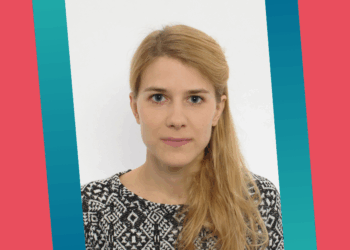


Àlex Cebrià Xart is a PhD student at the Institute for Research in Biomedicine (IRB) Barcelona, Spain who received an EACR Travel Fellowship to visit and work at the AGORA Cancer Research Center, Switzerland between 15 September and 31 October 2025.
The EACR, with support from Worldwide Cancer Research, provides Travel Fellowships of up to €3,500 to enable early-career cancer researchers to gain new skills through a short-term visit to a lab or research group in another country.
You can read about other Travel Fellows and their experiences here.
What is the topic of your current research?
Current cancer immunotherapy successfully targets adult tumours that are noisy, but it fails against silent, stealthy childhood cancers that evade detection. The goal of our research is simple: to study cancer samples from children to find the few but specific immune cells that are fighting back effectively. By discovering them and understanding the biology behind these successful fighter cells, we will be able to generate predictive tools needed to uncover who will respond and, ultimately, will allow us to develop highly specific and effective immunotherapies for these young patients. This work is critical to develop gentler, more focused treatments to help children’s immune system win the battle against difficult-to-treat childhood cancers.
Why did you decide to apply for an EACR Travel Fellowship?
Living in Lausanne with a PhD salary from Spain would have been quite difficult, and I explored funding options to help me cover the expenses during my stay. Given that I am member of both the ASEICA and EACR associations, I explored funding opportunities on their respective websites, and reading the positive feedback from other EACR Travel Fellowship awardees encouraged me to apply. Beyond the necessary financial support, I pictured this fellowship as a vital step in my professional career as a researcher, providing me with international exposure and the chance to build a professional network with experts in the immuno-oncology field.
Why did you choose the host lab?
The choice of the Alexandre Harari lab was influenced by its well-established reputation and pioneering work in understanding tumour specific antigens and T-cell dynamics, directly addressing key questions in personalized adult cancer therapies. Our previous research study was the beginning of a synergistic collaboration between both laboratories, where we monitored the effects of the immunotherapy in a five-month-old patient diagnosed with a rare but aggressive childhood cancer through 18 months. Given the positive environment, we decided to go one step further in this collaboration by learning on-site the T-cell related techniques in the Harari lab with the final aim to bring them to Barcelona to facilitate the study of this and other childhood cancers.
Can you summarise the research you did or what you learned on your visit?
During my stay at the Harari lab, I could advance and deepen on the study of a 5-month old patient diagnosed with a malignant rhabdoid tumour at the Pediatric Cancer Center Barcelona (PCCB), and how the lymphoid compartment effectively recognize tumour cells. A key training component involved processing patient-derived tumor biopsies from the PCCB for the expansion of Tumor Infiltrating Lymphocytes (TILs)—a crucial step in developing adoptive immune therapies. Furthermore, I acquired expertise in generating both transient and stable cells expressing candidate T-Cell Receptors (TCRs) in patient-matched PBMCs (see picture), which will help us to validate our previously reported findings in PDX models.
With the scope to expand our immune-oncology knowledge, I was also involved in the expansion of TILs from other childhood sarcomas, resulting in a very exciting experience given the rapid and high applicability to the patients. Altogether, this experience provided me with both technical and analytical skills, reshaping my perspective on developing immunotherapies for childhood cancer patients.
“Working within the AGORA Cancer Research Center itself was an excellent experience, seeing first-hand how clinicians and fundamental biologists share spaces to accelerate translational medicine.”
What were you able to do that you could not have achieved in your home lab?
Securing this fellowship allowed me to perform specialised, clinically focused immune-oncology protocols and benefit from the host lab’s unique expertise, as these advanced methodologies are not yet established at my home institution. Being surrounded by experts in T-cell dynamics and clinical application offered crucial mentorship, allowed me to access their already optimised protocols and advanced technologies for T-cell therapy development, which significantly accelerated the experimental phase of my PhD project. For example, I successfully learnt and implemented cutting-edge protocols for TIL expansion from patient tumour biopsies, and mastered the generation of both transient and stable T-cells expressing candidate TCRs.
Did you take part in any interesting local activities?
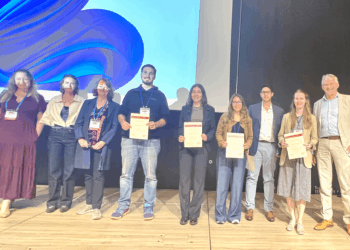
Lausanne is in a phenomenal location on the shores of Lac Lemán, and I took every chance to explore the Vaud’s Canton. I delved into the Swiss gastronomy, which included a memorable trip to Gruyères to enjoy a delicious fondue moitié-moitié, and a fantastic farewell dinner with the Harari lab members, where we savoured the seasonal specialty (La Chasse) (see picture; the names are below highlighted in blue). I also took the opportunity to visit the iconic Olympic Museum (see picture), the views from the tower of Parc Sauvabelin or the Lac Lemán (see picture), among others. The highlight, however, was definitely escaping into the mountains, including an unforgettable hike up Dent de Jaman and Rochers-de-Naye, where I could experience the magical feeling of being above the clouds (see picture). The combination of nature, culture and cuisine resulted in a fantastic, well-rounded experience outside the lab.
What was a personal highlight of your trip?
The personal highlight of this experience was the moment we successfully validated our first candidate TCRs in vitro using patient-matched T-cells. After co-culturing the tumour cells with the T-cells overnight, we were eager to see the results. On the following day, we stained the samples for flow cytometry analyses and immediately loaded them into the flow cytometer. Observing specific markers of T-cell activation for all tested TCRs in the screen during the analysis was the peak moment, providing strong confidence that our established pipeline was robust and effective. This initial success opens a new avenue of experiments and questions: assessing whether other malignant rhabdoid tumour patients might benefit, with the hope to expand this approach to other childhood cancers. Seeing the principles of T-cell dynamics I had only read about translate into a tangible, therapeutic possibility was incredibly rewarding.
Was the host institution very different from your own?
The host environment was definitely different, mainly because of the sheer scale and the tight integration of each department / affiliated institutions. The AGORA Cancer Research Center is not only a major institute; it has an efficient, well-structured setup to accelerate translational medicine. This is powered by the direct connection between the research centre, the Centre Hospitalier Universitaire Vaudois (CHUV) and the Hôpitaux Universitaires de Genève (HUG), and three major universities in Switzerland (UNIL, EPFL and UNIGE), which is seriously impressive. What really fuels that is the physical proximity, especially the close collaborations we had with other labs right there on the same floor. In addition, the regular seminars where the research community can share and discuss their latest results (i.e. the AGORA Process Report series and the Oncology Grand Round seminars) create a key environment for exchanging ideas and learning about novel techniques in the field.
How has the trip inspired you in your research?
The Harari lab was profoundly inspiring, particularly their scientific rigor and translational mindset. I was most impressed by the culture of the group: they have the ability to take highly specific, technically challenging immunological problems— TIL and TCR validation—and meticulously develop protocols that are both robust and scalable for clinical application. Their willingness to pivot their expertise to a rare childhood cancer (e.g. malignant rhabdoid tumours), and to share their knowledge so openly, showed me the true potential of international collaboration. In addition, working within the AGORA Cancer Research Center itself was an excellent experience, seeing first-hand how clinicians and fundamental biologists share spaces to accelerate translational medicine.
Have you brought back any specific knowledge or technique that has benefited your home lab?
Absolutely! I was able to bring back to my home lab the expertise and methodology for large-scale T-cell expansion to implement it with our patient tumours at the Sant Joan de Déu Children’s Hospital – specifically the TIL expansion protocols from the Harari lab. I could also learn how to transiently express candidate TCRs in both PBMCs, which directly translates in producing and functionally testing those tumour-reactive T-cells we identified in our home lab. Our preliminary results using the TCRs that we generated during this stay also validated in vitro, which was one of the milestones of this collaboration. Altogether, I gained the hands-on experience and confidence to apply the methodology necessary to promote a translational pediatric immune-oncology research line in the lab, moving us much closer to developing a patient-specific TCR therapy.
Does your lab plan to do any future collaboration or publication with the host lab?
We will continue with our collaborative efforts, initiated back in 2023, to advance our understanding of the immune-oncology landscape in childhood cancers. The highly specific anti-tumour recognition of these TCR clonotypes generated in the Harai lab during the stay provides the foundation needed to continue our joint efforts and pursue our objective. I personally believe that this is just the beginning of this story, and I am confident we will obtain impactful results that hopefully will translate into the clinics by offering a more specific therapy to these young cancer patients.
Is there anything else you’d like to mention?
This stay has been instrumental in advancing during my PhD journey, and I am very grateful to the EACR for providing me this opportunity, which would have been extremely difficult without the financial support of the EACR Travel Fellowship. I would also like to express my gratitude to Professor Alexandre Harari for giving me the opportunity to join the laboratory and all the members from the group, especially Dr Alexandra Michel for her unconditional support and patience in showing me their expertise and essential techniques. I am also deeply grateful to Dr Maria Lozano-Rabanella for our discussions about the project and her strategic inputs, as well as a special thanks to Florian, Maria, Naouill, Talita, Johanna, Rémy, Pier, and Baptiste for integrating me into the lab from the very beginning and their suggestions that helped me delve into the Swiss culture and nature.
Want to find out more?

If you are interested in applying for the Travel Fellowship scheme, please click here for more information: EACR Travel Fellowships