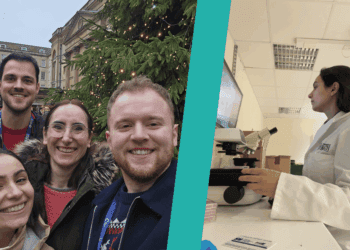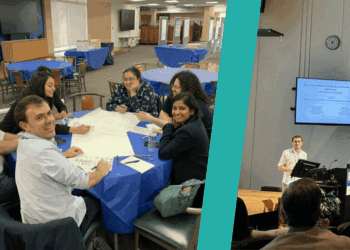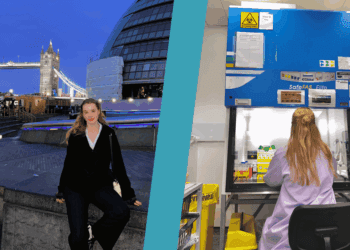

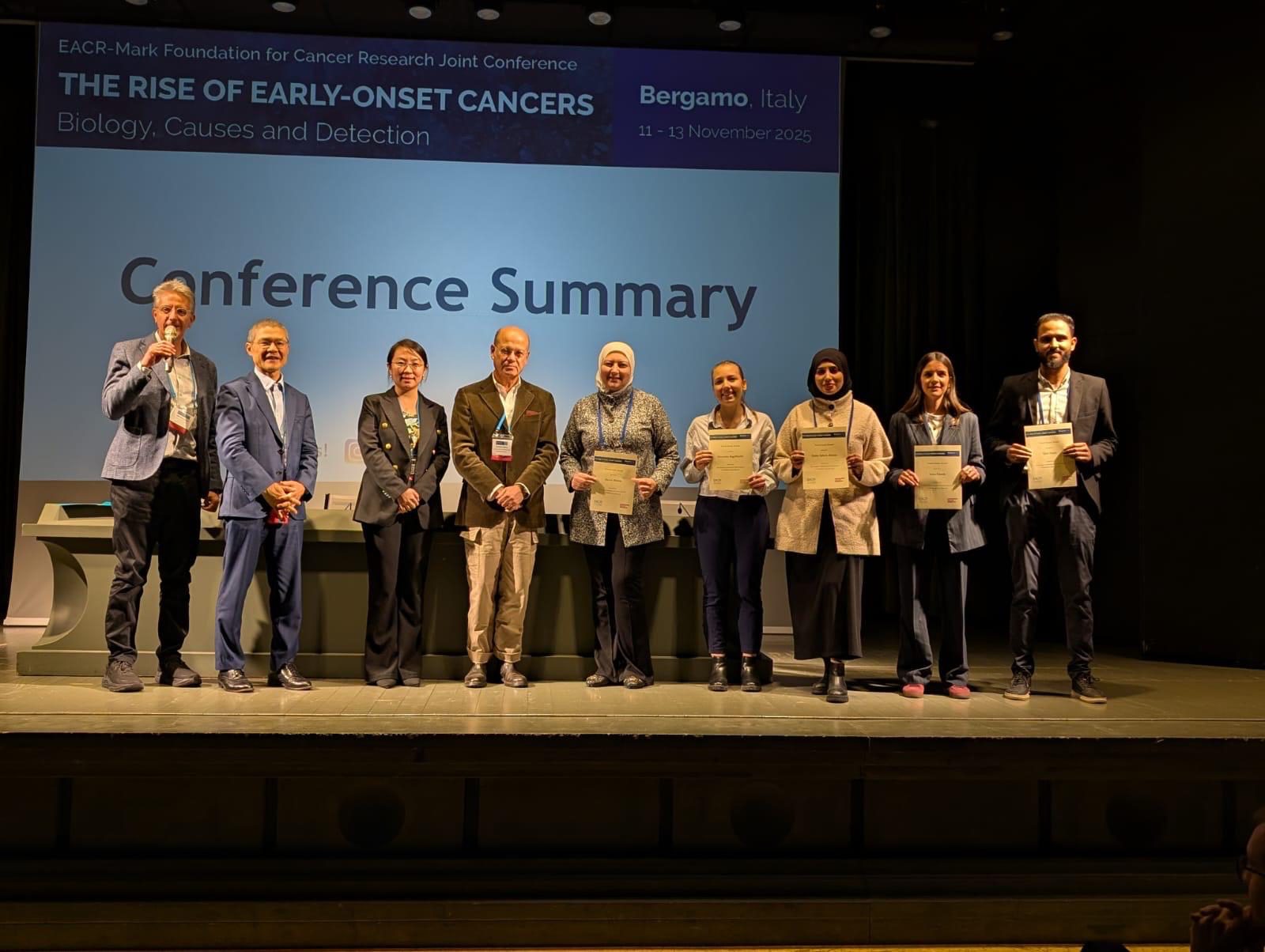
We met in Bergamo, Italy for the EACR-Mark Foundation Joint Conference: The Rise of Early-Onset Cancers – Biology, Causes, and Detection between 11 and 13 November 2025. This new interdisciplinary conference sought to foster a deeper understanding of the biological mechanisms, risk factors and clinical implications of early-onset cancers, and participants enjoyed a dynamic scientific programme covering the most recent advances in this emerging field.
Supported by Worldwide Cancer Research, we were delighted to award several Travel Grants to help cancer researchers in need of financial assistance to attend the event.
Read on to learn about their experience of the conference.
1. Alexandra Ingallinella
Postgraduate Research Fellow, Azienda ospedaliero-universitaria di Parma, Italy
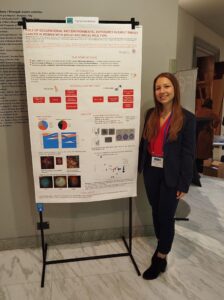
Research: My research aims to better understand breast cancer in young women. I’m currently studying markers that can show how the disease might develop and which treatments could work best. One of these is RAD51, which helps identify tumours that struggle to repair their DNA and may respond well to treatments like PARP inhibitors. I also investigate risk factors, including environmental exposures, to understand what might contribute to the early development of breast cancer.
What was a personal highlight of the conference for you?
A personal highlight of the conference for me was how well it was organised. The schedule was engaging without being overwhelming, and the venue was beautiful and easy to reach. The sessions really helped broaden my knowledge and made me realise how much more there is to learn in this field. It was an inspiring and enriching experience overall.
Were there any networking highlights you want to tell us about?
Yes, I had the chance to connect with several people working in the same field, and it was great to exchange ideas and experiences with them. I also managed to speak with one of the speakers I admire a lot, and she shared some valuable advice that I found truly inspiring.
How has the conference inspired you in your research?
The conference allowed me to expand my knowledge and return home with many ideas to apply to my research. Both the presentations I attended and the direct discussions I had with other participants provided new insights that will be very useful for my future work.
When you got home, is there anything from the conference that you immediately wanted to tell your colleagues about?
When I got home, I immediately told my colleagues about the speakers and lecturers at the conference. They were truly outstanding and highly influential in the field. I felt honoured to hear them speak and grateful for the chance to meet some of them in person.
Have you brought back any specific knowledge that has benefited your research?
Yes, I brought back valuable knowledge, especially about mutational signatures, a topic I previously knew little about. Since I am studying the potential effects of environmental pollutants on breast cancer risk, I was really inspired by other scientists who presented studies that considered environmental factors. Their work helped me learn a lot and gave me new ideas for projects that could be particularly meaningful for the disease I study.
2. Irene Cáseda Moreno
PhD Student, Navarrabiomed, Pamplona, Spain
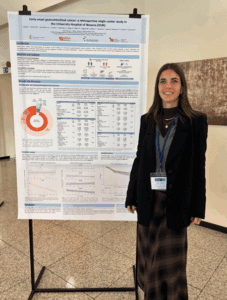
Research: My thesis project is part of the TEOGIC study (Transversal Study on Early Onset Gastrointestinal Cancer project). TEOGIC is an attempt to characterise early onset gastrointestinal cancer in the northern area of Spain (including different regions: Navarra, Aragón, La Rioja, País Vasco, Asturias). We include patients diagnosed with gastrointestinal adenocarcinoma in two different groups: Early-Onset Gastrointestinal Cancer patients (18-50 years old) and Average-Onset Gastrointestinal Cancer patients (60-75 years old). After enrolling patients in the study we collect: demographic and clinicopathological data, different lifestyle questionnaires (SF-36, GPAQ, FFQ) and baseline biological samples: blood, faeces and tumour.
What was a personal highlight of the conference for you?
During the conference, many talks inspired me, but both the opening and closing keynotes were particularly insightful, as they summarised well the current situation regarding early-onset colorectal cancers. Dr. Yin Cao’s lecture made me think about this illness from another point of view, considering not only external factors that affect young people but also incorporating the biological age of these patients. I thoroughly enjoyed Sir Mike Stratton’s keynote lecture on the mutagenic landscape in early-onset colorectal cancer. I believe the presentation effectively summarised the current understanding of DNA mutational signatures, and his hypotheses were both clear and highly inspiring.
How was this conference different from others you have attended?
Ultimately, the intimate size of the congress afforded me the invaluable opportunity to converse with experts in these fields, which has genuinely motivated me to continue pursuing our current research direction. These informal interactions allowed me to discuss different early-onset cancer fields with experts in my country, facilitating the establishment of connections for possible future collaborations. I really enjoyed the activities promoted to foster interactions among the conference participants
How has the conference inspired you in your research?
The conference significantly inspired my research, providing many new approaches that we could potentially incorporate into our studies. I learned about exposome factors (such as circadian rhythms or breastfeeding) that we were not addressing at the time within our population. We anticipate integrating the study of some of these factors into our future work. These new insights suggest a more holistic model, stimulating us to rethink our current data collection protocols to include a wider array of lifestyle metrics.
When you got home, is there anything from the conference that you immediately wanted to tell your colleagues about?
Within our group, we are also currently investigating the patient microbiota – a new approach for us. For this reason, Nicola Segata’s talk was particularly insightful. I have discussed his studies with my colleagues to explore the possibility of incorporating some of his data analysis methodologies into our own research protocols. Incorporating some of his pioneering work on computational metagenomics strategies could enable us to move beyond basic compositional analysis toward functional insights.
3. Marwa Hamza
Associate Professor of Clinical Pharmacy, The British University in Egypt (BUE), Egypt
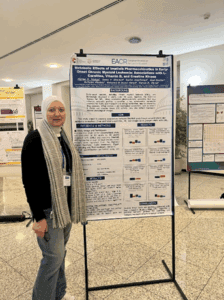
Research: My research focuses on understanding how cancer treatments affect metabolism and drug exposure in younger patients with cancer. In particular, I study pharmacokinetics and metabolic biomarkers in early-onset chronic myeloid leukemia (CML) patients receiving imatinib. By exploring biomarkers such as free L-carnitine, vitamin D, and creatine kinase, my work aims to improve treatment monitoring and personalise therapy, ultimately enhancing outcomes and quality of life for younger adults living with cancer.
What was a personal highlight of the conference for you?
A personal highlight of the conference was the opportunity to present my poster and discuss my research with experts working on early-onset cancers from different disciplines. The scientific discussions were highly engaging and constructive, particularly from an epidemiological perspective. They emphasised the importance of conducting more systematic reviews and focusing on cancer research in early-onset patients, especially in the context of my country. These discussions helped me better frame my research within a population-based and translational perspective and reinforced the relevance of my work to local healthcare needs.
Were there any social or networking highlights you would like to share?
One of the most enjoyable aspects was the interactive game we participated in on the first day, which created a friendly and relaxed environment and made it easy to connect with other attendees. I had the opportunity to speak with many participants from different countries and disciplines. Our discussions covered a wide range of topics, including epidemiology, clinical research, colorectal cancer, and even travel experiences. These informal conversations helped build meaningful connections and encouraged open exchange of ideas across diverse research backgrounds.
How was this conference different from others you have attended?
What distinguished this conference was its strong focus on early-onset cancers as a distinct and growing clinical challenge. Unlike broader oncology meetings, the sessions emphasised age-specific biological mechanisms, metabolic pathways, and long-term survivorship issues. The integration of basic science, clinical research, and patient-centered perspectives made the discussions particularly relevant. This focused approach allowed deeper exploration of topics directly aligned with my research interests and clinical background.
How was this conference different from others you have attended?
What distinguished this conference was its strong focus on early-onset cancers as a distinct and growing clinical challenge, with a particular emphasis on epidemiology and statistics, which are areas of strong personal interest for me. Many sessions highlighted population-level data, trends, and risk factors, alongside clinical and biological insights. I was especially impressed by the high level of enthusiasm among participants and the remarkable attendance, as almost all attendees remained engaged throughout all sessions. The speakers were not only highly knowledgeable but also very humble and approachable, and the organisers created a welcoming and friendly environment that encouraged questions and open discussion. This combination of scientific depth, engagement, and accessibility made the conference a uniquely enriching experience.
When you returned home, what was the first thing you wanted to share with your colleagues?
Upon returning, I was eager to share the growing international attention toward early-onset cancers and the importance of age-specific research strategies. I discussed how metabolic and pharmacokinetic profiling is increasingly recognised as a key component of personalised oncology care. I also shared insights from the conference discussions that could be integrated into our ongoing research projects and teaching activities.
Is there anything else you would like to mention?
I am very grateful to the EACR and Worldwide Cancer Research for supporting my attendance at this conference. The travel grant made it possible for me to present my work internationally, engage with leading researchers, and gain valuable scientific and professional experience. This opportunity has had a meaningful impact on my research perspective and will positively influence my future work in cancer pharmacology and metabolism. I also found myself truly inspired by the EACR community, and I am very much looking forward to attending more EACR events in the future. I hope to continue my engagement with EACR as an active contributor, not just as a member, but as someone who is eager to participate, collaborate, and give back to this inspiring scientific network.
4. Qasi Najah
Medical Student, Elmergib University, Libya
Research: I study how early-onset colorectal cancer differs from the usual older-age colorectal cancer and how environmental factors may be causing more young people to get it. I do literature reviews and small retrospective analyses to find possible biomarkers that might help detect cancer earlier and guide future clinical studies.
What was a personal highlight of the conference for you?
A big highlight for me was the final lecture by Professor Michael Stratton. Listening to someone who helped discover BRCA2 talk about how cancer genomics developed over time was very meaningful. I felt inspired and a little overwhelmed in a good way. As a medical student, it was special to be in the same room and hear those stories and lessons. It made me more certain that I want to continue working in cancer research.
Were there any social or networking highlights you want to tell us about?
I met many people from different countries and backgrounds. I spoke with early career researchers working on genomic risk models, and we discussed possible remote collaboration on data analysis. They kindly offered some mentorship. I also met clinicians who gave practical tips about doing translational studies in places with limited resources.
How has the conference inspired you in your research?
The conference inspired me to refine my research questions toward translational genomics with practical clinical endpoints. Professor Selma Elmasri’s talk about circadian rhythm disruption and cancer was eye-opening. I learned new ideas and now have many questions I want to follow up in my work. The meeting also showed me the importance of using diverse datasets and clear, reproducible methods. I left with concrete ideas about improving my analysis and finding collaborators who can help with larger datasets.
When you got home, what did you immediately want to tell your colleagues about?
I immediately told my classmates and supervisors how valuable the meeting was and how much I learned. I said it was a great chance to meet scientists, learn about new topics, and make contacts. I recommended that other students try to apply for travel grants and attend similar meetings.
Is there anything else you would like to mention?
I am very grateful to Worldwide Cancer Research and EACR for the travel grant. Without their support I could not have attended or presented. I hope to share more results soon with the EACR community and to help improve outcomes for young patients with cancer.
5. Rania Sihem Boussa
PhD Student, University of Science and Technology Houari Boumediene, Algeria,
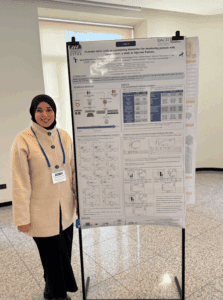
Research: My research focuses on finding simple, minimally invasive ways to detect and monitor colon cancer early. I study a molecule called nitric oxide (NO), which increases during inflammation and may signal how a cancer is developing. By comparing NO levels in patients with colon cancer to healthy individuals, and linking these levels to tumor characteristics and immune responses, we found that higher NO is strongly associated with cancer presence, progression, and poorer outcomes. This means a simple blood test measuring NO could help diagnose colon cancer earlier and predict how patients are likely to do, improving treatment decisions and follow-up care.
What was a personal highlight of the conference for you?
One of the most memorable highlights of the conference for me was the opportunity to finally engage with internationally recognised researchers whose work has shaped my own scientific thinking. Meeting brilliant scientists and hearing them discuss cutting-edge research first-hand was incredibly inspiring. It was my first major international conference, so experiencing the atmosphere, the diversity of expertise, and the openness of discussions felt both motivating and validating. Presenting my own work and receiving constructive feedback also helped me gain more confidence as a young researcher and encouraged me to continue pursuing my scientific goals with even greater determination.
Were there any networking highlights you want to tell us about?
Yes, I had several meaningful networking moments. I had the chance to connect with researchers and PhD students from different countries, which broadened my perspective on international collaboration. Most importantly, I met two of my scientific idols – Selma Masri and Yin Cao. These interactions opened doors for potential future collaborations and gave me valuable advice for advancing my career. It was both motivating and unforgettable to exchange ideas with experts I admire.
How was this conference different from others you have attended?
This conference stood out from previous ones I attended because of the exceptional scientific quality and the depth of the discussions. For example, the talk by Selma Masri, where she explained the impact of circadian disruption and individual light exposures on colorectal cancer risk, was truly eye-opening. The sessions were highly specialised, well-structured, and focused on emerging research directions. The diversity of topics, combined with the presence of world-leading experts, created a dynamic environment that encouraged critical thinking and meaningful conversations. Overall, it felt more innovative and intellectually stimulating than other events I have participated in.
Did you take part in any interesting local activities in your free time outside of the conference?
Yes, I was fortunate to explore some local and cultural sites during my free time. I visited the beautiful Città Alta of Bergamo, where I enjoyed discovering its historical architecture, charming narrow streets, and delicious traditional food. I also happened to be there when the Christmas market opened, which allowed me to experience the warm and festive atmosphere of the holiday season in Bergamo. The combination of culture, history, and culinary traditions made the visit even more special and added a lovely personal touch to my conference experience.
How has the conference inspired you in your research?
The conference gave me fresh perspectives and new ideas for my research. Listening to experts discuss innovative approaches, novel biomarkers, and evolving concepts in cancer epidemiology helped me see my own work in a broader context. The passion and clarity of the speakers reminded me of the importance of multidisciplinary collaboration and motivated me to keep pushing forward with my project with renewed energy.
When you got home, is there anything from the conference that you immediately wanted to tell your colleagues about?
When I got home, the first thing I shared with my colleagues was how impressed I was by the scientific quality of the event. Since it was my first international conference, I was truly amazed by the level of expertise of the speakers and the richness of the discussions. I told them about the innovative topics presented, the new findings, and how openly researchers exchanged knowledge. I also shared my positive experiences meeting renowned scientists and the encouraging feedback I received on my own work. It was an experience that exceeded my expectations.
Is there anything else you’d like to mention?
I am extremely grateful for the opportunity to attend this conference. It was not only scientifically enriching but also personally inspiring. The atmosphere, the interactions, and the chance to represent my research on an international stage were unforgettable. I hope to participate again in future editions and continue developing professionally within this supportive and dynamic scientific community.
6. Interested in EACR Conferences and further Travel Grants?
We organise a variety of excellent cancer research conferences, both in person and virtual, where the latest research topics and interaction for participants are the very highest priorities.
To assist researchers who need financial assistance to attend our in-person conferences, we offer EACR-Worldwide Cancer Research Travel Grants. Recipients also get the opportunity to present their work as an oral or poster presentation. Each Travel Grant includes a free registration and funds to support travel and accommodation costs.
Make sure you add the dates of upcoming EACR Conferences to your diary now. Don’t forget we offer EACR member discounts on all of our registration fees