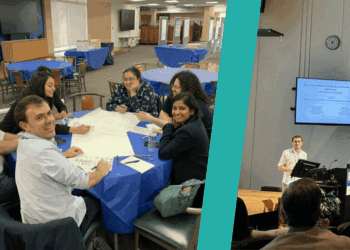


21 – 23 November 2022 was the Kick-off Meeting of CGI-Clinics, a five-year project funded by the European Union and UK Research and Innovation, which started on 01 November. 60 participants from the 17 member institutions of the consortium met in Empúries (Girona, Spain).
The project aims to build a new Cancer Genome Interpreter (CGI), a bioinformatics tool powerful enough to achieve the objective of systematising tumour genome interpretation for clinical decision making, thereby allowing medical doctors to choose the most effective cancer treatments for each patient.
The tool uses machine-learning and other computational methods to systematically extract information from mutations observed in thousands of tumours to improve the interpretation of the variants observed in each patient.

“The Cancer Genome Interpreter, which we have been working on for more than five years, has immense potential and, through this project, we intend to optimise it for its use in hospitals and healthcare centres. We want it to be a key instrument to support the decision-making by clinical oncologists, so that each patient, regardless of the hospital in which the diagnosis is made, receives the most appropriate treatment,” explains Dr. Nuria López-Bigas (IRB Barcelona), the coordinator of the consortium.
The project also includes the set-up of “virtual molecular tumour boards” including international experts with whom medical doctors can consult and discuss the report produced by the Cancer Genome Interpreter. The purpose of such meetings is to promote the exchange of knowledge and thus offer optimal treatment management to all patients, particularly those who are treated in smaller healthcare centres and who often do not have access to many specialised oncologists.
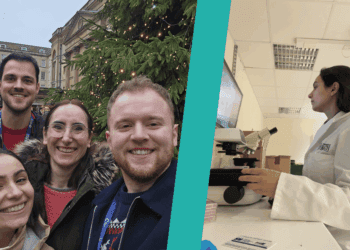
Participants at the Kick-off Meeting spent three days benefiting from excellent presentations and scientific talks, sharing methodologies and actions for the next five years, and several workshops and break out sessions to start the development of the new tool and exchange ideas over the different aspects of the project.
A community-driven project
The project consortium is made up of 17 different European organisations which offer complementary expertise to address the implementation of personalised cancer medicine from all angles.
IRB Barcelona, the project coordinator, is leading the development of the tool. Nine hospitals and healthcare centres from four European countries are partners of the project and these will be the first to introduce the platform into their systems: the Vall d’Hebron Institute of Oncology (Spain); the Gustave Roussy (France); the Leon Berard Centre de Lutte Contre le Cancer (France); Uniklinik RWTH AACHEN (Germany); Universitätsklinikum Köln AöR (Germany); the Manchester Cancer Research Centre (UK); the Girona Biomedical Research Institute Dr. Josep Trueta (Spain); the Fundació Althaia – Hospital Sant Joan de Déu de Manresa and the Andalusian Health Services (Spain), as well as the Catalan Institute of Oncology (Spain)) and the Fundación Progreso y Salud of the Regional Government of Andalusia (Spain).
Another research centre, the Centro Nacional de Análisis Genómico (Spain) will implement the data sharing strategy. The company Alira Health is the partner in charge of ensuring regulatory aspects and the European Association for Cancer Research will be managing communication actions associated with the project.
A key pillar of this project is the involvement of people with cancer. Project partners the European Cancer Patient Coalition and the Spanish Association Against Cancer will represent society and patients.
Patient involvement
The project aims to involve cancer patients so that they can play an active role in the process of their own personalised cancer treatment. To this end, the final genome interpretation tool created by the project will also provide patients with a report that they can discuss with their doctor, informing them about the molecular features of their tumour and what this means for their treatment.
The project also seeks to highlight the value of the information and make patients aware that they can help to improve the system by agreeing to share the molecular details of their tumours and their clinical information. In its current version, the Cancer Genome Interpreter algorithms have been developed from the analysis of the genomes of the tumours of 28,000 patients, covering more than 66 types of cancer, which are available to the scientific community in public repositories. As new sequenced tumours are added over the course of the project, machine-learning methods will improve their predictions, thereby enhancing the interpretation of the tumour mutations for new patients.
Follow the progress of the project
The Kick-off Meeting set the tone for this exciting and ambitious project, and all partners are highly motivated to accomplish the main objective of performing a community-based initiative to foster implementation of precision cancer medicine in hospitals, for the benefit of cancer patients.
To keep up-to-date with the progress of CGI-Clinics over the next five years, follow the project on social media: Twitter, Facebook, LinkedIn and Instagram and sign up for our mailing list.
 CGI-Clinics is funded by the European Union. Views and opinions expressed are however those of the author(s) only and do not necessarily reflect those of the European Union or the European Health and Digital Executive Agency (HADEA). Neither the European Union nor the granting authority can be held responsible for them.