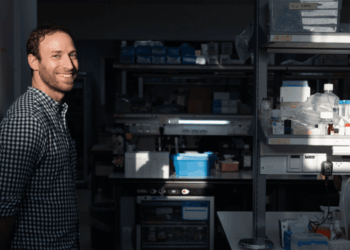


Antoinette van Weverwijk has now completed her first six months of her EACR-AstraZeneca Postdoctoral Fellowship, funding that is awarded for a period of up to three years to support excellent postdoctoral researchers in laboratories throughout Europe and the world.
Antoinette van Weverwijk is a senior postdoctoral research fellow in the group of Prof. Karin de Visser at the Netherlands Cancer Institute (NKI) in Amsterdam. We recently caught up with her to hear about the progress she has made in her research so far.
Please summarise the topic of your current research.
The application of immunotherapy in breast cancer remains challenging due to the inter-patient heterogeneity in distribution, composition and activation state of immune cells in breast tumours. These variations can manifest in both anti- and pro-tumour activities, significantly affecting disease progression and therapy response. Cancer cell-intrinsic features, such as genetic aberrations in tumour cells greatly contribute to this variability in the tumour microenvironment (TME). While mechanisms underlying these immunoregulatory features remain poorly understood, there is increasing evidence that phosphoinositide-3 kinase (PI3K)/AKT signalling plays a role. Using transgenic breast cancer mouse models carrying different PI3K/AKT mutations, we observed that distinct mutations drive different immunosuppressive TMEs. In this project we aim to therapeutically combat immunosuppression by targeting oncogenic PI3K/AKT signalling to enhance anti-tumour immunity in breast cancer.
At this stage, how do you think the fellowship will be beneficial to your research and your career?
With this fellowship, I aim to decipher how distinct genetic aberrations in the PI3K/AKT pathway drive unique immunosuppressive tumour microenvironments, and to identify actionable targets for personalised therapy in HR+ breast cancer. The opportunity provided by the EACR and AstraZeneca to further develop this project at the interface of industry and academia will facilitate the translation of a basic research project towards the clinic.
At a personal level, this fellowship will significantly advance my development as a scientist. The collaboration with my AstraZeneca supervisor has provided a clinical perspective on my project, new insights into drug development and clinical innovation, and substantially expanded my professional network. Overall, this fellowship will strongly support my competitiveness when applying for grants to establish my own research group.
What were the highlights from the first 6 months of your fellowship?
One of the major highlights has been the close collaboration with my assigned supervisor from AstraZeneca. The enthusiasm for the project, combined with the guidance in experimental design and their extensive expertise and network, has significantly accelerated the progress and impact of this project.
Another standout moment was the opportunity to deliver the EACR-AstraZeneca Postdoctoral Fellowship Award Lecture at the EACR 2025 Congress in Lisbon, Portugal. Sharing my research with an international audience allowed me engage in meaningful scientific discussions and provided excellent feedback on the project and future plans. The experience also opened doors to new collaborations and provided a valuable platform to connect with leading scientists in the field and fellow EACR-AstraZeneca postdocs.
I am very much looking forward to continuing this exciting project with the support of both EACR and AstraZeneca, and I expect to make some great progress with the project in the coming 6 months.
More about EACR-AstraZeneca Postdoctoral Fellowships
The aims of this funding are to support the career development of outstanding EACR members in the early stage of their careers, and to train the next generation of scientists engaged in innovative research in areas where AstraZeneca has demonstrated leadership through its pipeline and research programs. Learn more here.