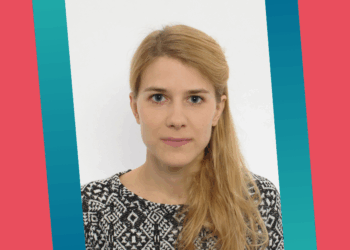


Cristóbal Fernández Santiago is a PhD student at the Instituto de Investigación Sanitaria de Santiago de Compostela, Spain who received an EACR Travel Fellowship to visit and work at Universitätsklinikum Düsseldorf, Germany between 01 August and 31 October 2025.
The EACR, with support from Worldwide Cancer Research, provides Travel Fellowships of up to €3,500 to enable early-career cancer researchers to gain new skills through a short-term visit to a lab or research group in another country.
You can read about other Travel Fellows and their experiences here.
What is the topic of your current research?
In my lab, we work in the field of liquid biopsy, a minimally invasive technique that aim to study tumour-derived material from body fluids to better understand cancer evolution. My research is focused on the study of circulating tumor cells (CTCs), which are cells that are able to detach from the primary tumour and travel through the blood, ultimately contributing to metastasis. By sequencing the genome of these cells, we aim to uncover the mutations and molecular pathways that allow them to survive and spread throughout the body. Given the metastatic potential of these cells, understading their biology is key to expand knowledge about the metastatic process. In this line, we are also investigating the role of SPARC gene, which we believe may influence how CTCs interact with their environment and promote metastatic growth by using both patient-derived samples and in vitro CTC models.
Why did your decide to apply for an EACR Travel Fellowship?
Being able to continue my PhD project in a lab abroad represented a unique opportunity to complement and expand my research and to grow as a researcher, while gaining an invaluable experience. However, spending three months in Germany by my own without no financial support would have been financially challenging, and this fellowship offered me a great opportunity to make this feasible. Beyond funding, I thought that this fellowship was a way to open the door to valuable scientific exchange and collaboration in a new research environment as well as to learn new techniques that I would not have been able to incorporate to my project otherwise.
Why did you choose the host lab?
I chose the host laboratory at the University of Düsseldorf led by Prof. Dr. Hans Neubauer and Prof. Dr. med. Tanja Fehm because of our already established collaboration and their recognised expertise in studying breast cancer circulating tumor cells (CTCs). From the start of my PhD, we have worked closely to better understand CTCs and their role in metastasis. The Düsseldorf group had recently published an EpCAM-independent method to identify low-EpCAM CTCs, precisely the subpopulation I am investigating through the expression of another protein named SPARC. Furthermore, one of the things that really motivated me to join their lab was their experience with the chick chorioallantoic membrane (CAM) model, a system that allowed me to functionally study the role of my protein of interest, SPARC, in vivo, and this is something that would not have been possible in my home lab. Hence, this opportunity to combine our complementary expertise, apply new experimental models, and gain hands-on experience in a different research environment made the Düsseldorf group the ideal place to advance my project and broaden my scientific perspective.

Can you summarise the research you did or what you learned on your visit?
During my visit to Düsseldorf, I focused on investigating the role of SPARC in breast cancer metastasis and evaluating its potential as a biomarker in circulating tumour cells (CTCs). Using the host lab’s expertise with the chick chorioallantoic membrane (CAM) model, I performed functional studies comparing our novel CTC-derived cell line (mCTC WT) and its SPARC knockout variant (mCTC KO). This allowed us to assess how SPARC loss influences important metastatic processes such as vessel recruitment, proliferation and, most importatnly the release of CTCs to blood. In parallel, we worked on validating SPARC as a biomarker for improving the detection of low-EpCAM CTC subpopulations using blood samples from metastatic breast cancer patients. In addition, we performed low-pass whole-genome sequencing to compare genomic profiles of CTCs with different SPARC and EpCAM expression combinations.
Describe a ‘typical day’ on your visit.
A typical day during my visit started early in the morning with a workout in the gym before heading to the lab. Once there, I organized my experiments for the day, which often involved working with the chick chorioallantoic membrane (CAM) model. I began by preparing the different cell conditions to be injected into the eggs. My lab colleague Mihaela, guided and supported me through every step of the CAM procedure, explaining the methodology and helping with the injections and later with collecting blood from the embryos when experiments were completed. Her guidance and support were essential for successfully establishing the CAM assays in my project. I also took responsibility for processing any blood samples from breast cancer patients fitting in my project for performing immunofluorescence staining for my biomarkers of interest, including SPARC. Beyond experimental work, I actively participated in the group’s weekly meetings held on Tuesdays and Wednesdays, where I had the chance to discuss my progress and present my results twice, once I arrived and just before leaving. This daily routine allowed me to gain valuable technical experience and integrate fully into the host lab’s research environment.
What were you able to do that you could not have achieved in your home lab?
I had the chance to work with the chick chorioallantoic membrane (CAM) model, which was completely new to me and to my group. It was an ideal system to quickly test some of our hypotheses on SPARC’s role in metastasis, something that would have been harder to do and more time-consuming using other animal models. Furthermore, one of my main goals was to identify and isolate circulating tumor cells (CTCs) that were double positive for SPARC and EpCAM, as well as those expressing only SPARC, to perform low-pass whole-genome sequencing and confirm their tumour origin. Back in my lab, we lacked semi-automatic cell isolation systems like CellCelector. Having access to this equipment in Düsseldorf made a huge difference, as it allowed me to micromanipulate CTCs much more efficiently and with greater precision than the manual micromanipulation I was used to.
Did you take part in any interesting local activities?
Yes, I took full advantage of my time in Germany to explore both the local culture and nearby cities. I bought the Deutschlandticket, which made it really easy and affordable to travel around the region. During weekends, I visited cities like Dortmund, Cologne (including its impressive cathedral) or Wuppertal. I also spent time getting to know Düsseldorf itself, which I really enjoyed, especially the atmosphere and gastronomy around the Little Tokyo area.
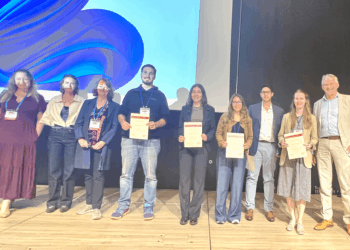
Furthermore, while I was there, the lab also organised a Research Day, which turned out to be a great experience. I had the chance to give a short oral presentation about my project and to meet other PhD students and researchers working in cancer and related fields from outside the host lab.
“The collaboration has been very productive, so we are very excited to continue working together on future projects”
What was a personal highlight of your trip?
The biggest highlight of my trip was the people I met and everything I was able to learn from them. Working in a new lab gave me the opportunity to learn new techniques and approaches that have greatly enriched my PhD experience. Beyond the scientific side, getting to know a new country and culture was truly rewarding, as it pushed me out of my comfort zone and helped me grow personally as well as professionally.
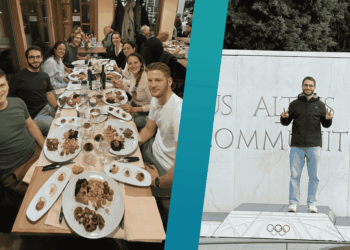
But what I value the most is the time I spent with the people in the host lab. Everyone was incredibly welcoming, patient, and supportive from day one. They made me feel part of the team right away! Their help was key for my experiments, but even more than that, their kindness made my stay unforgettable. I am genuinely grateful to now consider most of them to be true friends I was lucky to meet along the way.
Did you have a personal mentor or anyone who particularly helped you?
Everyone in the lab was incredibly welcoming and always willing to help, which made it easy to approach anyone whenever I had doubts or needed advice. I truly appreciated how supportive and collaborative the whole team was. However, there were two people I worked especially closely with during my stay.
Regarding the CTC work, André Franken was always available to discuss results, offer suggestions, and help me find solutions whenever I faced challenges. His input really helped me move the project forward.
For the CAM model, Mihaela Rusheva was absolutely essential. She was patient, generous with her time, and genuinely invested a lot of time in the project, teaching me every step of the process and working alongside me as if it was her own thesis. Her dedication and guidance were crucial for the success of this part of my work, and I am extremely grateful for all her help. I truly could not have done this part without her.
Does your lab plan to do any future collaboration or publication etc. with the host lab?
Yes, our collaboration with the host laboratory is definitely continuing. In fact, we have already discussed several of the results generated during my secondment and exchanged ideas on the analyses that are still pending. The plan is to start working on a manuscript in the coming weeks based on the data obtained during my stay. Our connection with the Düsseldorf group actually began at the very start of my PhD project, and this secondment has really strengthened this partnership. The collaboration has been very productive, so we are very excited to continue working together on future projects.
Want to find out more?

If you are interested in applying for the Travel Fellowship scheme, please click here for more information: EACR Travel Fellowships