
I was watching as my dad received an hematopoietic stem cell transplant to treat his disease, an aggressive blood cancer called acute myeloid leukemia, while my mind was switching between anxiety, worry for my father’s health, and curiosity for the complexity of the treatment. How much research and hard work had been done to that point, that a blood donation could travel from Germany to Argentina to replenish my father’s bone marrow and blood? At that moment he was turning into a chimera, and for me, that was science fiction in the real world.
I was a biology student at that moment, so I had enough background knowledge to understand the main concepts behind what was happening, but definitely that life situation awakened my interest for blood cancers and their treatments. How complex it was, that the transplanted cells were at the same time his only choice for a cure but also a major threat to his healthy tissues through the graft-vs-host disease, and a fine and delicate balance between them had to be achieved in order for the transplant to succeed.
A year later from this event, I started my PhD, driven by all the questions that arose during that time as a leukemia patient’s relative. I was studying the biology of hematopoietic stem cells from chronic myeloid leukemia patients, a disease that is widely known as the exemplar case of targeted therapy: the Philadelphia chromosome, discovered in the 70’s by classical cytogenetics, gives rise to the fusion transcript BCR-ABL1. These milestones were followed by a search for targeted inhibitors of the fusion oncoprotein, leading to the development of imatinib, a specific and effective tyrosine kinase inhibitor that is currently indicated for the front line treatment of chronic myeloid leukemia patients.
“I cannot think of a better example of basic and translational research working together than what I have found in blood cancers”
The discovery turned this leukemia into a chronic (and in some cases, curable) disease that allows patients to keep a normal life while taking imatinib as an oral medication. It was in a scientific meeting that I could learn about a similar development, the discovery of all-trans retinoic acid and arsenic trioxide as a successful therapy for acute promyelocytic leukemia, an aggressive subtype of acute myeloid leukemia. The discovery of the fusion gene PML-RARa in this specific type of leukemia, and the experimental work on cancer therapy led to a shift in the prognosis of this disease, from a very fatal course to a curative one in most patients.
I cannot think of a better example of basic and translational research working together than what I have found in blood cancers. It is an exciting intersection between cancer, immunology and genetics, driven in part by the simplicity to obtain a sample from the tumor, observe it at the microscope, and extract nucleic acids. Most of what we know about chromosomal abnormalities comes from blood cancer cytogenetics, and it has recently begun to extend to solid tumors with the advent of new sequencing technologies. I look forward to a near future with more collaborations between scientists from the areas of oncohematology and solid tumor oncology, that could benefit from the experience and optics from both worlds. I hope to be a part of that process!
About the author:
María Sol Ruiz, PhD, is a researcher at the National Scientific and Technical Research Council (CONICET) and University of Buenos Aires from Argentina. She is interested in understanding blood cancers, with a special focus on the interaction between the immune system and the leukemic cells, using transcriptomic sequencing and bioinformatic approaches.
About this article
This is one of our shortlisted entries for the 2024 EACR Science Communication Prize themed around our #KeepResearchCurious campaign. Choosing a winner was incredibly difficult and we’re delighted to share our shortlist with you.
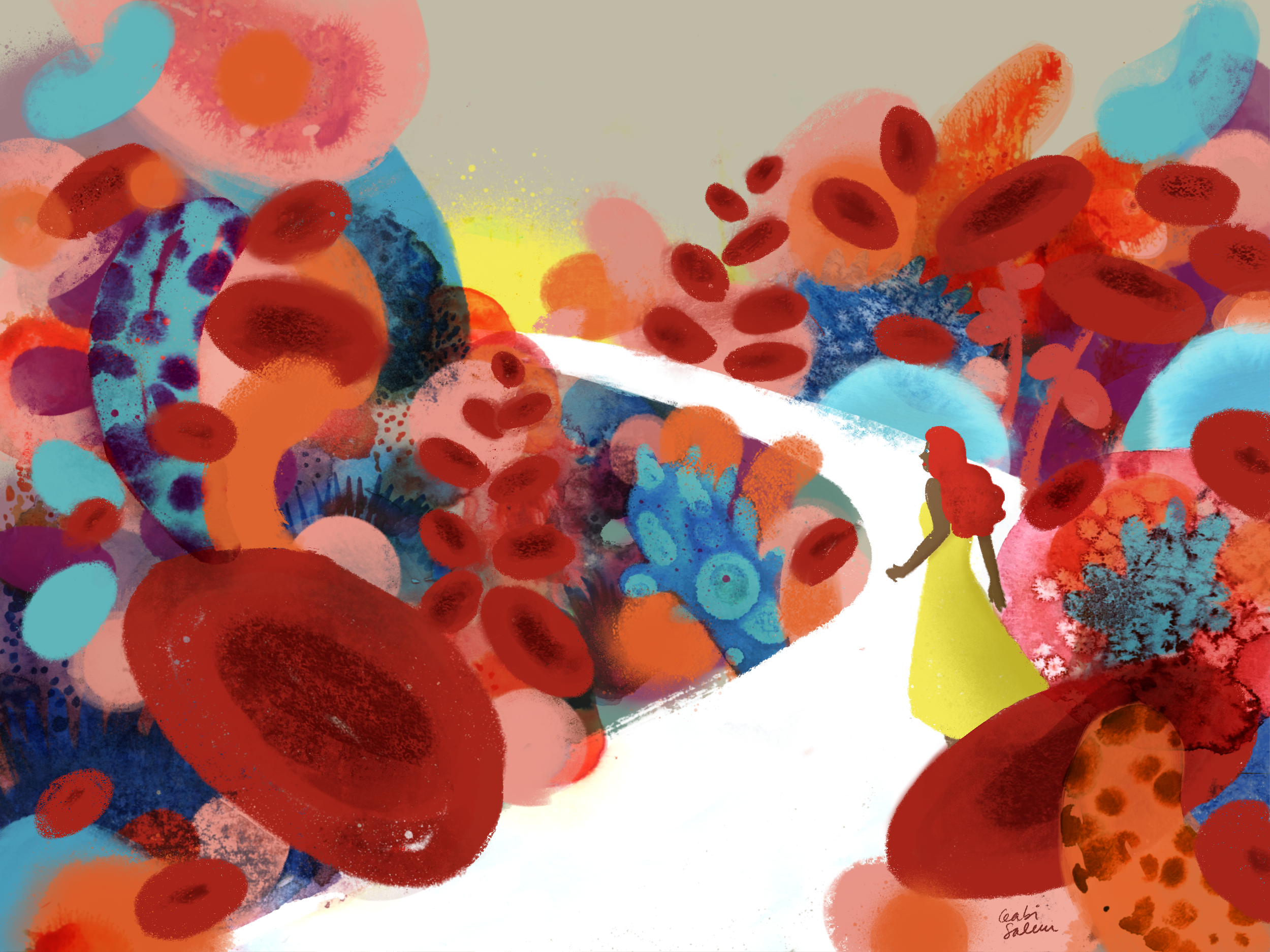
The first two paragraphs are based on a previous science communication article that I published here. The rest of the post has no repeated content with the previous article. The header image is illustrated by Gabriela Salem.