

As a child, I was the one who never stopped asking questions. “Why is the grass green?” “Why is the moon sometimes out during the day?” My mother patiently did her best to answer, even though science was never her forte. My sisters would sometimes roll their eyes, but they still laugh about it at family dinners, reminding me of my relentless curiosity.
Eventually, as my questions became more complex, my mum handed me a children’s encyclopedia in Maltese. I can still see myself sitting cross-legged on the carpet of our study room, completely absorbed in the mysteries waiting to be unraveled.

I would feel a warm, comforting sensation spread through my chest, something I can now identify as the thrill of discovery. That feeling became my companion, guiding me through my education. It was there in every biology class in school and it stayed with me as I pursued my bachelor’s and master’s degrees in molecular biology and biochemistry.
Today, that same passionate curiosity has led me to pursue a Ph.D. My research question focuses on whether commonly used pesticides in Europe affect the initiation and progression of colorectal cancer. I am investigating whether these chemicals, which are so prevalent in our environment, could be a hidden risk factor for the general population.
I’ve realised that my work isn’t just about finding answers – it’s about continuing to ask the questions that challenge our beliefs, just as I did when I was a curious child
As my academic journey progressed, I stumbled upon a book that would profoundly shape my thinking: Silent Spring by Rachel Carson. After World War II, Carson began hearing unsettling reports from scientists and conservationists about the indiscriminate use of pesticides and the potential threats they posed to the environment, animals, and even humans. Her meticulous research and fearless questioning of widely accepted practices struck a deep chord with me. Here was a scientist who dared to ask the uncomfortable questions: “What if the chemicals we consider safe are actually harming us?”, “What has already silenced the voices of spring?” Carson’s relentless curiosity drove her to uncover the devastating effects of dichloro-diphenyl-trichloroethane (DDT), and she courageously published her findings in Silent Spring. Despite fierce opposition from chemical companies, her work sparked a reversal in national pesticide policy, leading to a nationwide ban on DDT and other harmful pesticides.
But it wasn’t just the content of Silent Spring that inspired me. As I delved deeper into her life and work, I discovered another of her classics, ‘The Sense of Wonder’. Here she shares adventures with her nephew Roger as they make their way through the coast of Maine, forests, and open fields, observing wildlife, plants and insects. In this book, Carson wrote,
“If a child is to keep alive his inborn sense of wonder, he needs the companionship of at least one adult who can share it, rediscovering with him the joy.”
That quote resonated deeply with me, reminding me of the same curiosity that had me devouring my encyclopedia as a child. It also served as a reminder of the importance of nurturing that curiosity as an adult, especially in my research. Inspired by Carson’s legacy, I’ve realised that my work isn’t just about finding answers – it’s about continuing to ask the questions that challenge our beliefs, just as I did when I was a curious child, sitting on the carpet with my first encyclopedia. In the ongoing battle to prevent and fight cancer, it is this relentless curiosity that drives progress. The answers we uncover today could be the key to saving lives tomorrow.
 About the author:
 About the author:
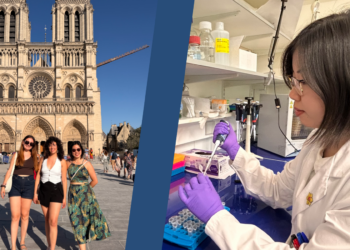
I am an early-career researcher pursuing a Ph.D. at the University of Malta. My current research investigates the potential impact of pesticides in food on gut health and their role in the initiation and progression of colorectal cancer. Previously, I studied epiproteomics and its influence on chemoresistance in colorectal cancer, as well as novel approaches to targeting lung cancer. I am deeply committed to making a meaningful impact with my research, aiming to reduce cancer risk and burden.