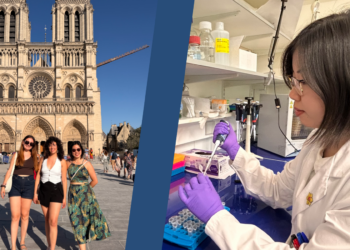

Corinna Keup writes for the EACR in the latest Industry Sponsored article about her research studies on liquid biopsies.
 Title: Postdoctoral Researcher
Institution: Department of Gynecology and Obstetrics, University Hospital of Essen, Germany
Area of study: “My research focuses on liquid biopsy testing in oncological settings. I am interested in a multi-modal liquid biopsy approach for therapy stratification of metastatic breast cancer patients. I could demonstrate that the molecular characterization of matched CTCs, cfDNA and EVs from a minimized blood volume showed additive value within the ELIMA project.”
In the era of personalized medicine, therapies should be individually tailored to finally achieve therapeutic success in all patients. In our department, we are elucidating how liquid biopsy analysis can help individualize patient treatment. The concept of liquid biopsy is intriguingly simple. A blood draw can potentially replace tissue sampling and provide even more insights into the current state of a disease. In this article we want to introduce the ELIMA project – a unique five arm workflow paving the way for multi-omic, multi-analyte liquid biopsy approaches in translational space (DOI: 10.1186/s13073-021-00902-1).
 In breast cancer (BC), treatment decisions are currently based on expression of three proteins. These are the estrogen receptor, progesterone receptor and the human epidermal growth factor HER2 on the tumor tissue. However, this routine strategy for therapy decision-making is an invasive procedure and metastases are sometimes difficult to biopsy. Additionally, a small punch biopsy often cannot reflect the heterogeneity of all tumor cells within the entire systemic situation.
In contrast, liquid biopsy – the examination of body fluids such as blood – is repeatable. It only carries the risk of a blood draw, and reflects the tumoral heterogeneity in real time. In BC, diverse liquid biopsy analytes (LBAs) have been proven to harbor potential relevance in translational BC research. Number of circulating tumor cells (CTCs), the seeds of metastasis, as well as the concentration of cell-free tumor DNA (ctDNA) have been proven to correlate significantly with overall survival. A detailed characterization of variants occurring in ctDNA can be used for therapy decision making. For example, the PI3Kα inhibitor Alpelisib was recently approved for metastatic BC patients with PIK3CA mutations detected in ctDNA.
The ELIMA Study
Today, most liquid biopsy approaches are still in translational space. One of the most promising paths is combinatorial analysis of more than two LBAs – the multi-analyte approach. We speculated whether the insights hidden in different LBAs – when integrated properly – might be greater than their individual sums. For this purpose, we established a reliable parallel analysis of different LBAs. This included CTCs, extracellular vesicles (EVs), and ctDNA from as little as 20ml blood to fully exploit the potential of a single blood draw. The resulting study was called ELIMA: Evaluation of multiple Liquid biopsy analytes In Metastatic breast cancer patients All from one blood sample. To gain comprehensive insights from a limited sample, our laboratory employed a multi-omic approach. The aim was to simultaneously analyze the transcriptional and genomic complexity. In brief, we used a blood sample to enrich CTCs for subsequent CTC mRNA and CTC gDNA analysis from the same cells. CTC-depleted blood was further used to isolate ctDNA and EVs (DOI: 10.3390/cancers11020238 and DOI: 10.1007/s00018-019-03189-z).

Each LBA analysed provided valuable insights, however the ability of a single LBA to describe the full picture was rather limited on transcriptomic level for CTCs and EVs (DOI: 10.1373/clinchem.2017.283531) and on genomic level for CTCs and ctDNA (DOI: 10.3390/cancers12051084). A longitudinal approach using CTC mRNA, EV mRNA and ctDNA isolated from blood drawn at three time points across therapy underscored the additional value of these analytes and their own unique features for disease monitoring (DOI: 10.3390/cells10020212). Moreover, the multi-analyte approach increased the number of patients identified with potentially actionable signals. By aggregating the results of the individual four LBAs into an ‘ELIMA.score’, a highly significant prognostic value was revealed. (DOI: 10.1186/s13073-021-00902-1).
Clinical practice in the future?
We demonstrated that CTC gDNA, CTC mRNA, EV mRNA, and ctDNA were complementary. This multi-omic, multi-analyte liquid biopsy approach deconvolutes the genomic and transcriptomic complexity. It enables the generation of a high-resolution snapshot of the individual disease and maximizes the information available for deliberated cancer therapy management. Consequently, such an approach should be considered in clinical practice to improve therapy management in the future.