
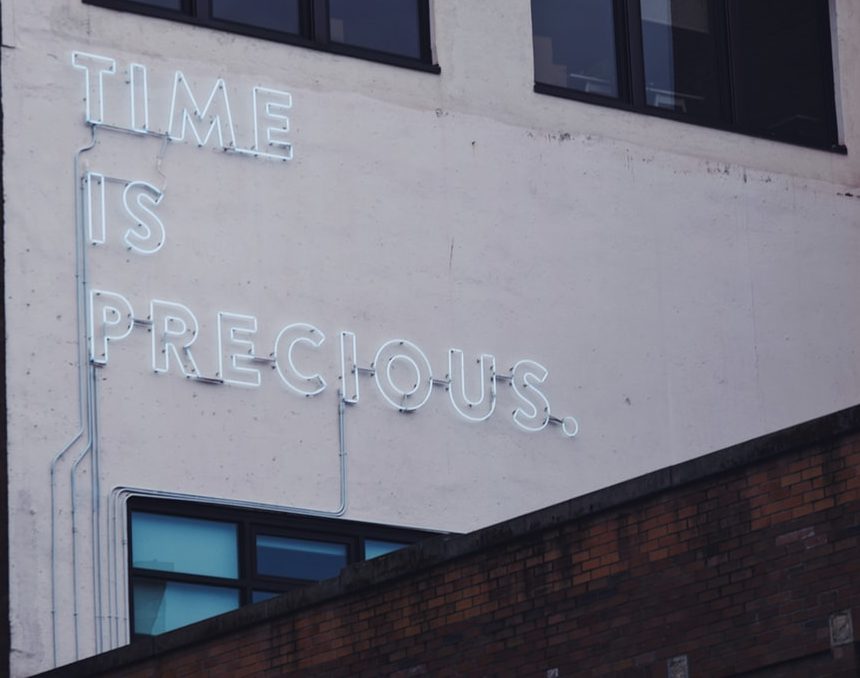
“Tempus Fugit, Time Matters”
Every time I meet PhD students at the beginning of their career, I’m always asking them: Are you seriously taking into consideration the “time” parameter in your work? Sadly, the answer in most of the cases is “what?” or “no”.
In some ways I feel this is normal. Even if we deal with time daily, we need experience to efficiently handle it. I’m focusing on this aspect because by understanding and improving your use of time, you will see a big improvement and more happiness in your work.
Organising your time
Experienced scientists recognize that every week often has the same structure.
In general, time can be managed at different levels: daily, weekly, monthly and yearly. Normally, PhD students have a weekly plan with a list of experiments that must be performed. Knowing that on Monday you need to run a specific experiment is not a good plan itself. Experiments have a specific execution time with many “incubation” points.
The first rule is: Start every day with a “to do” list! The list should include as many details as possible, including the precise time required for a specific experimental protocol. Work on your experimental plan and precisely define the time based on your experience.
If you are aware that certain methods or protocols require hours instead of days, more time can be used to perform other tasks. Use this information to fill in your daily “to do” list with the right experiment timeline. Fill in the remaining time with all the other scientific activities (meetings, reading articles, analyzing data) .
Experienced scientists recognize that every week often has the same structure. For example, cell culture on Monday and Friday, lab meeting on Wednesday, data analysis on Thursday and so on. My suggestion is to create your own weekly plan. It does not have to be completely fixed. It can be a structured time schedule with degrees of freedom. With this solution you are more organized. I find it is much easier to fill in my daily “to do” list with a structured weekly plan.
Planning further ahead
Healthy time pressure is good for your work
Moving the arrow of time further ahead, you also have to think about the coming months. Normally, during your PhD, you have a detailed scientific project. Well-structured projects always have goals or milestones, which might include packages of data that allow you to move to the next level of your project. It is important to set up a deadline for your milestones. The easiest way is to use your weekly plan as tool for time estimation. Fill in in the weekly plan with every experiment you need to reach your milestone based precisely on the time required.
Healthy time pressure is good for your work. If you feel that every day is like another day, then you won’t realise deadlines are approaching. Similarly, you may feel more like you are in a public office than a scientific lab. You should be able instantly recognize that you are possibly losing direction.
Finally, take this last concept into consideration:
During the years, the time you dedicate to specific activities changes. In the beginning, you are more focused on setting up experiments and techniques. At the end, the time you need for implementation of your scientific knowledge or simply writing your thesis increases greatly with increased stress.
A good way to avoid this problem is to initiate your knowledge enrichment and your thesis writing from the beginning. Clearly, it is not easy to write a thesis without data. However it is possible to efficiently create a structure of your manuscript to update day by day. Working with your daily and weekly plan gives you the chance to efficiently organize your time.

About the author
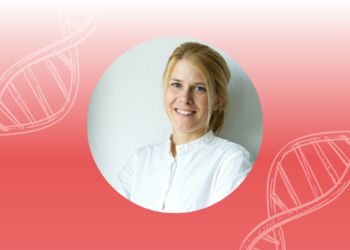
Federico is a senior scientist with a great passion in mentoring and scientific project management. For several years, he has been dedicated to basic and systemic mechanisms in liver cancer progression, focussing on NFkB, microenvironment and cell polarity. He is also interested in scientific implementation and innovation, and is currently looking for special and creative ideas to develop. Federico is an EACR Ambassador.