
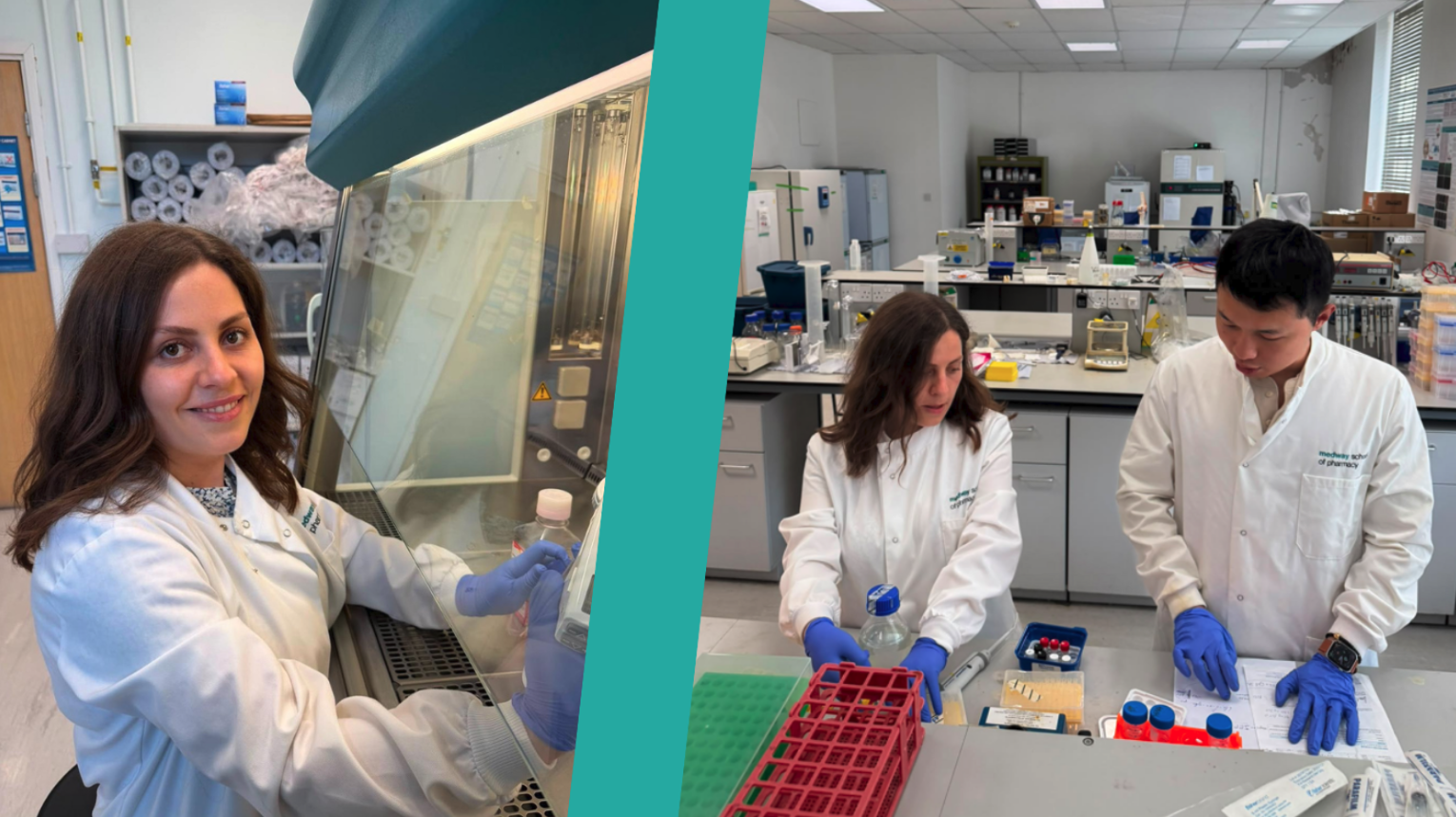
Gohar Sevoyan is a PhD student at the Institute of Physiology National Academy of Sciences, Republic of Armenia, who received an EACR Travel Fellowship to visit and work at the Medway School of Pharmacy, Universities of Kent and Greenwich, UK from May to August 2026.
The EACR, with support from Worldwide Cancer Research, provides Travel Fellowships of up to €3,500 to enable early-career cancer researchers to gain new skills through a short-term visit to a lab or research group in another country. This trip was also partially funded by the G. Gulbenkian Foundation.
You can read about other Travel Fellows and their experiences here.
Tell us a little bit about your research.
My research focuses on understanding how cancer cells communicate with their surroundings and how this communication helps them grow and survive. I study a protein called TIGIT, which is usually associated with immune cells but is also found on several types of cancer cells. We found that TIGIT can interact with other proteins and activate signals that promote cancer cell growth. At the same time, it can interact with immune cells and contribute to their suppression. Understanding these interactions may help reveal new mechanisms of cancer progression and identify potential targets for future cancer therapies.
Why did you decide to apply for an EACR Travel Fellowship?
I decided to apply for an EACR Travel Fellowship because opportunities for researchers in Armenia to receive financial support for international research training are still quite limited. The three-month training was a valuable opportunity for me to gain new research experience, learn from researchers in a different scientific environment, and bring new ideas and approaches back to my own work. The fellowship made it possible for me to take part in this experience and develop both my research skills and my scientific perspective.
Why did you choose the host lab?
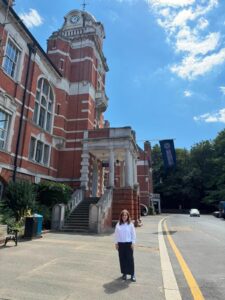
My institute has a long-term relationship with Prof Ovsepian from the University of Greenwich, UK. I sought advice from Prof Ovsepian regarding the possibility of training in one of his groups focused on the research related to my current PhD programme. In particular, I am working on understanding the molecular mechanisms of interaction of immune cells with tumour microenvironment and cross-links between cancer immune evasion pathways.
Prof Ovsepian recommended that I contact Prof Sumbayev, who is currently leading the research group focusing on anti-tumour immunity and regulation of cancer immune evasion pathways. We had several online meetings with Prof Sumbayev, discussing my PhD project and the work of his lab. Prof Sumbayev offered me an opportunity to join his ongoing project focusing on understanding the intracellular and extracellular activities and functions of immune checkpoint protein called TIGIT (T cell immune receptor with Ig and ITIM domains).
Did you have a personal mentor or anyone who particularly helped you?
During my stay, Xi Lei, a PhD student in the laboratory, became an important mentor and source of support for me. Throughout the three months, he helped me adapt to the new research environment and guided me as I learned new experimental methods.
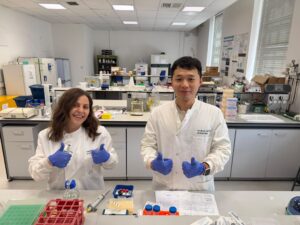
Whenever I had questions or faced difficulties during the experiments, he was always willing to help, explain things patiently, and discuss possible solutions with me. He also encouraged me to pay attention to the details of my experiments and the reliability of my results.
I am very grateful for his support and for the experience he shared with me. His guidance helped me gain new practical skills and become more confident in working independently in the laboratory.
How has the trip inspired you in your research?
The trip inspired me through the calm and natural environment of the university. Being away from the noise and rush of everyday life gave me the space to think more clearly and plan my research more productively. During the trip, I started looking at my project from a broader perspective, not only focusing on the biological role of a single molecule, but also considering how it is involved in a biochemical pathway and interconnected with other molecules within it. This helped me rethink some aspects of my project and approach my research questions in a more integrated way.
The results obtained during my three-month training will be included in two manuscripts that are currently being prepared, and I will be a co-author on both publications.
How has this visit been beneficial to your research and your career?
This visit has been very beneficial for both my research and my career. Being involved in research that has already led to publications through an international collaboration is an important step for me and a valuable experience at this stage of my career. The data I obtained during the visit will also be used in my PhD thesis. The visit gave me hands-on experience with new methods and helped me become more confident in working in a new research environment. More importantly, it encouraged me to approach my research from a broader perspective and gave me ideas that I can apply to my ongoing work. Overall, I feel that the experience has had a meaningful impact on both my research and my development as a researcher.
Want to find out more?

If you are interested in applying for the Travel Fellowship scheme, please click here for more information: EACR Travel Fellowships