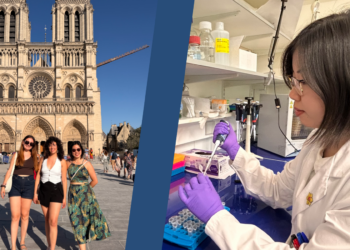


Magdalena Sznurkowska was the 2024 recipient of an EACR-AstraZeneca Postdoctoral Fellowship, funding that is awarded for a period of up to three years to support excellent postdoctoral researchers in laboratories throughout Europe and the world.
She began as a Postdoctoral Research Fellow in Nicola Aceto’s laboratory at the Institute of Molecular Heath Sciences, ETH Zürich, where she studied the mechanisms of metastasis, and has recently progressed to a new role as an assistant professor at the University of Basel after securing an ERC Starting Grant. We would like to congratulate Magdalena on her exciting new funding and project, and are proud to have supported this part of her journey!
Tell us about your current research topic.
Enhertu is a potent new antibody-drug-conjugate used for the treatment of HER2-positive and HER2-low breast cancer, lung and gastric cancer patients. However, it is generally understood that specific genetic backgrounds of cells may play a role in response to therapies and that resistant cells may exist in tumours or arise in response to treatments. Here, we aim to further increase the prospects of Enhertu, by discovering the potential – currently hidden – mechanisms of resistance and sensitisation, to reach higher response rates with combinatorial therapies.
What are the next steps you plan to take?
In May 2026, I started my own lab in Metastasis Biology at the University of Basel. Broadly speaking, we are interested in metastatic organotropism and the effects of different organs on cancer cells. The first team members have been recruited and are joining our group. The next steps are setting the stage and building new projects with the new members of the team. I am very excited about the science ahead!
How did the fellowship impact your career progression?
Receiving this prestigious fellowship has also been an important recognition of my scientific trajectory and has strengthened my career prospects as I had been moving towards establishing my independent research programme. The opportunity to present my work at the EACR Annual Congress was particularly valuable, both scientifically and professionally. In addition, being part of the EACR Fellows Network, and EACR in general, is inspiring and provides a meaningful platform for exchange with other early-career cancer researchers.
What were the highlights of your fellowship?
The Fellowship has been very beneficial for both my research and career development. Through the connection with AstraZeneca and its research leaders, I have had the opportunity to further develop my translational perspective and to think more deeply about how discoveries in cancer biology can ultimately be linked to clinical impact. Additionally, receiving this fellowship and having a chance to present my work at the EACR annual conference were both great opportunities for enhancing my career prospects. Being part of the EACR Fellows Network is inspiring and beneficial as well.
More about EACR-AstraZeneca Postdoctoral Fellowships
The aims of this funding are to support the career development of outstanding EACR members in the early stage of their careers, and to train the next generation of scientists engaged in innovative research in areas where AstraZeneca has demonstrated leadership through its pipeline and research programs. Learn more here.