
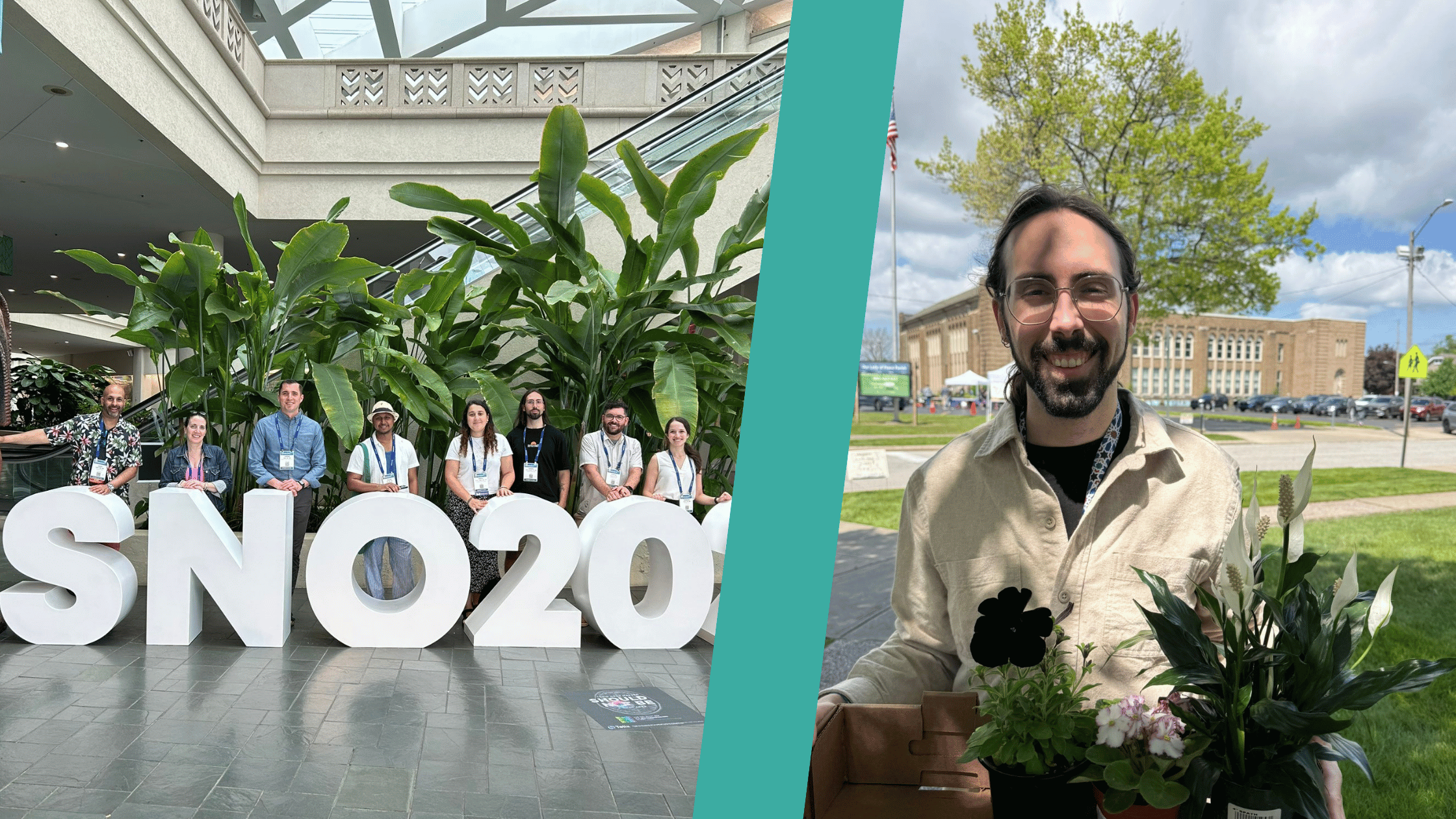
Enrique Jiménez Madrona is a PhD student at the Universidad de Salamanca, Instituto de Neurociencias de Castilla y León, who received an EACR Travel Fellowship to visit and work at the Cleveland Clinic, USA from October 2025 to June 2026.
The EACR, with support from Worldwide Cancer Research, provides Travel Fellowships of up to €3,500 to enable early-career cancer researchers to gain new skills through a short-term visit to a lab or research group in another country.
You can read about other Travel Fellows and their experiences here.
Can you summarise what you learned on your visit?
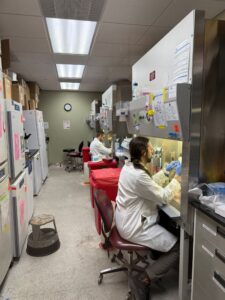
Mainly, I have learned how to properly perform tissue clearing on tumour resected mouse brains and consecutively image them in three dimensions using the cleared tissue light sheet microscope. In addition, I have also learned the whole transduction process, including plasmid design, bacterial culture and processing, and finally transduction itself and validation. I have gained some basic insights into genotyping and mice colony management. Lastly, I have successfully tested a new combination of immunotherapy in the same mouse model, going through surgical resection along with temozolomide (chemotherapy) and a new experimental therapy from my origin lab, which led to promising results to fight glioblastoma, the most malignant primary brain tumour.
Why did you decide to apply for an EACR Travel Fellowship?
The EACR Travel Fellowship was the perfect opportunity to fund my research stay. After some funding fell through, almost every grant call was either closed or the duration of the stay didn’t meet the requirements for my collaboration until I found the EACR Travel Fellowship. The EACR team promptly replied and since the response time was astonishingly quick, my stay was not affected by any financial issues.
The EACR team has always been helpful, efficient and patient. And furthermore, the call for applicants is always open!
What were you able to do that you could not have achieved in your home lab?
This opportunity allowed me to learn several techniques that we rarely or never perform in our lab, such as genotyping, mice colony management, viral transduction, in vivo bioluminescence imaging, fluorescence guided surgical resection and tissue clearing. As a PhD student, learning as many techniques as possible is a top priority.
Did you take part in any interesting local or cultural activities?
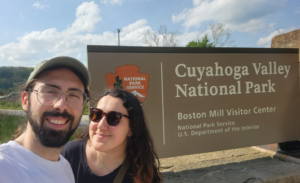
Yes! Thanks to the EACR Travel Fellowship I was able to take part in several unique activities. The first week I experienced the Midwest’s stunning autumn, and visited one of the iconic gardens in the area – the Holden Arboretum. The second week I participated in American Halloween! I also enjoyed Thanksgiving and Christmas, and was impressed by how well decorated some houses can be and by how much it could possibly snow. I also attended hockey and basketball games. One of my favourite activities was hiking through Cuyahoga National Park, and I also enjoyed just walking around the neighborhood to a nearby small lake which I found truly calming.
Did you have a personal mentor or anyone who particularly helped you?
I was lucky to work primarily with Andrea Álvarez-Vázquez. She was such a wonderful support during my whole stay, both personally and professionally. I learned most of the techniques from her and this stay would have been much harder without her. I also wouldn’t have gotten to see half of the city if it wasn’t for her, so I would like to thank her in particular!
How has the trip inspired you in your research?
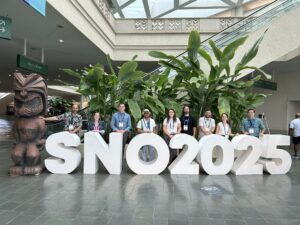
This trip has helped me to always remember that our results are ultimately aimed to help the patients. Therefore, we have to take into consideration which question we hope our experiment will answer and then modify its design as needed in order to best transition the insights gained to the relevant clinic. Also, I learned it is fundamental to take results from online databases, administration and physiology itself into consideration, as they may help improve design therapeutic strategies or avoid unnecessary suffering to the animal models.
Have you brought back any knowledge that has benefited your home lab?
Yes! The main purpose of this stay was for me to learn tissue clarification and light sheet microscopy, as our work centre was granted funding to buy a light sheet microscope, which we received the week before my return to Spain. Therefore, the techniques and expertise acquired will be fundamental for using this device and training other users in the following months. We hope to benefit from this knowledge very soon!
Does your lab plan to do any future collaboration with the host lab?
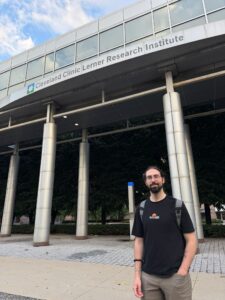
Our plan is to write at least one original manuscript, that will include some results obtained during my stay. In fact, some results already support previous data that is currently being reviewed, so both PIs involved are considering including part of my stay in the publication.
How has this visit been beneficial to your research and your career?
This research stay was a fully immersive experience that made me part of a world-class scientific environment. As I have previously mentioned, it made clear for me to always keep the clinic in mind. On the other hand, all of the techniques that I have learned or seen others perform will significantly enhance not only my PhD thesis, but my whole career.
Is there anything else you’d like to mention?
I would like to thank you all for this great opportunity! I’m especially thankful for your patience, guidance and humanity. Thank you, EACR team! 😊
Want to find out more?

If you are interested in applying for the Travel Fellowship scheme, please click here for more information: EACR Travel Fellowships