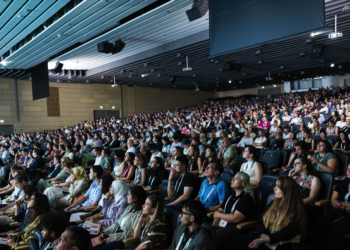

The EACR’s Cancer Genomics, Multiomics and Computational Biology conference (Essen, 12–14 May 2026) centred on integrating high-resolution genomic and multi-omic data with advanced computational and AI-driven approaches to dissect tumour initiation, evolution, heterogeneity, and therapeutic response. At its 7th edition (previously known as Cancer Genomics), the meeting brought together just under 200 delegates from 33 countries. This was a truly multidisciplinary meeting, with topics discussed spanning cancer genomics and immune genomics, cell plasticity and non-genetic evolution, genetic and epigenetic regulation, and genomic instability, alongside methods for data integration and convergence across modalities in a pan-cancer context. The transdisciplinary approach was appreciated by attendees with the conference being highly recommended by 99% of feedback respondents.
The programme
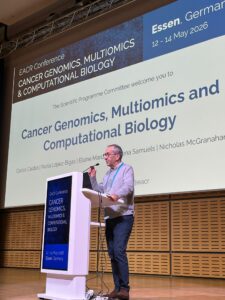
The programme placed single-cell omics and spatial organisation at its core, using these approaches to dissect cellular diversity and spatio-temporal context within the tumour ecosystem.
Itay Tirosh (Weizmann Institute of Science, Israel) focused his talk on metastasis and senescence in head and neck cancer, illustrating how single-cell and spatial profiling can define distinct cell states and map their spatial architecture [1,2], while Mor Nitzan (The Hebrew University of Jerusalem, Israel) presented computational strategies for decoding layered spatial and temporal organisation in multicellular systems [3,4]. Complementing these spatial perspectives, Jamie Blundell (University of Cambridge, UK) focused on reconstructing clonal histories (recapitulate phylogeny) at single-cell resolution and described an in vivo lineage tracing method that uses methylation barcodes in the PCDH gene cluster. This method could improve early detection of individuals at risk of developing cancer [5]. Andrea Sottoriva (Human Technopole, Italy) showed how single-cell multi-omics can quantify epigenetic evolution and plasticity in colorectal cancer and its microenvironment, linking epigenetic changes to Darwinian selection [6-8]. On the translational side, Ewa Szczurek (Helmholtz Munich, Germany) highlighted how AI-driven analyses can reveal clinically meaningful spatial neighbourhoods and cell–cell interactions in tumours [9], and Raza Ali (CRUK Cambridge Institute, UK) focused on spatial predictors of response to neoadjuvant immuno-oncology therapy [10]. Bringing these insights toward clinical application, Eduard Porta (Josep Carreras Leukaemia Research Institute, Spain) outlined how spatial maps can be transformed into diagnostic and decision-support tools, positioning spatial biology as an emerging layer in precision oncology [11,12].
Continuing on this theme, the EMBO Closing Keynote Lecture delivered by Carlos Caldas (Hebrew University of Jerusalem, Israel, and University of Cambridge, UK) captivated the audience with a helicopter view of his research: genomics to post-genomics approaches applied to the study of breast cancer. Starting from genomic driver-based stratification of breast cancer [13] and moving on to understanding the genomic subgroups that underlie the dynamics of breast cancer relapse [14] and the development of tools that can predict breast cancer therapy response [15-17], Dr Caldas’ lecture offered fantastic insights into the evolution of the cancer genomics research field from uncovering tumour heterogeneity to charting the tumor microenvironment; from genomic data to multi-omics integration; from uncovering and understanding biological processes to practical clinical implications. Dr Caldas also delighted the audience by sharing the latest unpublished results from his research.
Relevant themes and research advances
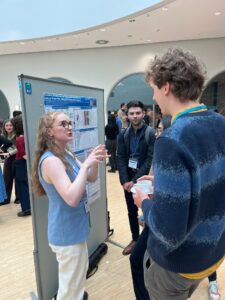
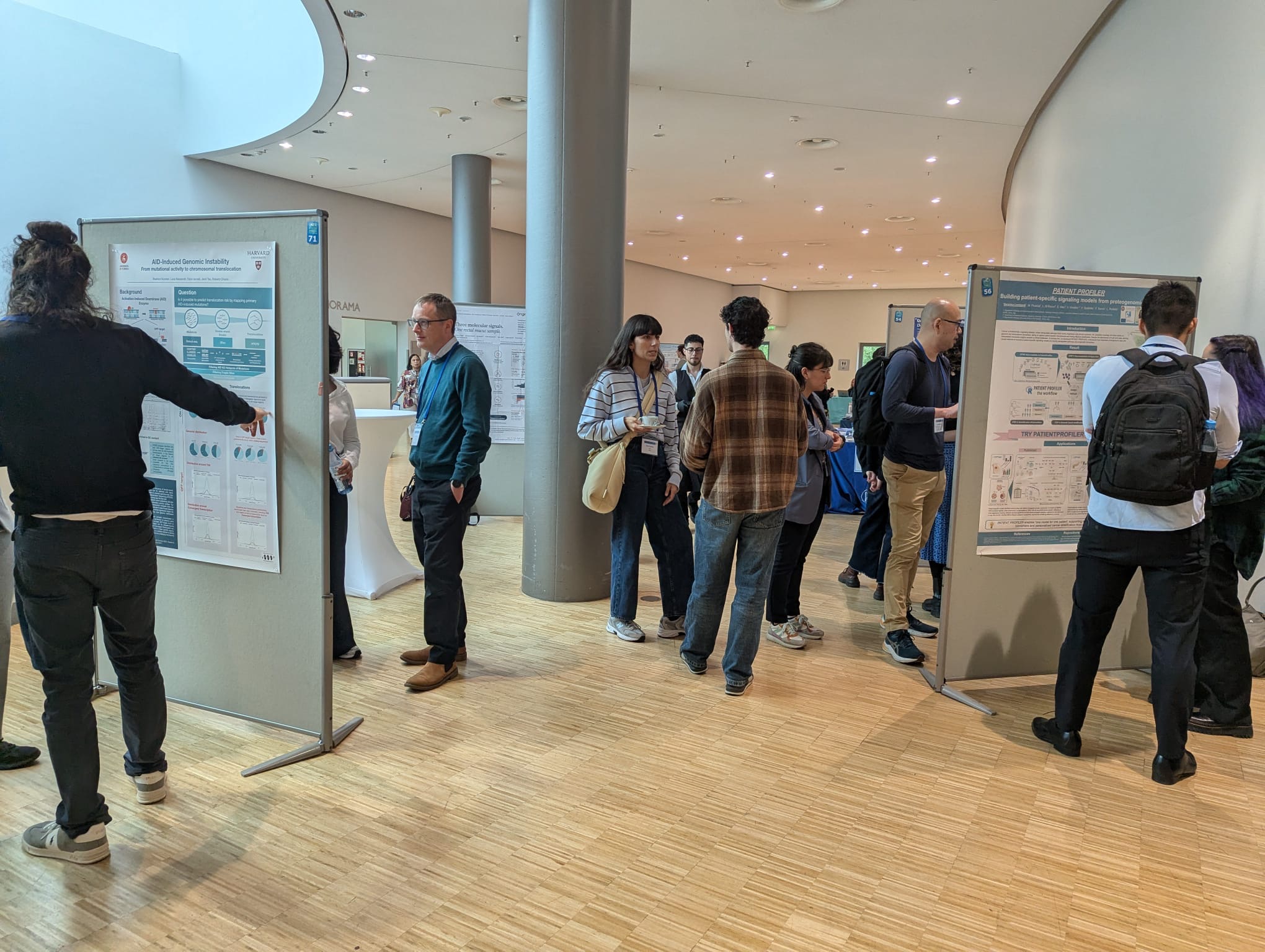
A theme mentioned throughout the conference was that tumour ecosystems underlie all cancer features, whilst malignant cells instruct the tumour ecosystems, creating an ever more complex feedback loop. The trajectory is clearly from artificial model systems toward human tissues, with computational biology and advanced data analysis positioned as a pillar in the future of cancer research. Poster sessions and proffered papers reinforced these directions, while dedicated discussions with the Scientific Programme Committee underscored how recent technical advances have transformed our understanding of cancer, enabling a shift from studying isolated genes to interrogating cells and tissues in an increasingly multidisciplinary framework that integrates physics, mathematics and biology. While the range of topics covered at the conference was remarkably diverse, a recurring message was that the biggest current challenge is no longer data generation but “data immigration” – moving data across platforms and scales in ways that are biologically meaningful. The committee also stressed that a significant limitation is the reliance on correlative studies. While modelling and simulation are advancing rapidly, truly predictive, mechanistic models of tumours will require deeper causal insight and more rigorous integration of multi-scale data. Looking ahead, the scientific committee highlighted an ambitious next goal for the community: to realistically “compute tumours” in the way we are now able to compute gastrulation and embryonic development [18]?
Survey feedback on Cancer Genomics, Multiomics and Computational Biology
The conference had a significant positive impact on attendees’ research and career development. Survey feedback showed that 96% of respondents gained new ideas or perspectives that they intend to pursue further in their research, demonstrating the event’s role in stimulating innovative thinking and future scientific inquiry. The conference also fostered valuable networking opportunities, with 87% of respondents indicating that it helped them establish new professional connections. Overall, the conference showed value in supporting and empowering researchers as it increased the motivation and confidence in pursuing a career in cancer research in 95% of feedback survey respondents.
References:
- Chanoch-Myers R, Hara T, Greenwald AC, Hoefflin R, Bussema L, Weisman HR, Nieblas-Bedolla E, Gurramkonda J, Bekezhankyzy Z, Jucht A, Calvo Fernández E. A blueprint for local and distal invasion programs in glioblastoma. Nature communications. 2026 Mar 17.
- Kinker GS, Greenwald AC, Tal R, Orlova Z, Cuoco MS, McFarland JM, Warren A, Rodman C, Roth JA, Bender SA, Kumar B. Pan-cancer single-cell RNA-seq identifies recurring programs of cellular heterogeneity. Nature genetics. 2020 Nov;52(11):1208-18.
- Karin J, Bornfeld Y, Nitzan M. scPrisma infers, filters and enhances topological signals in single-cell data using spectral template matching. Nature Biotechnology. 2023 Nov;41(11):1645-54.
- Friedman R, Moriel N, Ricci M, Pelc G, Weiss Y, Nitzan M. Characterizing Nonlinear Dynamics via Smooth Prototype Equivalences. arXiv preprint arXiv:2503.10336. 2025 Mar 13.
- Hackett SF, Boniface CT, Fonseca AV, Ramos-Yamasaki AD, Watson C, Bazin HM, Tan A, Yu HL, Hanssen LL, Dev H, Apostolidou S. In vivo lineage tracing across human tissues using methylation barcodes in the protocadherin gene cluster. bioRxiv. 2026 Feb 23:2026-02.
- Lakatos E, Gunasri V, Zapata L, Househam J, Heide T, Trahearn N, Swinyard O, Cisneros L, Lynn C, Mossner M, Kimberley C. Epigenetically driven and early immune evasion in colorectal cancer evolution. Nature Genetics. 2025 Nov 5:1-1.
- Oliveira EA, Milite S, Fernandez-Mateos J, Cresswell GD, Yara-Romero E, Vlachogiannis G, Chen B, James CT, Patruno L, Ascolani G, Acar A. Epigenetic heritability of cell plasticity drives cancer drug resistance through a one-to-many genotype-to-phenotype paradigm. Cancer Research. 2025 Aug 1;85(15):2921-38.
- Boudjelthia IK, Milite S, El Kazwini N, Huang Y, Sottoriva A, Sanguinetti G. Interpretable learning of temporal cellular dynamics from single-cell data. Cell Reports Methods. 2026 Mar 23;6(3).
- Możejko M, Schulz D, Gogolewski K, Eling N, Krawczyk J, Bogatyrova O, Golab J, Nowis D, Liechti R, Morfouace M, Hong H. Cellohood: multi-granular discovery of cellular neighborhoods with a permutation-invariant set transformer auto-encoder. bioRxiv. 2025 Nov 11:2025-11.
- Wang XQ, Danenberg E, Huang CS, Egle D, Callari M, Bermejo B, Dugo M, Zamagni C, Thill M, Anton A, Zambelli S. Spatial predictors of immunotherapy response in triple-negative breast cancer. Nature. 2023 Sep 28;621(7980):868-76.
- Cervilla S, Grases D, Perez E, Real FX, Musulen E, Aprea J, Esteller M, Porta-Pardo E. A technical comparison of spatial transcriptomics platforms across six cancer types. Genome Biology. 2026 Jan 12.
- Grande E, Sibai M, Andrada E, Grases D, Reig O, Escobosa M, Azueta A, Castellano D, Puente J, Villarreal JM, Font A. Spatial biomarkers of response to neoadjuvant therapy in muscle-invasive bladder cancer: the DUTRENEO trial. medRxiv. 2025 Feb 10:2025-02.
- Curtis C, Shah SP, Chin SF, Turashvili G, Rueda OM, Dunning MJ, Speed D, Lynch AG, Samarajiwa S, Yuan Y, Gräf S. The genomic and transcriptomic architecture of 2,000 breast tumours reveals novel subgroups. Nature. 2012 Jun 21;486(7403):346-52.
- Rueda OM, Sammut SJ, Seoane JA, Chin SF, Caswell-Jin JL, Callari M, Batra R, Pereira B, Bruna A, Ali HR, Provenzano E. Dynamics of breast-cancer relapse reveal late-recurring ER-positive genomic subgroups. Nature. 2019 Mar 21;567(7748):399-404.
- Sammut SJ, Crispin-Ortuzar M, Chin SF, Provenzano E, Bardwell HA, Ma W, Cope W, Dariush A, Dawson SJ, Abraham JE, Dunn J. Multi-omic machine learning predictor of breast cancer therapy response. Nature. 2022 Jan 27;601(7894):623-9.
- Ruppin E, Dhruba SR, Sahni S, Wang B, Wu D, Rajagopal P, Gurevich-Schmidt Y, Shulman E, Sinha S, Sammut SJ, Caldas C. The expression patterns of different cell types and their interactions in the tumor microenvironment are predictive of breast cancer patient response to neoadjuvant chemotherapy.
- Shulman ED, Campagnolo EM, Lodha R, Chung Y, Stemmer A, Cantore T, Ru B, Chang TG, Biswas S, Dhruba SR, Patiyal S. AI-predicted spatial transcriptomics unlocks breast cancer biomarkers from pathology. Cell. 2026 May 8.
- Brenner S. Life’s code script. 2012 Feb 23;482(7386):461-.