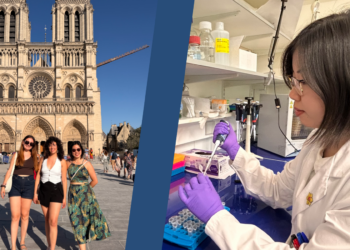

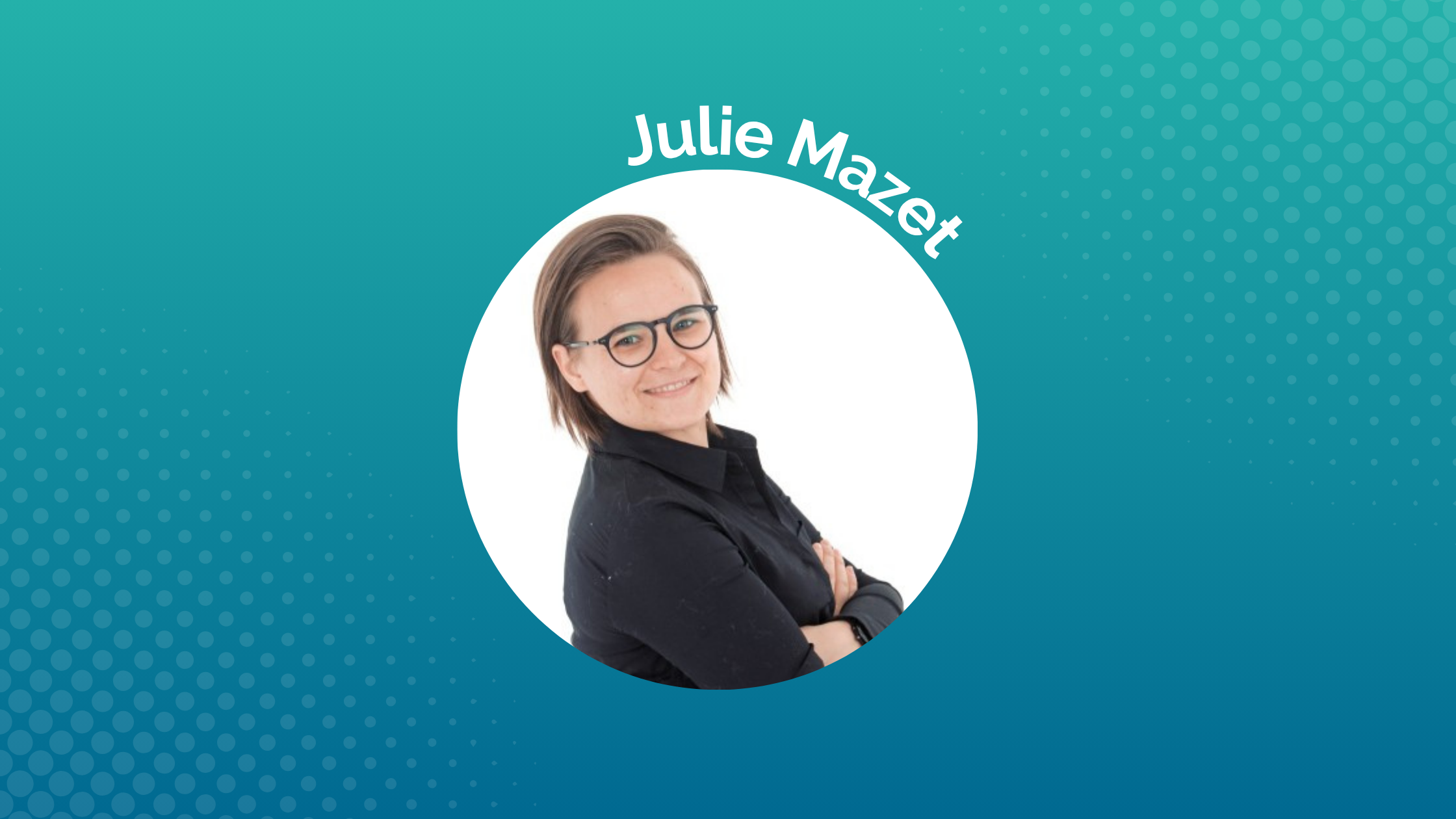
Julie Mazet was the 2025 recipient of an EACR-The Mark Foundation Postdoctoral Fellowship, funding that is awarded for a period of up to three years and support excellent postdoctoral researchers in laboratories throughout Europe.
She is a Postdoctoral Research Fellow at the Agora Cancer Research Institute in Switzerland, where she studies brain metastasis. We recently caught up with her to hear about the progress she has made in her research during this first year of her fellowship.
Can you tell us about the topic of the research you are undertaking during your fellowship?
Our research focuses on brain metastasis, a clinically challenging evolution of cancer for which treatment options are limited. We aim to understand why CD8+ T cells, which represent the key cytotoxic cells driving anti-tumour immunity, fail to control the growth of brain metastases. By comparing primary breast tumours with breast-to-brain metastases, we aim to determine how the tumour microenvironment influences CD8+ T cell dynamics. Specifically, we are investigating how CD8+ T cells are recruited to tumours, their phenotypes, microenvironmental niches, and functional capacities. Ultimately, this research could reveal new therapeutic strategies to unleash the anti-tumour function of CD8+ T cells in brain metastasis.
At this stage, how do you think the fellowship will be beneficial to your research and your career?
The EACR-The Mark Foundation Postdoctoral Fellowship has been highly beneficial to both my research and professional development. This support has enabled me to advance a challenging and clinically relevant research project while also providing the resources needed to pursue innovative approaches. The fellowship has also created a valuable opportunity to present my research at the EACR 2026 Congress, engage in scientific discussions, and establish connections within an international network. Being part of this community has increased the visibility of our research and facilitated its dissemination to a wider audience. I am very grateful for this support, which continues to foster my scientific growth and career development.
What were the highlights from the first year of your fellowship?
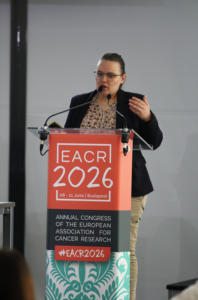
This first year of my fellowship has been highly productive and rewarding. The first highlight was generating preliminary data that provides intriguing insights into the status of CD8+ T cells in breast-to-brain metastasis. We established a strong foundation for the project and guided the next stages of investigation into mechanistic studies, exploring the tumour microenvironment and more deeply characterising the CD8+ T cells. Another important achievement was the publication of an invited commentary article in Molecular Oncology with my mentor Professor Johanna Joyce, which allowed us to contribute to scientific discussions in the CD8+ T cell cancer field, specifically in cancer immunotherapy. Finally, the major highlight was that I had the opportunity to present my research to date at the EACR 2026 Congress in Budapest, where I received encouraging and valuable feedback from researchers working across different fields of cancer research. This very enriching experience facilitated scientific exchange and placed our findings into a broader context. Overall, the first year has strengthened both the scientific direction of the project and my development as an independent researcher, while engaging with the international cancer research community.
EACR-The Mark Foundation Postdoctoral Fellowships
The goals of this funding programme are to support talented EACR members during their postdoctoral training, to advance innovative areas of cancer research, and to continue to grow a global network of scientists with diverse expertise. Learn more here.
About The Mark Foundation for Cancer Research
The Mark Foundation for Cancer Research, a charitable organization based in New York City, actively partners with scientists worldwide to accelerate research that will transform cancer prevention, diagnosis, and treatment. Since 2017, The Mark Foundation has awarded over $300 million in grants to investigators at more than 120 academic institutions across 18 countries, with research programs focusing on early career support, team science collaboration, new technology innovation, and therapeutics discovery. Additionally, The Mark Foundation maintains a growing portfolio of investments in early-stage cancer diagnostics and therapeutics companies, including several that have transitioned from grantee projects into commercial development. To learn more, please visit www.themarkfoundation.org.