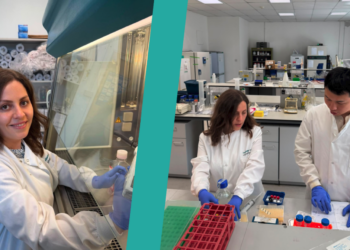

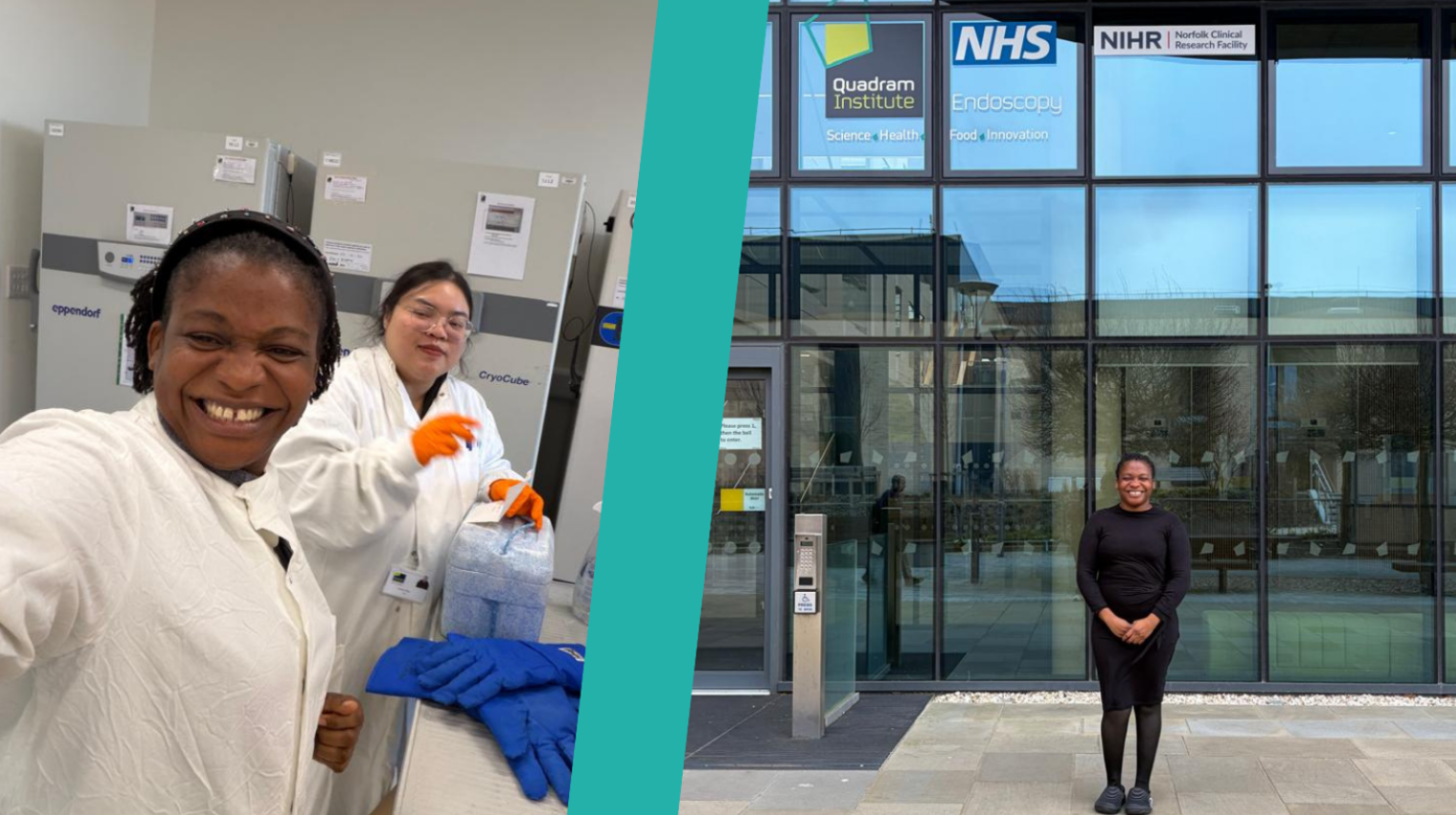
Aniefiok John Udoakang is a postdoctoral researcher at University of Medical Sciences, Ondo City, Ondo State, Nigeria who received an EACR Travel Fellowship to visit and work at Quadram Institute Bioscience, Norwich Research Park, Norwich, United Kingdom between February and April 2026.
The EACR, with support from Worldwide Cancer Research, provides Travel Fellowships of up to €3,500 to enable early-career cancer researchers to gain new skills through a short-term visit to a lab or research group in another country.
You can read about other Travel Fellows and their experiences here.
Tell us more about your research.
My current research investigates how the gut microbiome (the community of microorganisms in the digestive tract) may influence breast cancer development and progression in West African women. Breast cancer is the leading cause of cancer-related deaths among women globally and increasingly affects younger women in Ghana and Nigeria. Recent studies suggest that changes in the gut microbiome composition could contribute to breast cancer risk and treatment response. Therefore, by understanding these relationships, we could develop new approaches for breast cancer prevention, early detection and improved treatment outcomes in African populations.
Why did you decide to apply for an EACR Travel Fellowship?
I decided to apply for the EACR Travel Fellowship to strengthen my skills and capacity in analysing gut microbiome metagenomics datasets, which are central to my research. Although I had a basic understanding of metagenomics analysis, independently processing and interpreting large-scale microbiome data remained challenging for me. Therefore, this fellowship provided an opportunity for me to gain practical hands-on training and mentorship in advanced bioinformatics approaches within the supportive research environment of the Quadram Institute. Developing these skills is necessary to advance my research role in the gut microbiome niche, especially in Africa, as well as to build long-term research capacity that I can apply and share within my home institution. Finally, the fellowship provides a lasting collaborative opportunity with colleagues at places like the Quadram Institute.
[Dr Stephen Robinson’s] lab provided an ideal environment to develop advanced metagenomics and bioinformatics skills needed for my research.
Why did you choose the host lab?
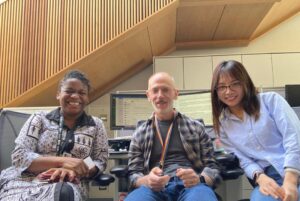
I found Dr Stephen Robinson’s profile on the Quadram Institute website following a recommendation from a colleague. I was interested in his lab because of the close alignment of his research with mine, the role of the gut microbiome in breast cancer. I was particularly drawn to his lab’s expertise in metagenomics analyses and its
integration with translational health research. After contacting him directly, we had several discussions, including a virtual meeting, where we interacted about our shared research interests and my training needs. Dr Robinson was very supportive and receptive regarding hosting me. His lab provided an ideal environment to develop advanced metagenomics and bioinformatics skills needed for my research, while I contributed datasets from African populations to compare with UK datasets in order to identify shared and population-specific gut microbiome signatures associated with breast cancer.
Can you summarise the research you did or what you learned on your visit?
During my visit to the Quadram Institute, I received hands-on training in gut microbiome shotgun metagenomics data analysis using the high-performance computing (HPC) systems. I acquired skills on shotgun metagenomics analysis using a complete bioinformatics workflow, including quality control with fastp, host read removal with HoStile, taxomonic profile with MetaPlAn, and functional annotation using HUMAnN. I gained experience navigating the HPC, writing and modifying batch scripts, and troubleshooting analysis pipelines.
I was a part of valuable discussions on microbiome study design and reproducible bioinformatics workflow. Working closely with Dr Robinson’s team, particularly Dr Ting Liu (Postdoc) and Thomas Bennett (PhD candidate), greatly improved my confidence in independent analysis of microbiome data. The fellowship visit significantly strengthened my computational skills, providing practical experience that directly supports my ongoing microbiome research in African populations.
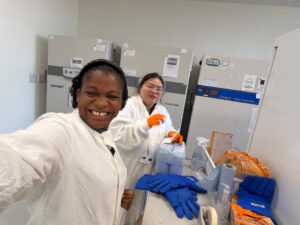
Describe a ‘typical day’ on your visit.
A typical day during my visit involved attending practical training sessions and performing metagenomics analysis on the HPC. I was trained on writing and adapting batch scripts, general troubleshooting, and interpreting outputs from different bioinformatics tools. I worked through key steps of shotgun metagenomics analysis, including quality control and pre-processing to functional profiling analysis. I worked closely with Dr Ting Liu, a postdoc in the Robinson lab, and Thomas Bennett, a PhD candidate. We had regular discussions on best practices in reproducible microbiome research, data management, and analysis workflow.
What were you able to do that you could not have achieved in your home lab?
Through this visit, I had access to advance computational infrastructure, particularly HPC resources, not currently available in my institution, as well as hands-on training on metagenomics data analyses and regular mentoring. I gained practical experience navigating the system and troubleshooting. I am very excited by the opportunities this training has provided as it has allowed me to significantly progress in my work and develop competences that I was lacking before.
Did you take part in any interesting local or cultural activities?
Yes, I visited the Norwich Easter park and the Seventh-day Adventist church where I had fellowship with other individuals from different countries. These were opportunities to meet with new people and it was quite refreshing after a long week of work.
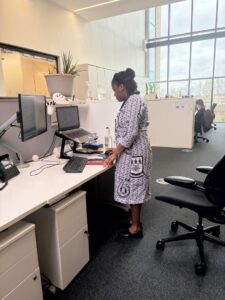
What was a personal highlight of your trip?
A personal highlight of my trip was gaining knowledge and confidence to independently navigate the HPC system and execute working bioinformatics workflows. I have enjoyed learning how to write and refine scripts and troubleshoot errors. Seeing my analysis capabilities progress and obtaining meaningful outputs have been especially rewarding for me.
Was the host institution very different from your own?
Yes, the Quadram Institute is different from mine as it is an institution with a focus specifically on research. The equipment and computational infrastructure, as well as research support is quite encouraging. I particularly appreciated the structured training I received, access to advanced computational resources (such as the HPC), and the strong collaborative culture in the QIB.
Did you have a personal mentor or anyone who particularly helped you?
Yes, in addition to lab meetings which were highly supportive learning environments, I received substantial support from several members of the Robinson lab, particularly from Dr Ting Liu and Thomas Bennett. They provided direct mentorship in bioinformatics analysis and HPC usage, guiding me through bioinformatics pipelines/workflow and troubleshooting. Dr Sumeet Tiwari of the core QIB bioinformatics team also offered invaluable support. Dr Sally and Heloise were quite helpful with discussions around approaches to problem-solving within the lab environment and beyond. Their combined support greatly enhanced my learning experience.
The opportunity to work in a technically advanced environment has inspired me to pursue more rigorous and scalable analyses in my own research and reinforced the importance of reproducibility, structured workflows, and continuous skill development in bioinformatics.
How has the trip inspired you in your research?
This trip has significantly strengthened my motivation to further develop my expertise in applying computational approaches to microbiome research and contributing to the upscale of the microbiome research niche in Nigeria and across Africa. The opportunity to work in a technically advanced environment has inspired me to pursue more rigorous and scalable analyses in my own research and reinforced the importance of reproducibility, structured workflows, and continuous skill development in bioinformatics.
Have you brought back any specific knowledge that has benefited your home lab?
Yes, I have brought back the practical skills in analysis of shotgun metagenomics data, including the use of different tools for quality control and pre-processing, removal of host reads, taxonomic and functional profiling of the microbiome. These techniques will enhance our lab’s ability to efficiently analyse different microbiome datasets. Also, I have brought back techniques in microbiome research which can be adapted to our own environment.
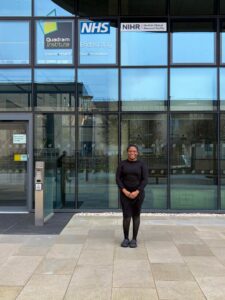
Does your lab plan to do any future collaboration with the host lab?
There are plans for future collaborations with the Robinson group, and we already have a grant application under review. We are currently exploring future collaborative opportunities and are also planning joint publications which have arisen from our shared methodology, analytical workflow, and datasets. These will further strengthen our partnership, supporting future research collaborations between the two groups and institutions. For our continued collaborations, I have also been granted one-year remote access, which is enabling us to continue with our work together.
How has this visit been beneficial to your research and your career?
This visit been highly beneficial to both my research and career development. I have developed computational bioinformatics capacity in analysis of shotgun metagenomics data using high performance computing systems through mentorship and hands-on training. These skills are directly relevant to my ongoing research on the role of the gut microbiome in breast cancer in West African population. Additionally, the visit expanded my professional network, opening up opportunities for collaboration with colleagues like Dr Robinson in the global North. This experience in a multidisciplinary research environment has enhanced my knowledge in conducting high quality interdisciplinary research in the microbiome niche, positively shaping my future research goals.
Is there anything else you’d like to mention?
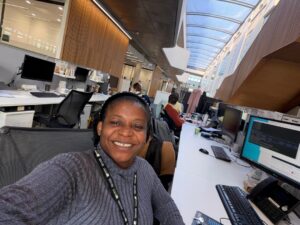
My visit to the Quadram Institute through the support of the EACR Travel fellowship has reinforced my desire to build and develop computational and bioinformatics capacity within my home institution. Access to advanced computational infrastructure, structured training, and collaborative support demonstrates the significant impact such resources can have on the quality of research and productivity. This experience has motivated me to contribute towards strengthening local capacity in computational studies.
Want to find out more?

If you are interested in applying for the Travel Fellowship scheme, please click here for more information: EACR Travel Fellowships