
Cancer research in Ireland is advancing rapidly, from microbiome mapping to community lung screening. We recently spoke to the Irish Association for Cancer Research (IACR), one of our affiliated National Societies, to find out more about their work, ambitions, and open invitation to the wider EACR family.
About the IACR this year
What is one thing your society achieved or initiated in the past year that you are most proud of?
This past year, we’re especially proud to have invested directly in the future of our community – launching seed awards, co‑funding PhD studentships, and expanding travel grants that empower our early‑career members to grow, connect, and excel.
Did your society host or co-host any conferences, workshops, or events? If so, what was the key scientific theme, and what was the highlight?
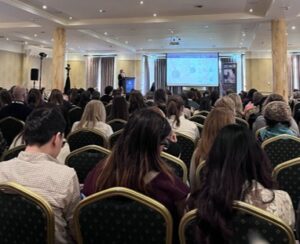
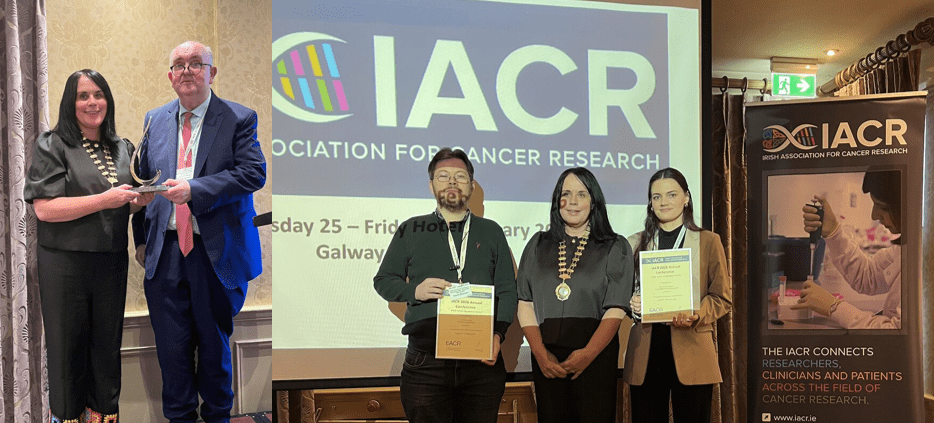
IACR Galway, which took place in February, is our flagship conference of 2026 with ~300 attendees. The 2026 meeting showcased cutting-edge cancer research, from advanced tumour engineering and AI-powered oncology to breakthroughs in precision monitoring. Sessions highlighted next generation tumour models, digital health innovations, and impactful PPI focused communication initiatives, while the liquid biopsies plenary showcased pioneering advances in ctDNA and non-invasive cancer monitoring.
Has your membership grown or changed in any notable way?
IACR continues to grow year-on-year with strong representation across the entire island, integrating translational and clinical research with a focus on patient representation throughout.
The IACR’s refreshed governance model is anchored by senior academic leadership, but each council now has a distinct and clearly defined focus, ensuring that the organisation’s strategic, scientific, and patient-centred priorities are all represented.
- The Strategic Leadership Council is composed of senior academics from major universities across Ireland and Northern Ireland, providing high level direction and oversight for the national IACR conference and cancer research priorities.
- The Emerging Leaders Council, while still supported within this academic governance structure, focuses specifically on early career researchers – giving postdoctoral scientists and new investigators a formal voice in shaping the future of cancer research.
- The Patient Council brings patient partners directly into governance, ensuring that lived experience informs research relevance, design, and impact.
This restructured model keeps governance firmly led by academic experts while making space for distinct, mission-aligned councils that elevate emerging scientific leaders and embed patient voices at the heart of cancer research in Ireland.
The cancer research landscape in Ireland
What has been the most significant cancer research development, discovery, or publication to come out of your country this year?
One of the most significant cancer research breakthroughs in Ireland this year is the national “biological mapping” of cancer patients through microbiome analysis, developed under the Precision Oncology Ireland Phase 2 (POI‑2) programme.
Through the OncoBioMaps Ireland initiative, researchers aim to build nationwide biological profiles of cancer patients, investigate the microbiome as a potential biomarker for cancer behaviour and treatment response, and establish standardised protocols for collecting and analysing samples across multiple centres.
Why does this matter? Exploring the microbiome opens a new frontier in understanding how individual patients respond to cancer and its treatments. By advancing microbiome‑based precision oncology, this project places Ireland at the forefront of an emerging and potentially transformative area of cancer research.
Have there been any notable changes to national cancer research funding, policy, or infrastructure?
Research Ireland was formally established on 1 August 2024 through the amalgamation of Science Foundation Ireland (SFI) and the Irish Research Council (IRC), creating a single national competitive research and innovation funding agency. It was founded as a central pillar of Impact 2030: Ireland’s Research and Innovation Strategy, designed to unify and strengthen the country’s research ecosystem.
As Ireland’s central competitive research agency, Research Ireland’s funding strategy aligns with Impact 2030 – Ireland’s national research and innovation strategy – which includes health, biomedical science, and cancer-related innovation as core national priorities.
Through these strategic frameworks, cancer research teams can receive funding for:
- Precision oncology
- Biomarker discovery
- Clinical research and trials
- Imaging and diagnostics
- Survivorship and quality of life research
- Big data / AI-enabled cancer research
Is there a particular cancer type, research area, or clinical challenge that researchers in your country are especially focused on right now?
Ireland’s GP-led lung screening model brings low dose CT scans directly into high-need communities by having GP practices identify and invite high risk patients, leveraging the trust and local knowledge of primary care. Mobile scanning units, stationed in familiar locations like GAA (Irish national football) clubs, make screening accessible and less intimidating, helping overcome barriers that have historically delayed diagnosis. This piloted approach is already demonstrating how community-based screening can improve early detection and reach populations most at risk for this highly prevalent cancer.
What opportunity – scientific, collaborative, or funding-related – are you most excited about for the year ahead?
As a society, we are most excited about the opportunity to deepen our translational and clinical research collaborations across Ireland and Europe. Strengthening cross‑border partnerships, expanding multi‑centre clinical study networks, and growing funding avenues for joint translational initiatives will allow us to accelerate meaningful patient‑focused impact. We also see major potential in enhancing mobility and exchange opportunities for researchers at all career stages, further embedding the IACR within a vibrant, interconnected European research community.
An invitation for the wider EACR community
With strengths spanning translational discovery, clinical research, and patient‑centred innovation, the IACR serves as a dynamic hub connecting Ireland’s cancer research ecosystem with the wider European network – open, engaged, and committed to advancing cancer science together. Visit the IACR website to find out more.
Join leading cancer researchers at our flagship annual conference in Athlone, Ireland, from 24–26 February 2027!
We’re bringing together international and national experts for a dynamic, inspiring three day event showcasing the latest breakthroughs and innovations in cancer research. All colleagues across Europe are warmly invited to be part of this exciting gathering.
Follow the IACR on Bluesky, LinkedIn, Facebook and Twitter to be among the first to know when registration opens!
About National Societies affiliated with the EACR
The IACR is one of the 14 National Societies that have chosen to affiliate with the European Association for Cancer Research and give their members EACR membership at no extra cost to each member. Click here to find out more about these affiliated National Societies.