
We met in Bilbao, Spain for the EACR Conference: Cancer Neuroscience between 14 and 16 October 2025. The first EACR conference on this exciting and rapidly evolving topic brought together international leaders of the field to identify the most relevant current insights, and to develop a roadmap for future preclinical, translational and clinical research.
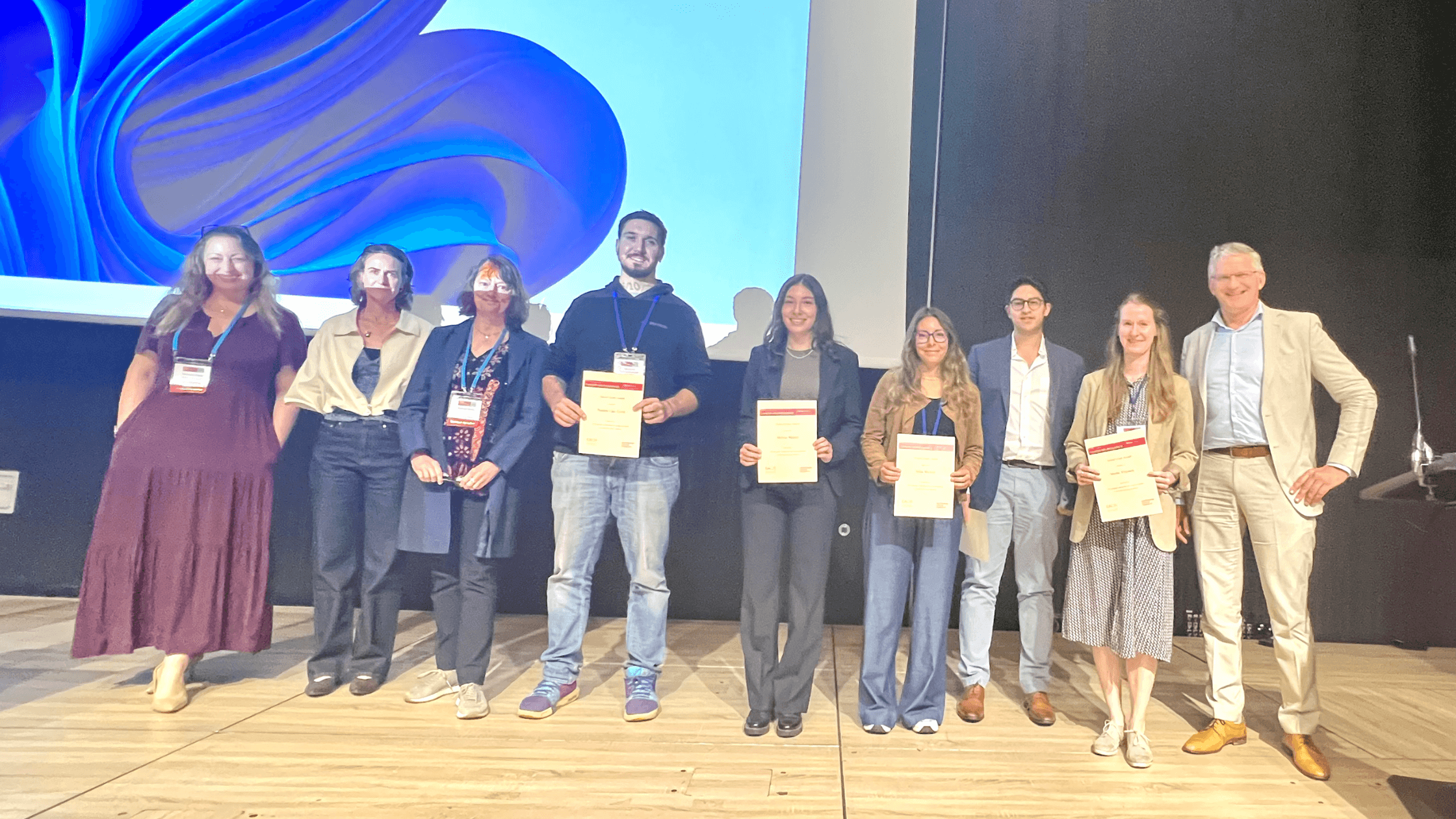
Supported by Worldwide Cancer Research, we were delighted to award several Travel Grants to help cancer researchers in need of financial assistance to attend the event.
Read on to learn about their experience of the conference.
Jai Sidpra
MBPhD Student, University College London, UK

Research: I am a Cancer Research UK MBPhD student at the UCL Great Ormond Street Institute of Child Health supervised by Professor Darren Hargrave. My research aims to develop new and improved treatments for brain tumours based on an understanding of healthy brain networks and the integration of brain tumours with these networks. In the Hargrave Group, I am working to define the neural dependencies of glioma growth in the living human brain through integrated connectomics, intracranial recordings, and genomic analyses of tumour specimens – with a specific focus on paediatric diffuse midline glioma and adult glioblastoma.
What was a personal highlight of the conference for you?
It was a privilege to be able to participate in the first EACR Cancer Neuroscience conference and to meet collaborators from around the world, many of whom I had previously only interacted with virtually. The ability to have face-to-face discussions about new and ongoing projects was invaluable and reinforced the value of bringing together a burgeoning global community focused on understanding the links between the nervous system and cancer.
How was this conference different from others you have attended?
The field of cancer neuroscience is relatively new and this was reflected in the strong sense of momentum and positive energy throughout the meeting. Everyone was super friendly and approachable which made it easy to start conversations and ask questions, regardless of career stage. In particular, there was a very open atmosphere of collaboration, with many speakers openly sharing ideas, challenges, and future directions for the field. This created a supportive environment that encouraged interdisciplinary thinking and made the conference particularly engaging for young scientists.
Did you take part in any interesting local activities in your free time outside of the conference?
Outside of the scientific programme, some of our lab visited the Guggenheim Museum Bilbao. The museum itself was striking, both architecturally and in terms of its exhibitions, and it was a memorable way to experience the city. It also offered an informal setting to reflect on the conference and continue discussions sparked by the meeting, strengthening both professional and social connections.
Have you brought back any specific knowledge that has benefited your research? Tell us about it.
So much! A specific highlight was learning how new retrograde tracing methods are being used to anatomically localise, molecularly characterise, and selectively disrupt the neuronal connections of tumours in both the central and peripheral nervous systems. Our group aims to develop targeted therapeutic and surgical strategies that disrupt neuron-tumour interactions while preserving normal neuronal function and so the translational potential of these approaches was particularly exciting.
Meike Thijssen
Postdoctoral Researcher, Maastricht University Medical Center, The Netherlands
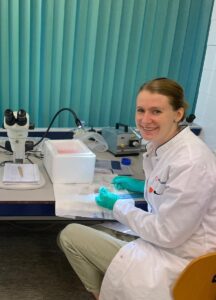
Research: Cancer neuroscience is an exciting and rapidly emerging field that explores how nerves interact with tumors. My research focuses on colorectal cancer and shows that nerves actively shape the tumour environment by influencing immune cells. Rather than affecting tumour size directly, nerve signals change how specific types of immune cells behave within the tumor, revealing a previously unappreciated form of neuro-immune communication. By combining mouse models with human cancer data, my work also highlights how nerve–immune interactions may impact disease progression. These findings demonstrate the promise of cancer neuroscience as a new avenue for understanding cancer and developing future therapies.
What was a personal highlight of the conference for you?
My highlight of the conference was definitely my oral presentation, which was an incredible opportunity for me to share part of my PhD work with the experts in the cancer neuroscience field. I was pretty nervous upfront, but then I enjoyed sharing and discussing my research a lot. After my talk I came in contact with a lot of people that were interested in my work or had ideas on how to elevate the story, which was both engaging and helped to increase the impact of my research.
Were there any social or networking highlights you want to tell us about?
During the conference there was a lot of time for interaction during long breaks and poster sessions, which I experienced as a nice part of the conference. I used this time to look at the research of other groups in the field, chat with other young investigators on their work and techniques, and meet experts that you read papers from or use protocols from in real-life. The personal interactions surely solidified established collaborations and opened opportunities for new ones.
How was this conference different from others you have attended?
For me this conference was amazing and different from others, as the topic of Cancer Neuroscience matches my research very well. Therefore, all the talks and information during the conference was interesting and relevant for my own work and my knowledge in the field of my research. Attending this conference has brought me new knowledge on the direction of this promising field, novel technologies and how to use them, and new ideas for my postdoctoral research and setting-up my own research line.
Did you take part in any interesting local activities in your free time outside of the conference?
Next to the conference, we also had time to discover Bilbao, which was a nice social and cultural addition to the scientific conference. I visited the Guggenheim museum, walked past city highlights and the historical centre, and viewed Bilbao from above using the funicular. I also enjoyed the Basque Country outside of Bilbao after the conference by a day-tour through the region. Altogether, it was a great experience!
How has the conference inspired you in your research?
This conference has boosted my motivation and eagerness to continue my research work, because we are on the right way, but there is still a lot that needs to be done and uncovered.
Melina Müller
MD Student, German Cancer Research Center / University Hospital Heidelberg, Germany
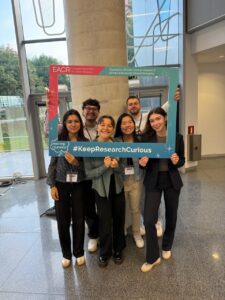
Research: What if brain tumours could exploit the brain’s own communication mechanisms to survive? My research investigates how glioblastoma cells hijack intrinsic neuronal signaling mechanisms, driven by rhythmic calcium communication from pacemaker-like cells, to promote network formation and therapy resistance. By targeting the calcium-dependent potassium channel KCa3.1 with the inhibitor senicapoc, I explore how disrupting these electrically active tumour networks can enhance the effectiveness of radiotherapy and improve patient outcomes.
What was a personal highlight of the conference for you?
A personal highlight for me was the panel discussion on the future of cancer neuroscience. It was fascinating to hear leading researchers debate where the field is heading — from the emerging concept of cancer circuits to how the brain’s own plasticity may influence tumor behavior. As an early-career researcher, being able to listen to and interact with such visionary discussions gave me a real sense of belonging to this young but rapidly evolving field. Another unforgettable moment was presenting my own work in an oral presentation for the first time at an international conference.
Were there any social or networking highlights you want to tell us about?
I had the opportunity to speak with pioneers such as Michelle Monje and Erica Sloan, whose work has shaped much of what we now understand about neuron–cancer interactions. Despite their achievements, they were approachable and encouraging, offering valuable advice on navigating the intersection of neuroscience and oncology. Informal conversations with other young researchers during poster sessions also sparked potential collaborations.
How was this conference different from others you have attended?
This was the first scientific conference I have ever attended, which made the experience especially memorable. What stood out most was the unique size and atmosphere of the event: large enough to attract world leaders in the field, yet small enough to allow personal interactions. Unlike broader oncology meetings, the focus on cancer neuroscience created a strong sense of community and shared curiosity. It felt like being part of a movement that bridges two disciplines in a collaborative way.
How has the conference inspired you in your research?
The conference profoundly inspired me to stay curious and keep learning new methods to further improve my research. The keynote lecture by Ben Deneen was particularly impactful—he emphasised how cellular identity and signaling dynamics shape tumour behavior within the neural microenvironment. His talk strengthened my motivation to learn more neuroscience-based techniques. The openness of the field also motivated me to pursue interdisciplinary collaborations.
When you got home, what did you immediately want to tell your colleagues about?
What stuck in my mind was Frank Winkler’s statement that “we must fight the bad cancerous networks by building even better benign networks.” It reminded me that collaboration within and between research teams is just as essential as targeting cellular networks in the lab. The conference reinforced how crucial teamwork, mentorship, and community are in tackling complex scientific challenges.
Sofia Micheli
PhD Student, University of Zurich, Switzerland
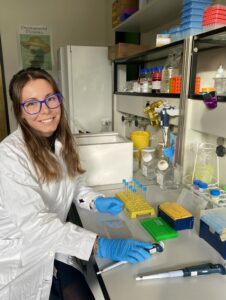
Research: Cancer neuroscience is an exciting and rapidly emerging field that explores hoMy research investigates the role of peripheral glial cells, the cells that surround and support nerves, in the development of the second most common skin cancer worldwide. We study how these cells become activated at very early stages, even before a tumor fully forms, and emerge as a previously unrecognized component of the tumor microenvironment. By interacting with skin and stromal cells, peripheral glia help tumors grow and invade surrounding tissue. Understanding this process opens new therapeutic opportunities in the emerging field of cancer neuroscience.
What was a personal highlight of the conference for you?
A personal highlight of the conference for me was being immersed in the cancer neuroscience community, which is an exciting and rapidly emerging field that directly aligns with my PhD research. It was inspiring to see how many different approaches are being taken to study the interaction between the nervous system and cancer, from both similar and completely different perspectives. The quality of the science was outstanding, and the researchers themselves were equally impressive. Reconnecting with colleagues and meeting new scientists from this community, coming from all over the world, made the experience especially meaningful and motivating.
Were there any social highlights you want to tell us about?
One of the strongest highlights was how open and accessible the leaders of the field were. I had the opportunity to directly speak with major figures in cancer neuroscience, including Michelle Monje, Frank Winkler, and Erica Sloan, which was incredibly inspiring. The conference was also exceptionally well structured for networking: informal moments like coffee breaks, along with dedicated activities, made it easy to reconnect with existing collaborators and establish new connections. Presenting my own work was another key highlight, and the discussions it sparked opened up exciting opportunities, including potential groups for a future postdoctoral position after my PhD.
Did you take part in any interesting local activities in your free time outside of the conference?
Yes, I had the chance to enjoy several local and cultural experiences outside of the conference, and Bilbao itself was truly amazing. I joined a food tour that was a great introduction to the local cuisine and culture, and I also took the opportunity to visit nearby San Sebastián and Guernica, both of which were fascinating and beautiful in very different ways. Simply walking around Bilbao was a highlight on its own. The city is stunning, with a unique mix of architecture, history, and vibrant street life that made the experience outside the conference just as memorable as the scientific program.
How has the conference inspired you in your research?
The conference was a great source of inspiration for my research. I had productive discussions about ideas for future experiments and received valuable advice on potential editors and journals to publish my work. It also made me aware of upcoming conferences and specialised courses focused on cancer neuroscience techniques, which could be extremely helpful for advancing my skills. Beyond the practical aspects, simply being surrounded by leading scientists and their innovative approaches sparked new ideas and perspectives, motivating me to explore different angles in my own research and think more broadly about the impact of my work.
Interested in EACR Conferences and further Travel Grants?
We organise a variety of excellent cancer research conferences, both in person and virtual, where the latest research topics and interaction for participants are the very highest priorities.
To assist researchers who need financial assistance to attend our in-person conferences, we offer EACR-Worldwide Cancer Research Travel Grants. Recipients also get the opportunity to present their work as an oral or poster presentation. Each Travel Grant includes a free registration and funds to support travel and accommodation costs.
Make sure you add the dates of upcoming EACR Conferences to your diary now. Don’t forget we offer EACR member discounts on all of our registration fees