
EACR Travel Fellowships are co-sponsored by Worldwide Cancer Research and provide funds up to €3,000 to early-career cancer researchers. For more information on how to apply for Travel Fellowships, you can visit the EACR website.
Name: Ana Teresa Monteiro Amaral
Title: Postdoctoral researcher
Home institution: Institute of Biomedicine of Seville (IBiS), Spain
Host institution: The Institute of Cancer Research (ICR), London, UK
Dates of visit: 10 September – 16 December 2018
Other funding organisations who supported your trip: CIBERONC Network
Research: My work is mostly focused on understanding how tumour cells communicate with other tissues, tumour microenvironment. Specifically, I am involved in the development of new research models of rare sarcomas, namely Ewing Sarcoma.
Why did you decide to apply for an EACR Travel Fellowship?
I have been a member of EACR for many years and I have been in contact with other researchers who had previously applied to this grant and had been successful.
I found my experience extremely beneficial
Why did you choose the host lab?
I have been working in Ewing Sarcoma for several years and I was aware that the ICR was developing new models for pre-clinical research. The ICR is one of the few groups in Europe working on this specific subject.
Can you summarise the research you did or what you learned on your visit?
During my stay at the ICR, I learned to develop 3D models of Ewing Sarcoma and desmoplastic small-round cell tumours. These models are extremely useful for pre-clinical studies such as drug screenings and matrix invasion assays. Moreover, I am now able to use these models to evaluate potential predictive biomarkers of response to treatment, by immunoflourescence. I have also learned how to generate 3D models from tumour samples derived from biopsies or PDX models. Finally, I learned how to perform invasion assays using 3D models from tumours, in different types of extracellular matrices.

Describe a ‘typical day’ on your visit
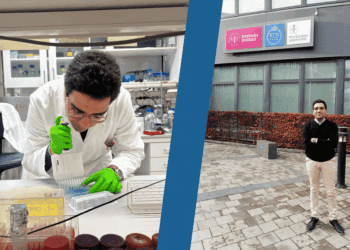
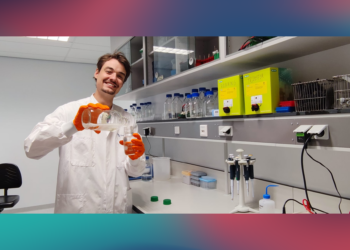
A typical day at the host lab would see me start early in the morning with several hours of cell culture, including cells ending and spheres treatment and medium change. The group would stop for lunch around 12PM and afterwards, I would be fixing spheres or scanning them with the help of my colleagues. Later in the afternoon, we would analyse sphere growth and invasion with the help of a colleague. I also participated in the group’s lab meetings and some ICR conferences.
What were you able to do that you could have not achieved in your home lab?
In my home lab, we lack expertise in the generation of spheres from tumour cells. Also, to correctly follow 3D formation growth and invasion, we used the live cell imaging analyses, system-IncuCyte S3 and the In Cell plate scanner. These analysers are not available at my lab.
Did you take part in any interesting local activities?
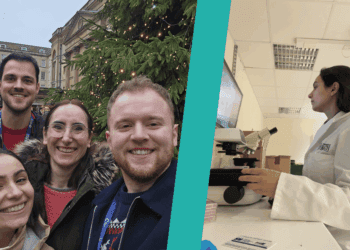
During my stay, I enrolled in the ICR volleyball team.

What was a personal highlight of your trip?
I found my experience extremely beneficial on both a personal and scientific level.
Was there anything you particularly liked about the host institution?
The ICR is a highly considered cancer research institute in Europe with an outstanding record of achievement. It was a pleasure to be a part of the ICR team.
Did you have a personal mentor or anyone who particularly helped you?
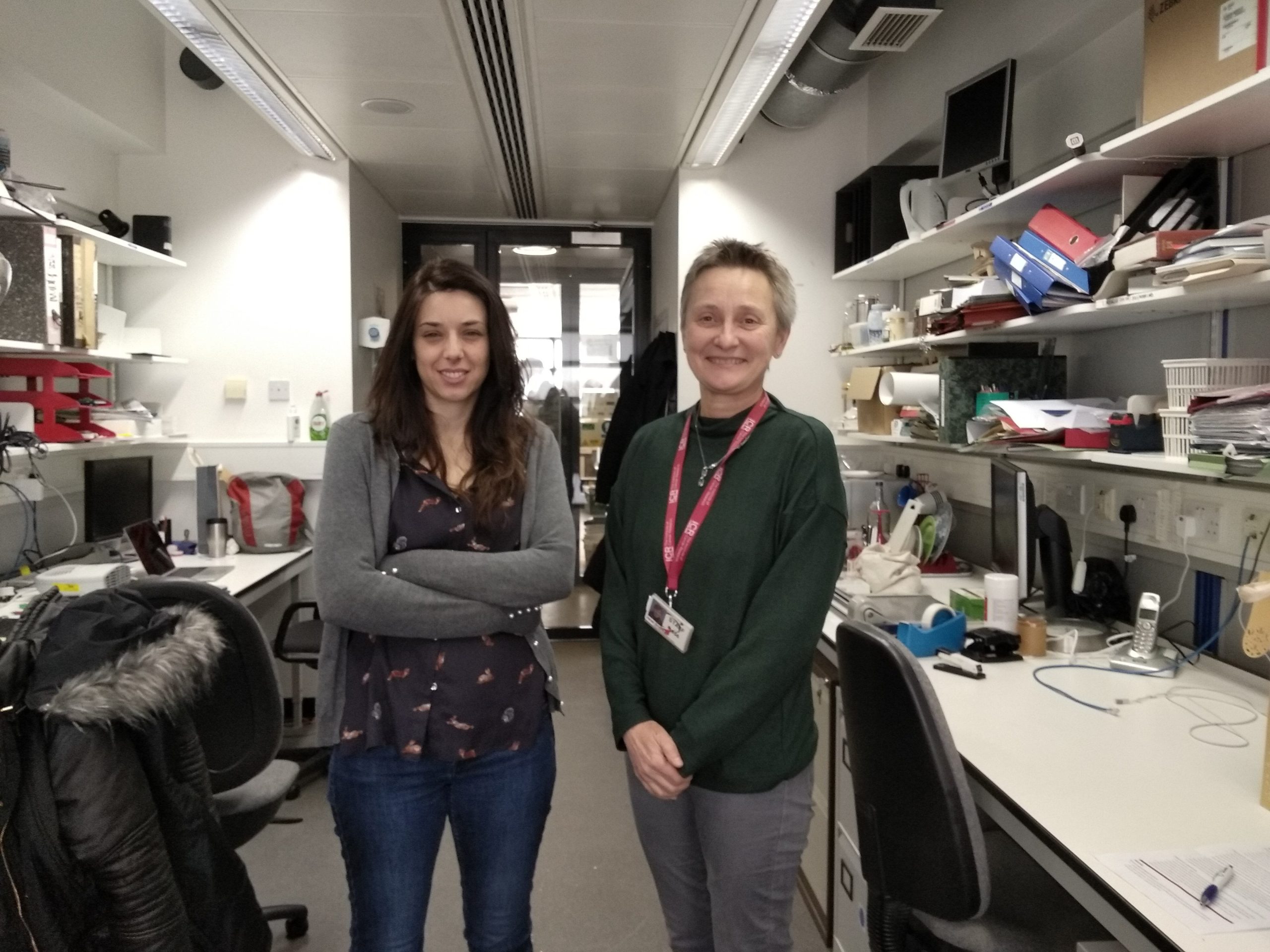
Most of the time I worked with Antonio, a PhD student, who taught me to generate spheres and perform most of the techniques I learned during my stay. Also, Ewa, a postdoctoral researcher, taught me to generate 3D models from tumours and perform immunofluorescence for biomarkers of responses to treatment in these models. Finally, Dr. Janet Shipley supported me scientifically by discussing results and any future collaborative projects.
Have you brought back any specific knowledge or techniques that has benefited your home lab?
Thanks to my stay, we are now able to generate 3D models from tumours and evaluate predictive biomarkers of response after drug treatment. In fact, we have already successfully started to generate these models from patients samples derived from different types of sarcomas.
Does your lab plan to do any future collaboration or publications with the host lab?
Due to the work performed at the host lab, we hope to finish one project and have it published this year. We are also currently working on a review article with the ICR.
How has this visit been beneficial to your research and career?
Spending time at the ICR will help me to be more competitive in achieving national grants and fellowships as well as improving my technical skills.
 Interested in applying?

If you are interested in applying to the Travel Fellowship scheme, please click the EACR Travel Fellowships logo for more information.