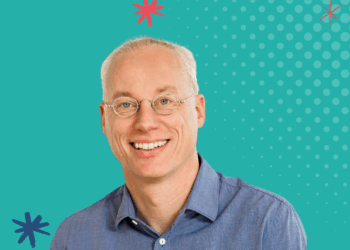

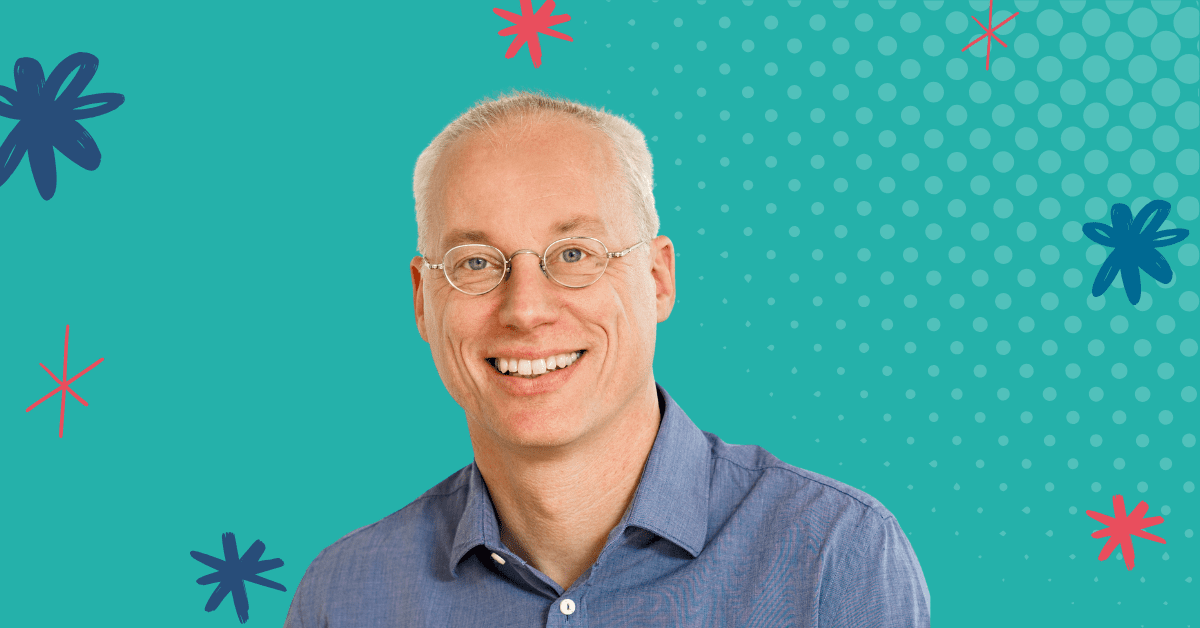
Our guest in this episode is Bernhard Küster, Professor at the Technical University of Munich, Director of the Bavarian Biomolecular Mass Spectrometry Center and Co-Director of the Center for Infection Prevention, the former Vice President of Cellzome (now GSK), and co-founder of the biotech companies OmicScouts and MSAID.
As well as giving us some teasers about his keynote lecture at the EACR 2026 Congress in June 2026 in Budapest, Bernhard talks about his scientific journey from chemistry to chemical proteomics and precision medicine. He reflects on how an interdisciplinary mindset – combining chemistry, biology, and computational science – has shaped his approach to understanding how drugs act on proteins and how this knowledge can inform personalised cancer treatments. He also shares practical advice for early-career researchers on how to embrace interdisciplinarity in their work.
Bernhard discusses his team’s pioneering work developing technologies such as Prosit, Decrypt-E and Decrypt-M, and highlights how artificial intelligence is accelerating discoveries in proteomics. He also underscores the vital role of the clinical community in providing well-annotated tumour samples – an essential foundation for meaningful AI-driven cancer research.
Listen here, scroll down for the transcript and subscribe now via Spotify, Apple Podcasts, Amazon Music/Audible, Deezer or YouTube so you’ll never miss an episode. You can find all episodes and their transcripts here.
Our host is Dr. Alexandra Boitor, EACR Scientific Manager.
Episode transcript
Alexandra: Hello Bernhard, thank you so much for joining us. You are well known for your contributions to the field of chemical proteomics and precision medicine. You have a longstanding interest in deciphering how exactly therapeutic drugs work, which molecular mechanisms play a role in cancer, and how these can be used for individual approaches in clinical treatment. What I’d really like to ask you is how did you find and define your research interest? As far as I know you are a chemist by training. What determined you to study biochemistry and then what attracted you to the field of proteomics and its applications to chemical and systems biology?
Bernhard: Yes true, I am a trained chemist. Actually, I always wanted to do biochemistry, but back in those days there were not many universities that even offered biochemistry bachelor or master courses. So the advice I got from actually my biology school teacher was, why don’t you study chemistry and use that as kind of a launch into biochemistry later?
This is exactly what I did, and I think it did shape early on my interest in both sides of the story. That drugs typically act on proteins and at least most of the medicines we have today are small molecules that act on proteins, or they are proteins, in case of antibodies, for example. Or they make proteins like vaccines for COVID, or they degrade proteins like all these PROTAC molecules that are now a new modality for treating certain diseases.
So this interface of chemistry and biology has had a kind of a natural appeal to me because on the one hand, biology tells us how things work, and chemistry is a way of interfering with biology, particularly when things go wrong. So the transition into proteomics is kind of another natural progression in that because if you think about biological systems where proteins are the major players in regulating almost anything a cell does, and where the dysregulation of an activity of a protein is usually also what makes things go wrong, and that we treat then proteins with small molecules.
It doesn’t take a lot of thought to see that proteomics, which is the field of studying as many proteins as you can in parallel, akin to genomics, that this would be a natural way of going forward in trying to understand both the drugs on the one hand and the diseases on the other, and that proteomics would be the technology to do that.
Alexandra: Would you say that your interdisciplinary background gave you an advantage?
Bernhard: Absolutely. For seven years I was in a biotech company, which was full of biologists, chemists, biochemists, informaticians, and I profited a great deal from getting everybody’s perspective on the same problem. And together you usually come up with a better overall answer to a question that you have or, if you’re lucky, solve the problem.
So I would say absolutely yes, interdisciplinarity is absolutely key these days, and this is what also is characterising our work today, not only in my own lab, but also in the collaborations that we do. And another additional learning came from the fact that, when you start working with clinicians, particularly oncologists who actually still treat patients, this provides yet a completely new perspective on things that, one as a scientist often doesn’t think about immediately because you want to find and solve your little problem in a test tube. But then if a patient comes into play where a whole organism and a person with a personality comes into the picture, it makes a difference to the way how you think about things.
Alexandra: Would you be able to give us an example of how this interdisciplinary background and entourage, that you are cultivating in your research, shaped your approach to proteomics in general, and especially in understanding the drug protein interactions?
Bernhard: Yeah, it’s relatively simple. I mean, in the world of cancer treatment, there are a lot of small molecules that address human kinases, and many of them hit more than one protein. So a lot of times these molecules have more than one target, and as that creates an opportunity, at least potentially, to use the same molecule to treat cancers that are driven by different kinase activities if one were able to find those. And that whole idea is called drug repurposing and that’s not something that we have invented, but proteomics and chemical proteomics is one way of trying to systematise the search for such new indications.
It clearly isn’t enough to have a chemist because maybe you don’t even wanna exchange that molecule. You wanna use the same molecule, but you wanna test it in different cancer scenarios. And latest when you want to have an impact on the treatment of patients, you’ll have to team up with the clinicians who have those patients that are in need of treatments that are not yet satisfactorily served by standard of care.
And maybe this is a good point to emphasise that what we do today isn’t ready for every cancer patient at all. So we are really in the research phase where we are trying to figure out if that is even possible, what I portrayed of trying to understand the cancer proteomes and trying to understand the cancer drug proteome effects, and bring the two together.
And this is currently what we are doing as part of a precision oncology program whereby by definition these are interdisciplinary teams that come together and look at that patient tumour from all kinds of angles.
Alexandra: As you mentioned earlier and as your experience proves, interdisciplinarity has become a must in cancer research. So what advice do you have for young scientists aiming to find their place or establish their line of research in interdisciplinary studies to maximise the impact of their research?
Bernhard: I guess I would say find yourself an environment where this is fostered, so that people actively try to think outside the silos. And that doesn’t have to happen in a single lab. That may be difficult because the laboratory has to be reasonably big. It can also happen by the collaborative environment that the laboratory you consider joining offers, and this is very important.
A lot of it is a mindset. You need to want to work interdisciplinarily because it’s actually hard. It requires an extra effort. It’s one thing to get really good at one thing, it’s something rather different to be good at many things. But maybe you don’t actually have to be good at many things, as long as you understand enough of the other things that it helps you to do even better what you’re already good at.
I don’t know if that is maybe too confusing, but I think it’s a mindset in the sense that you’ll probably apply your own skills best in what you’ve learned properly. But if you get inputs from other sides that help you to see the necessity for you doing something, you can maximise.
So my advice to young scientists would always be, find yourself a challenging environment, ideally one that fosters interdisciplinary exchange. And don’t expect that you have to be the great cancer biologist, a super bioinformatician and an organic chemist at the same time. That’s not working either. You’ve got to be willing and curious enough to try and understand the basics of all of those areas in order to be able to integrate that into your own work.
Alexandra: Sort of like make sure you’re really good at your own thing, but you know enough to understand the language that the researchers around you are talking.
Bernhard: Yes, I mean, there’s this concept in education of a T. You wanna be going really deep on one thing and you want to have enough lateral thinking. That’s kind of the top part of the T. And some people say, well, a Π is even better. So you really good at two things. There you can go really deep, but then you still put a roof on top of that, in trying to think laterally across disciplines. And that’s of course harder to do. But I think the general idea to try and think laterally on the one hand across disciplines, but be really good at one thing, better two things, but one thing would be enough usually, that you can actually make a difference.
Alexandra: Slightly switching gears in our conversation to focus a bit more on your research work. What is your favourite or most interesting research project that you’ve ever worked on?
Bernhard: That’s a tough question. Over the years we had many of those, but I’m trying not to sound like a politician that I liked all of them and they were all great. Probably one of the things I liked most was a few years ago where we did some really, really fundamental proteomic analytical technology projects, which resulted in an artificial intelligence that could actually predict what the mass spectra of any peptide from any organism under the sun would look like, and that actually led to quite a revolution in the way people use proteomics measurements or assess them. And it gave the field a boost. It gave rise to startup companies and new products that everyone in the field can use to do what they do better. I think that was really a fun project because it was a hard sell to the funding agencies because it did sound very dumb, but we said, let’s create a lot of ground truth data on proteomics so that we can actually train a meaningful artificial intelligence and make that useful. And that worked out. And again, that was a super interdisciplinary project. We had to make a million peptides synthetically. We had to measure them in the laboratory, and then we had to crunch them through computers to teach an AI what it could learn from it.
And it worked. so that I think would be probably the top of my list of fun projects with it, because we still use it today and many, many other people can use that too.
Alexandra: Is this something you’ll be telling us more about as part of your talk at the EACR Congress in Budapest?
Bernhard: Not at all actually, in the sense. For that audience it’s too technical and no, I’ll be focusing on how we are trying to learn from the data that we get, in the context of the tumour board. And I will portray it as an ongoing learning exercise. Because outcome data is something that is usually hard to come by in the setting that we work in, which is rare cancers and the molecular tumour board, seeing patients that have already been heavily pretreated.
So everything becomes harder to measure in terms of outcome. We are not there yet, but I think what I’m really focusing more on is kind of giving the notion that we could learn a lot of things from looking across different cancer entities. Like very many of them, we focus on rare cancers by way of our collaboration with the German Cancer Center folks.
And that this is an exciting kind of launchpad for a lot of future work that could either be new clinical trials set up in certain entities. Or new even biomarkers to identify, to make better diagnostic guesses, or ideally measurements. This is gonna be more the focus of my talk. I’ll probably blend in the drug angle as well so that I can get across, our basic kind of approach is trying to understand the drugs well on one hand, try to understand the tumours well and how we can bring them together.
Alexandra: Thank you for sharing a bit of a teaser into your talk at the Congress in June in Budapest. As you alluded to earlier, you are actively involved in pioneering AI applications in proteomics, notably with the development of a mass spectrometry based draft of the human proteome. Then later on developing Prosit, the deep learning neural network you talked about earlier, as a dear project to you.
I also think it’s worth mentioning Decrypt E and Decrypt M, which may have a more direct relevance to cancer research as they evaluate the dose-response characteristics of drug-induced protein expression changes, measure the time- and dose- dependent response of thousands of proteins and reveal how these proteins respond to small molecule, or antibody-based drugs. And this is just to name a few of your contributions to research.
I have to admit that this is very far from my scientific background. So whilst I can grasp that AI in general and the applications that you developed alongside your team in particular have a tremendous potential, I also have to admit that I struggle a bit with visualising the way they would be used. Can you please share with us some insights into how these tools in particular, and proteomics in general, is advancing personalised medicine and cancer therapy strategies?
Bernhard: One simplistic way of looking at it is hopefully a new diagnostic. Either by bringing out certain proteins or certain modifications thereof that are predictive of either diagnosing the disease or distinguishing related diseases or even a response to therapy. So this could be, one of the outcomes. It’s a diagnostic, if you like.
But it could also be the profiles in their entirety. And this is something that the diagnostic community struggles with today, and rightly so because it’s complicated and it’s not fully understood. But we think this type of diagnosis could really help to get a better overall picture of what the tumour looks like.
And many of the technologies you’ve mentioned earlier – Decrypt E, Decrypt M – they tell us these days, tell us more, something about what the molecules can do and not necessarily about what the cancer looks like.
But they go hand in hand as I try to portray. Because in the end, we are gonna treat those cancers a lot of times with small molecules or antibody-based drugs. So this is why we’re trying to look at both of these angles simultaneously.
Alexandra: How do you foresee artificial intelligence shaping the future landscape of proteomics research, particularly with respect to advancements in applications in cancer biology?
Bernhard: Yeah, so you mentioned on the technical level it has already done that and it continues to do that. It is very, very gratifying to see how that is developing. For the cancer biology side of things, of course everybody hopes that artificial intelligence is gonna solve all problems however, it exposes also a very basic requirement for doing meaningful AI research is the quality of the underlying data that you have at hand to be able to train an AI so that it can actually learn something meaningful.
And what do I mean by that? We need data from tumours, and a lot of them, and we need a lot of annotation of these samples with clinical data. With any kind of metadata that we can get. How many tumour cells were in that tumour? What were the potentially many pre-treatments that the patients were undergoing before they even had their proteomes looked at? There’s no end to this and there’s a huge shortage of that kind of level of annotation of data. Let’s say technology speaking, we can measure these samples by the thousands by now. It’s effort, but it is a solvable effort.
But for AI to really make a difference, we would have to have a lot of cases studied, and a lot of them that need all that extra annotation. So that’s also a reach out to the clinical community. That information needs to be recorded systematically because without good annotated samples, we don’t know what the ground truth is gonna be. And then AIs usually find it very hard to make good predictions about anything if they don’t know quite what they should learn.
Alexandra: With that being said, I think we can leave our listeners with some food for thought. Thank you so much Bernhard, for joining us on The Cancer Researcher podcast. I’m looking forward to your talk in June at EACR 2026 to learn more about proteomics and their applications in cancer research, particularly to learn more about how this could help us tackle rare cancers. Thank you.
Bernhard: Thank you very much Alexandra, and I’ll see you in Budapest.
Enjoyed it? Stay curious with The Cancer Researcher Podcast. Subscribe now via Spotify, Apple Podcasts, Amazon Music/Audible, Deezer or YouTube so you’ll never miss an episode. You can find all episodes and their transcripts here.
Suggest a topic for a future episode: What would you love to learn more about? Click here to give us your topic suggestions in a short online form. We warmly welcome your ideas and input!